
When you open a Japanese underground cassette, the first thing you notice is often the small sticker on the J-card. Not the band logo, not the tracklist, but a pair of digits stamped in neat sans-serif: "3 2." It appears on releases from labels like G.R.O.S.S., MST, and countless anonymous dubs that circulate in second-hand shops in Koenji. The numbers are not a catalog code, not a track count, not a year. They are a signal — a statement about balance, about the tension between the asymmetric and the symmetrical, about how two numbers can tell you more about the music inside than a genre tag ever could.
The significance of the number three in Japanese experimental music is well documented: triadic structures, the three-microphone field recording setup, the three-minute noise piece that feels like an hour. We've covered its role in defining space and silence in an earlier piece on the number three. But what happens when you pair three with two? The combination appears on cassettes where the A-side runs 33 minutes and the B-side runs 22. Or where the tracklist has three pieces on side A and two on side B. Or where the recording uses three channels of source material but mixes into two final tracks. The "3 2" notation is a promise that the release will explore the friction between these numbers.
The practical implications are immediate for anyone who has ever tried to dub a tape. A 33-minute side and a 22-minute side force the listener to confront the physical limits of the medium. The longer side will have narrower track width, lower volume ceiling, more audible tape hiss. The shorter side will sound cleaner, louder, more present. This is not a flaw — it is a compositional constraint. Musicians who deliberately design a release as "3 2" are writing with these asymmetrical conditions in mind. The noisician who fills the 33-minute side with a dense wall of feedback knows that the B-side's 22 minutes will offer relief, an almost clinical clarity that would be impossible if both sides were equalized.
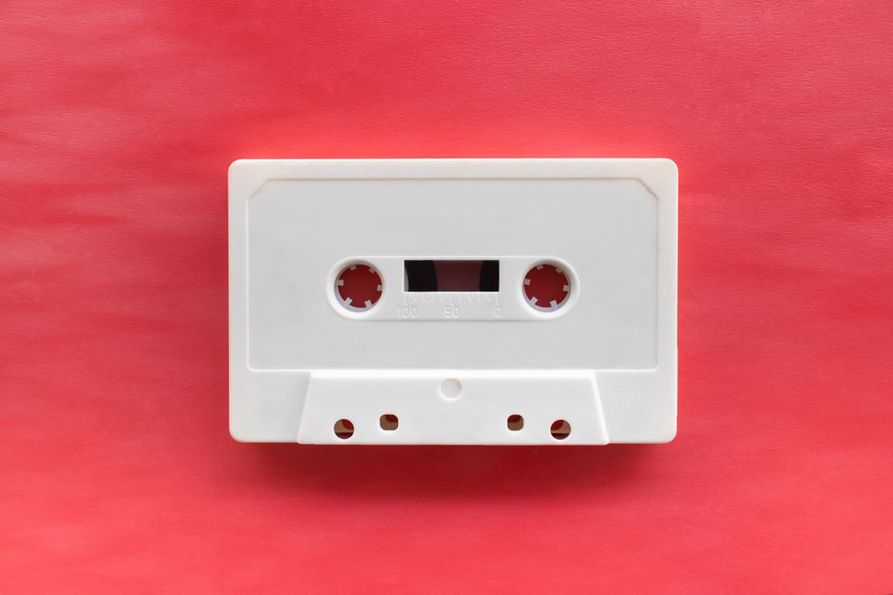
The Structural Logic of Odd- Even Pairing
Three is odd. Two is even. In Japanese underground tape culture, this is not numerology — it is a practical tool for structuring listening. A three-part composition implies a beginning, middle, and end. A two-part composition implies a dipolar relationship: before and after, left and right, source and processed. When you put them together on a single cassette, you create a listening experience that shifts between narrative and binary modes.
Consider a tape where side A contains three field recording pieces: a 12-minute recording of a Tokyo construction site, an 11-minute recording of a river in Yamanashi, and a 10-minute recording of a cicada swarm in August. Each piece is self-contained, three distinct sonic environments. Side B, however, contains two pieces: a 12-minute drone built from the construction site tape processed through a ring modulator, and a 10-minute drone built from the river recording with the cicadas layered underneath. The B-side collapses the A-side's trinity into a dualism. The listener hears the same sources transformed, now presented in pairs. The "3 2" notation on the J-card tells you that this transformation is intentional, that you are meant to hold both sides in your mind simultaneously.
This kind of structural thinking appears throughout Japanese underground labels that shun traditional track numbering. The label MST, for instance, often releases cassettes where the tracklist on the J-card gives only durations — no titles, no sequential numbers. The "3 2" sticker is the only guide. It says: side A has three moments, side B has two. Find the relationship yourself.
The Recording Practice: Three Mics, Two Tracks
The most common technical application of "3 2" in field recording and electroacoustic music is the three-microphone recording technique that is then collapsed into a two-channel stereo mix. This method is widespread among Japanese practitioners who record in harsh environments — subway tunnels, factory floors, abandoned schools. They place three omnidirectional microphones in a triangle rather than the standard XY or ORTF pair. The third mic captures what the stereo pair cannot: the center, the phase cancellations, the spatial depth that disappears in typical stereo recordings.
When these recordings are transferred to cassette, the mixdown from three to two channels becomes a compositional decision. Which mic gets panned left? Which right? Does the third mic get summed to mono and blended at low volume, or does it alternate between left and right throughout the piece? These choices are rarely documented on the release itself. The "3 2" sticker is all you get. It acknowledges that the source was richer than the delivery format, that something was lost and something was gained. The listener who knows this technique will hear the difference — the unusual room tone, the slight instability in the stereo image, the feeling that the sound field is wider than the headphones suggest.
Mono vs. Stereo: The Hidden Layer
The "3 2" notation also appears on releases that deal explicitly with the mono-stereo relationship, a topic we have explored in depth in a separate practical guide. Some Japanese underground cassettes are recorded in mono but duplicated with two different signal paths — one for left, one for right — creating a pseudo-stereo effect that is neither true stereo nor true mono. The "3" can refer to three separate mono recordings that are panned across the stereo field. The "2" can refer to the two final stereo tracks. But sometimes the numbers are reversed: two mono recordings processed through three different effects chains before being mixed down. The ambiguity is the point.
A notable example is a tape by the artist Toshiya Tsunoda (though we will not name specific releases here, as the practice is widespread across anonymous productions). The tape contains two pieces, each made from three contact microphone recordings of a metal bridge in Yokohama. The first piece uses all three sources in mono, panned center. The second piece pans one source hard left, one hard right, and keeps the third in center. The effect is disorienting. The bridge sounds like it is folding in on itself. The "3 2" sticker tells you that there is a logic at work, but it does not tell you what it is. You have to listen to find it.
Collecting the Unbalanced
For collectors, a "3 2" cassette is a marker of intentionality. It signals that the artist or label has thought about the physical format as a compositional element, not just a container. These tapes are often the ones that hold value in private trading circles — not because they are rare, but because they reward repeated listening. The asymmetry forces you to flip the tape at an unexpected moment. The side lengths are not equal, so you cannot zone out. You have to be present for the transition.
Pricing for "3 2" releases on the second-hand market varies wildly. Some sell for standard rates (¥800–1500). Others, especially from labels known for extreme minimalism, can fetch ¥5000 or more. The value is not in the music alone but in the conceptual frame. A "3 2" release that actually delivers on the promise of structural depth is worth seeking out. One that just stamps the numbers on a random compilation is not.
A Final Practical Note
If you are making your own tapes, try the "3 2" approach. Record three pieces for side A. Record two for side B. Do not adjust the lengths. Let them be whatever they are. Then dub the tape and listen to the physical result. Notice how the longer side pushes the medium into noise and the shorter side pulls it back. Notice how your attention shifts. The numbers will tell you things about your own music that analysis cannot. That is what they are for.