
A single sustained tone played through a small amplifier in a Tokyo apartment at 2 a.m. can feel more physically present than a wall of distortion. That is the paradox at the heart of Japanese ambient noise: the space between sounds often carries as much weight as the sounds themselves. The work of artists operating in this territory does not function as background music. It demands a specific kind of attention, a willingness to sit inside a texture and wait for it to reveal its internal logic.
The Architecture of Empty Space
The Japanese experimental underground has long treated silence not as an absence but as a raw material. In the late 1970s and early 1980s, practitioners began systematically stripping away the overt aggression of early noise music to examine what remained. The result was not "quiet music" in any conventional sense. A recording might consist of a single microphone placed in an empty room, its gain pushed to the limit, capturing the hum of fluorescent lights and the distant rumble of traffic through concrete walls. The listener hears the room itself breathing.
This approach shares DNA with the electroacoustic tradition but takes a more confrontational stance toward the listener's expectations. Where academic electronic music often builds narrative arcs, Japanese ambient noise frequently refuses progression entirely. A piece might hold a single texture for twenty minutes, forcing the ear to adjust, to begin perceiving micro-variations that were always present but initially imperceptible. The physical space of playback becomes part of the composition. Your room, your ventilation system, your own heartbeat join the work.
The Cassette as a Quiet Instrument
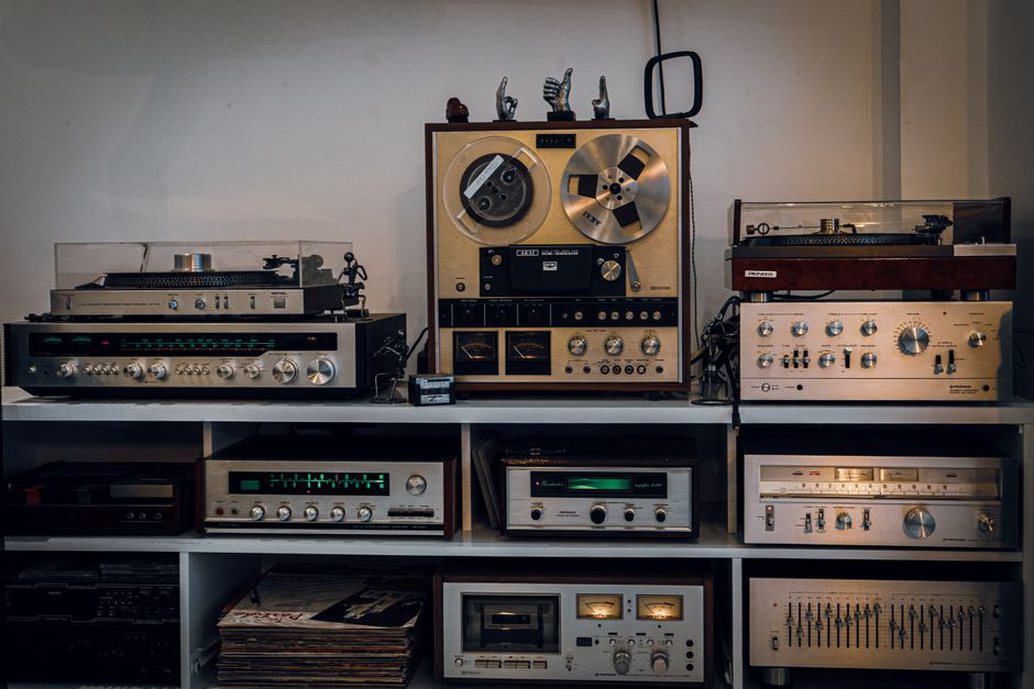
The cassette format proved essential to this aesthetic for reasons beyond affordability. Tape hiss is not a flaw to be eliminated; it is a constant companion, a baseline layer of noise against which other sounds are measured. When a recording pushes into near-silence, the hiss of the medium itself becomes the audible surface. Artists working in the 1990s tape underground exploited this ruthlessly. A release might alternate between dense, corroded drone passages and stretches where the only sound is the noise floor of the cassette itself, punctuated by the mechanical click of a pause button being pressed and released.
This was not gimmickry. It was a direct engagement with the physical reality of the medium. The listener is never allowed to forget that they are hearing a recorded object, a dubbed tape, perhaps a third-generation copy. The degradation of the signal across dubs becomes a compositional parameter. Labels operating in this sphere, often run by the artists themselves, produced editions of fifty or a hundred copies, each one dubbed in real time, each one slightly different from the next. The object itself carries the evidence of its making.
The relationship between this quiet extremity and the more famous Japanese noise acts is often misunderstood. They are not opposing camps but points on a continuum. The same artist might release a punishing wall of feedback on one label and a near-silent field recording study on another, sometimes under different project names, sometimes not. The cassette network allowed for this fluidity. A small-run tape could document a single evening's experiment without the pressure of defining a career trajectory. The orphaned files that surface decades later often reveal how much of this work existed outside any formal discography.
Field Recording as Confrontation
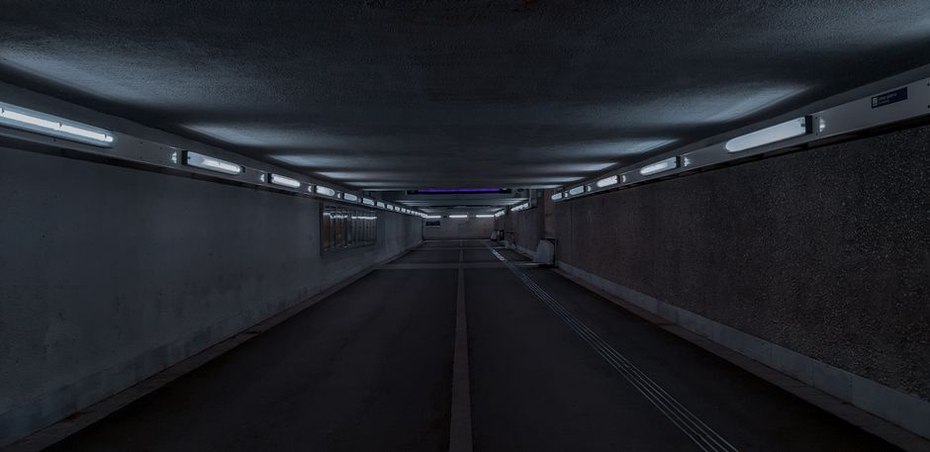
The use of field recordings in this context differs sharply from the nature-documentary approach common in Western ambient music. Japanese practitioners tend to record spaces that are already charged with ambiguous sonic information: underground pedestrian tunnels, empty parking garages at 3 a.m., the interior of a moving train carriage with no passengers. These are not peaceful environments. They hum with electrical infrastructure, with distant mechanical systems, with the pressure of air moving through sealed spaces.
A recording made in the Tokyo subway system during off-peak hours captures a specific kind of engineered silence: the sound of a massive public infrastructure momentarily at rest, still alive with ventilation and distant signals. When such a recording is presented without commentary, at a volume that makes the listener lean in, it becomes something stranger than documentation. The familiar becomes alien. The listener begins to hear the space as a constructed sound environment, which of course it is.
Drone and the Threshold of Perception
Drone music in the Japanese underground often operates at the edge of audibility. A composition might be built from a single frequency, sustained and slowly modulated, played back at a level that hovers just above the ambient noise of the listening environment. This creates an unstable perceptual situation. Small changes in the listener's position, in the ambient temperature of the room, in the voltage reaching the amplifier, all become audible events.
This approach owes something to the minimalist tradition but pushes further into perceptual psychology. The question being asked is not "what is the composer expressing?" but "what is the listener actually hearing?" When a tone is held long enough, the ear begins to generate its own phantom frequencies, combination tones that exist only in the auditory system. Some artists have designed work specifically to exploit this phenomenon, building pieces that change depending on the listener's own hearing physiology. No two people hear the same recording.
The equipment used in this work is often deliberately simple: a single oscillator, a small mixer, a consumer-grade tape deck. The complexity emerges from the listening situation, not from the signal chain. This DIY ethos is not about nostalgia or authenticity; it is about transparency. When the tools are visible, the listener can trace the decisions being made. There is no studio magic to hide behind.
The Social Dimension of Quiet Extremity
Live performances in this vein create a unique social situation. An audience gathered to hear near-silence must collectively negotiate their own presence. Every cough, every shift in a chair, every breath becomes part of the sound field. The fourth wall does not so much break as become irrelevant. The performer might be doing almost nothing visible: slowly turning a single knob, adjusting the angle of a microphone, or simply letting a tape play. The drama is in the room, in the shared act of attention.
This creates a different kind of community than the more physically cathartic noise shows. The audience is not there to be overwhelmed but to participate in a collective listening exercise. The social codes are strict: absolute silence from the audience is expected, not because silence is sacred but because any sound becomes part of the piece. A dropped glass becomes a percussion event. A whispered comment becomes a vocal line. The boundaries between performer and audience dissolve through discipline rather than chaos.
The documentation of these events is often frustratingly sparse, existing as cryptic references in tape catalogs and obscure file names that only a handful of collectors can decode. This is not obscurantism for its own sake. The work resists documentation because its primary material is the specific acoustic situation of a specific room on a specific night. A recording can only gesture toward what happened.
Listening as a Creative Act
The most radical proposition of Japanese ambient noise is that the listener completes the work. A recording that presents minimal sonic information—a quiet hum, a distant metallic resonance, the sound of rain on a window recorded from inside the room—demands that the listener supply their own focus, their own patience, their own willingness to be bored and then to move through boredom into a different kind of attention.
This is not a passive experience dressed up as profundity. The work functions as a kind of attention-training device. After twenty minutes of focused listening to a near-static sound field, the world outside the headphones sounds different. Ordinary environmental sounds acquire texture and depth. The refrigerator's compressor becomes a rhythmic element. Traffic noise reveals internal melodic contours. The piece has not ended; it has simply moved outside the frame of the recording.
The legacy of this approach continues to surface in unexpected places. Contemporary artists working with digital tools have found ways to extend the inquiry into new technological contexts. A piece might use algorithmic processes to generate an endlessly varying near-silence, a sound field that never repeats but never changes its fundamental character. The question remains the same: what happens when you stop waiting for something to happen and start hearing what is already there.