
The phrase "a ae cmyk 3" looks like a printer's error. A color separation that slipped out of alignment, a cyan plate that shifted a millimeter to the right, leaving a ghost of itself against the magenta. In commercial printing, misregistration is a defect. In Japanese experimental music, that same displacement—the gap between intended signal and what actually arrives—has become a compositional principle for a subset of artists working at the intersection of field recording, electroacoustics, and degraded media.
The number 3 in the phrase hints at three-channel work, but not in the conventional surround-sound sense. Several Japanese composers in the 2010s began constructing pieces where three independent signal paths run in parallel, each carrying the same source material processed through different analog chains. The listener hears not a unified stereo image but three overlapping versions of the same event, each slightly desynchronized, each colored by its own chain of tape saturation, cable capacitance, and amplifier noise. The result is a kind of auditory CMYK misregistration—the image is recognizable, but its edges bleed into each other, and the colors don't quite align.
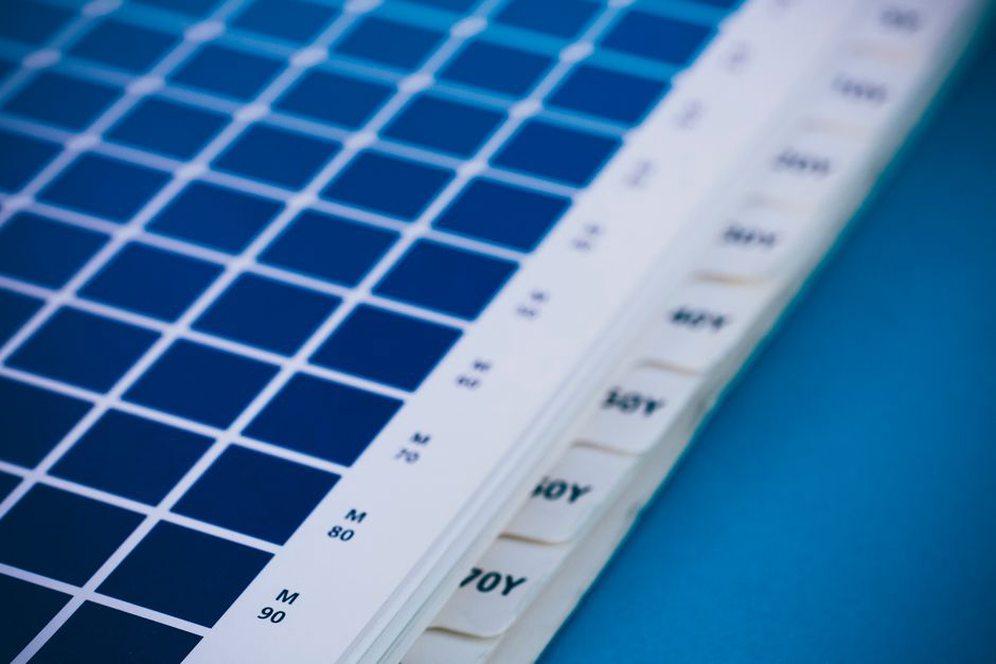
The Color Separation as Compositional Model
The analogy to four-color printing is not arbitrary. In offset lithography, the final image is built from four separate monochrome layers—cyan, magenta, yellow, and black—each printed at a specific screen angle to avoid moiré patterns. When all four register perfectly, the eye blends them into a continuous-tone photograph. When they slip, the image fractures into its component hues.
A small group of Japanese experimental musicians—working primarily on cassette labels that prioritize process over polish—has adopted this model as a structural device. Instead of mixing sources into a single stereo master, they keep the layers separate, sometimes distributing them across different physical media or playback systems. A typical piece might consist of a field recording played back through a small speaker in a resonant room, re-recorded onto a worn cassette, then played back again through a second chain. The result is not a mix but a stack of registrations, each generation adding its own drift.
The aesthetic preference here is for the gap. The misregistration becomes the content. A bird call recorded in a Tokyo park, when passed through three generations of cassette duplication on different decks, no longer sounds like a bird. It becomes a smear of high-frequency information, a texture that exists only because the original signal degraded unevenly across the three copies. The composer's role shifts from creator to curator of errors.
Three-Channel Listening in Domestic Spaces
The practical implementation of this approach rarely involves expensive multichannel systems. Most of these works are designed for everyday playback environments—a bedroom with two speakers and a boombox, or a kitchen radio placed at a right angle to a laptop. The third channel is often a portable cassette player with its own internal speaker, positioned across the room. The listener moves through the sound field, experiencing phase cancellations and reinforcements that change with each step.
This domestic, low-fi multichannel setup mirrors the ethos of the DIY cassette labels that release such work. Labels like 004tt and 008tt—which operate without websites, without social media, often without any public catalog—release editions that demand physical presence. The listener must acquire the cassette, find a working deck, and arrange the playback space themselves. The misregistration is not just in the sound; it is in the entire listening situation. One cannot stream these pieces and experience them as intended.
For a deeper look at how one such label constructs its identity around deliberate obscurity, see our piece on 004tt: The Japanese Noise Label That Doesn’t Want to Be Found. The refusal to provide metadata, track titles, or even consistent labeling forces the listener into a relationship with the object that mirrors the sonic misregistration—information is present but not aligned, legible but not transparent.
The Role of the Third Plate
Why specifically three channels, and not four or five? The number corresponds to a practical limit in the home-recording context. Most affordable cassette four-tracks from the 1980s and 1990s offer three simultaneous playback paths if one uses the mixer section creatively. Additionally, three sources create a stable but asymmetrical listening field—the ear cannot resolve them into a simple left-right image, but the brain still attempts to locate each source in space. This unresolved triangulation produces a constant low-level cognitive tension, a sense that the sound is almost coherent but not quite.
Composers working in this mode often cite the concept of ma—the Japanese aesthetic of negative space, the interval between events—but applied not to silence but to misalignment. The gap between the three channels is a sonic ma, a space that cannot be filled because it exists only as a relationship. The listener's attention drifts between the three streams, never settling, always aware of what is missing in each.
Field Recording as Source Material
The raw material for these pieces is almost always field recordings. Not the pristine, high-resolution captures favored by nature recordists, but lo-fi, location-specific recordings made with consumer-grade equipment—handheld dictaphones, mobile phone microphones, or the internal mics of aging cassette recorders. The imperfections of the recording device become the first layer of misregistration. A recording made with a Sony TCM-5000EV microcassette recorder, for example, introduces wow and flutter that will interact unpredictably with the playback speed of the final cassette edition.
For practical advice on making field recordings that retain their character through multiple generations of degradation, consult Field Recording for Experimental Music: Microphone Techniques and Practical Tips. The techniques discussed there—particularly the use of contact microphones and boundary-layer placement—produce signals that survive the misregistration process without collapsing into noise.
The choice of location matters as much as the equipment. Recordings made in spaces with complex reverberation—underpasses, parking garages, metal stairwells—contain internal phase relationships that interact with the three-channel playback setup. A sound recorded in a concrete stairwell, when played back through three misaligned channels in a domestic room, produces interference patterns that mimic the original space but with added digital or analog artifacts. The result is a hybrid acoustic space that exists only in that specific listening moment.
Cassette as Carrier of Error
The cassette format is not incidental to this aesthetic. Cassettes degrade predictably but not uniformly. High frequencies drop out first, but the rate of dropout depends on tape formulation, deck alignment, and storage conditions. A release pressed on a batch of Type I ferric tape from the 1980s will sound different from the same master transferred to a modern Type II chrome tape. The label cannot control this variance. Each copy of a release is a unique misregistration of the master.
Some labels embrace this uncontrollability. The 012tt imprint, for instance, deliberately uses different tape stocks for each copy of a given release, sometimes recording each copy individually from a master tape rather than duplicating in real time. The result is a series of objects that share a theoretical identity but diverge in practice. Our investigation into this approach, 012tt: The Japanese Cassette Label That Refuses to Be Found, details how the label's production methods turn each cassette into a unique artifact of misregistration.
Listening Protocol
To experience a piece built on the "a ae cmyk 3" principle, the listener must follow a specific protocol:
- Acquire the cassette edition. Digital files, even if provided, are not the work—they are documentation of one possible registration.
- Play back on a deck with independent output jacks for each channel, or use multiple portable players synchronized manually.
- Position the speakers or players in an asymmetrical triangle around the listening space. The distances should not be equal.
- Set each channel to a different volume. The piece is designed for imbalance.
- Listen from at least three different positions in the room over the duration of the piece. The work changes depending on where you stand.
This protocol is rarely printed on the release itself. It is transmitted through word of mouth, through forum posts, through the tacit knowledge that accumulates around these micro-scenes. The lack of explicit instruction is itself a form of misregistration—the information exists, but not in alignment with the object.
The Digital Paradox
A final note on the relationship between this analog, misregistration-based aesthetic and the digital platforms that most listeners use to discover music. Many of these releases are virtually undocumented online. No Discogs entries, no Bandcamp pages, no reviews. The only way to encounter them is through physical distribution at live events, through trades within a small network of collectors, or through the occasional mention on a private mailing list. The digital representation of the work—if it exists at all—is itself a misregistration, a low-resolution thumbnail of a three-dimensional object.
This is not nostalgia for a pre-digital era. It is a deliberate choice to make the work resistant to easy consumption. The misregistration extends beyond the audio into the entire economy of the release. The listener who wants to hear the piece must accept the conditions of its creation: imperfect equipment, domestic playback, and the patience to arrange three channels in a room and listen for the gaps between them.