
The 9-volt battery, a rectangular block of 1.5V cells, is the quiet workhorse of the Japanese noise underground. It powers the portable contact mics, the circuit-bent toys, the feedback loops, and the dying preamps that define the genre’s rawest edges. Unlike the regulated, clean power of a studio PSU, the 9V battery introduces its own set of variables – voltage sag, chemical degradation, and a slow, audible decay that becomes part of the composition. This article examines the role of the 9V battery as a sound source, a practical constraint, and a cultural artifact in Japanese experimental music.
Why 9 Volts?
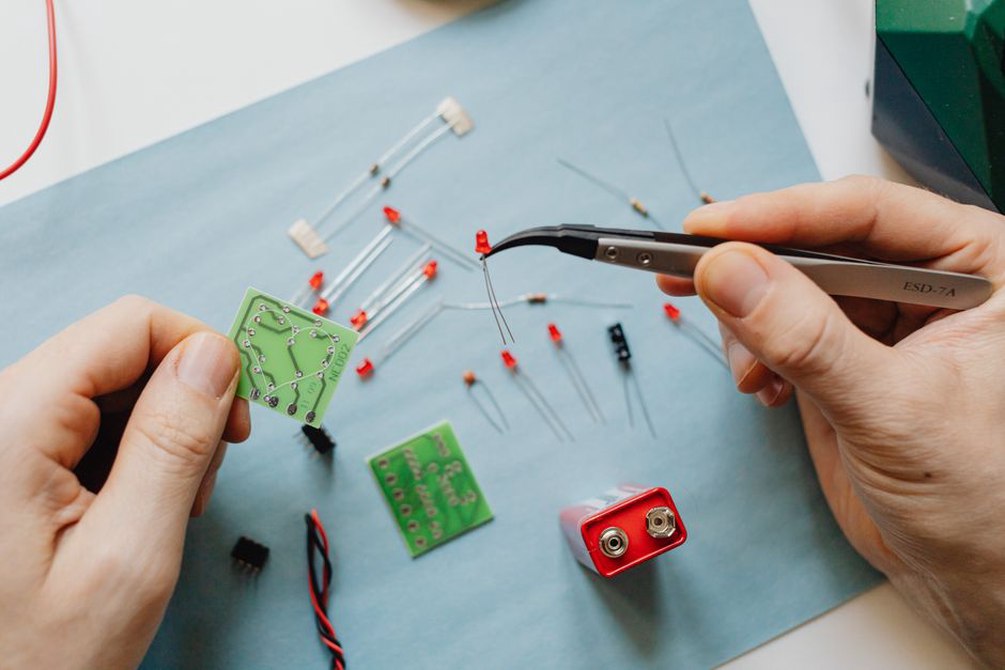
The 9V format became dominant in the DIY noise scene for two reasons: the widespread availability of cheap battery-powered effects pedals in the 1980s, and the simplicity of the snap connector. Early Japanese noise artists imported budget fuzz pedals from American catalogues, gutted them, and rebuilt them into feedback apparatuses. The 9V rail was already there. The snap connector, with its two terminals, made prototyping fast – no soldering iron required for quick tests. Over time, the 9V battery became a standard for portable noise boxes, from the simplest transistor oscillator to multi-stage distortion units.
In Japan, the 9V battery also found a second life in field recording. Lightweight preamps for electret microphones often run on a single 9V cell, allowing recordists to capture sounds far from mains power. The choice of battery is critical for field recordings, as detailed in our guide to Field Recording for Experimental Music: Microphone Techniques and Practical Tips. The preamp noise floor, the headroom, and the battery life all affect the final recording – and a weak battery can introduce a subtle, low-frequency rumble or a warbling distortion that many field recordists try to avoid, but noise musicians embrace.
The Sound of a Dying Battery
The most distinctive characteristic of a 9V battery in a noise circuit is its instability. A fresh alkaline battery delivers about 9.6V; as it discharges, the voltage drops steadily. Below 7V, many circuits begin to behave erratically: oscillators change pitch, distortion becomes asymmetrical, and feedback loops develop a gating effect. These are not defects – they are the sound of entropy. A dying battery in a circuit-bent toy can create a pattern of fading, glitching, and sudden silence that no programmed LFO can replicate.
Carbon-zinc batteries, now rare, offer a different curve. They deliver lower current and their voltage drops more sharply under load, producing a more dramatic collapse. Some musicians stockpile old carbon-zinc cells specifically for this purpose. The sound of a battery failing during a live set – the crackling, the sag, the eventual dropout – is a performance in itself, a reminder that the equipment is alive and temporary.
Practical Considerations for the Noise Musician
Not all 9V batteries are equal. For consistent results in a studio recording, a fresh alkaline battery is the default. But for live work, where you want controlled instability, the choice becomes strategic:
- Alkaline (e.g., Duracell, Energizer): Long life, stable voltage drop until near depletion. Good for sustained drone or when you want the battery failure to occur at a predictable point (e.g., the last 15 minutes of a set).
- Rechargeable NiMH (9V, typically 200–300 mAh): Lower initial voltage (~8.4V) and a flat discharge curve. They sound “softer” and are less likely to produce dramatic failure. Many musicians find them boring for noise.
- Lithium 9V: Very stable voltage, long shelf life, but expensive. Rarely used in DIY circles because they lack the organic sag.
- Carbon-zinc: Almost obsolete, but still found in some hardware stores. They sound the most unpredictable – a short, violent life.
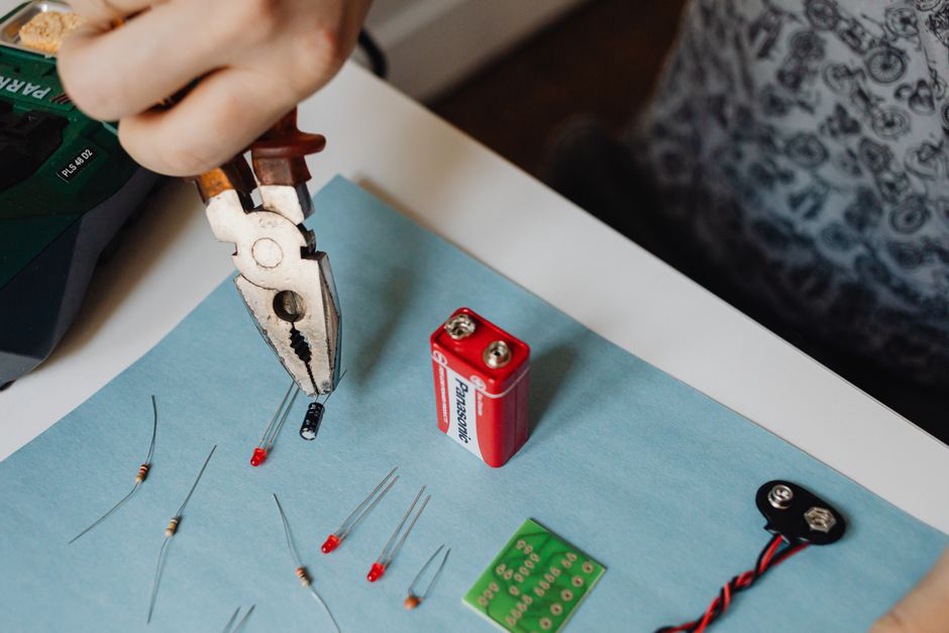
Beyond the cell itself, the battery snap connector is a component worth considering. Cheap, unbranded snaps often have thin wire that introduces resistance – which can be a feature or a bug. Some musicians deliberately use a long, thin cable from the battery to the circuit to create a low-pass filter effect. Others replace the snap with a direct soldered connection to eliminate resistance.
Battery Culture in Live and Studio
In the Japanese underground, the 9V battery is more than a power source; it is a prop and a ritual. At small venues, you will see musicians taping batteries to their pedalboards with gaffer tape, or swapping them mid-set with a quick, practiced motion. The sound of a battery dropping onto a wooden floor is a common interlude. The limited capacity of a 9V battery forces a natural constraint on performance length – a 45-minute set often ends with the last battery dying, a planned fade-out that the audience reads as intentional.
Some cassette labels, such as those discussed in our coverage of 012tt: The Japanese Cassette Label That Refuses to Be Found, release editions that are intentionally low-volume and ephemeral, mirroring the battery’s lifecycle. The 9V battery, like the cassette tape, is a consumable medium – its degradation is part of the aesthetic. The number 9, in this context, is not a mystical numeral but a technical standard that shaped the sound of a scene.
Before your next session, check the voltage of your battery. A reading below 8.4V might be exactly what you need, or the final nail in the coffin of a clean signal. Either way, it will sound like something.