
The number three appears with surprising frequency in the structural decisions of Japanese experimental musicians — not as a cultural symbol, but as a practical and aesthetic constraint. Unlike binary oppositions (on/off, left/right, signal/noise), three introduces a middle ground, a pivot, or a destabilizing element. In noise, drone, and field recording, the triad functions as a minimal unit of complexity: two elements define a relationship, the third breaks it.
Consider the trio format in Japanese noise. Many groups since the late 1980s have settled on three members not because of lineup convenience, but because three allows a specific dynamic: one player generates the continuous texture, another introduces ruptures, the third modulates the overall density. This is not a fixed rule, but a recurring pattern observed in live performances and studio sessions. The trio avoids the tight synchronization of a duo and the potential chaos of a quartet. It creates a rotating center of gravity — each member can become the foreground or background depending on the moment. The resulting sound is neither hierarchical nor democratic; it is a constant negotiation of weight.
Ternary Time in Drone and Ambient
Drone music, often associated with static or slowly shifting textures, tends toward binary pulse — a steady beat or a continuous tone. Yet a number of Japanese drone works employ ternary time structures: three-note melodic cells, three-part harmonic cycles, or three-layer textures where each layer evolves at a different speed. The effect is not rhythmic in the conventional sense, but a kind of temporal breathing. A three-part cycle of 4–5–6 seconds, for instance, creates a pattern that never quite repeats identically, because the third element resets the expectation. This is a compositional device, not a mystical numerology.
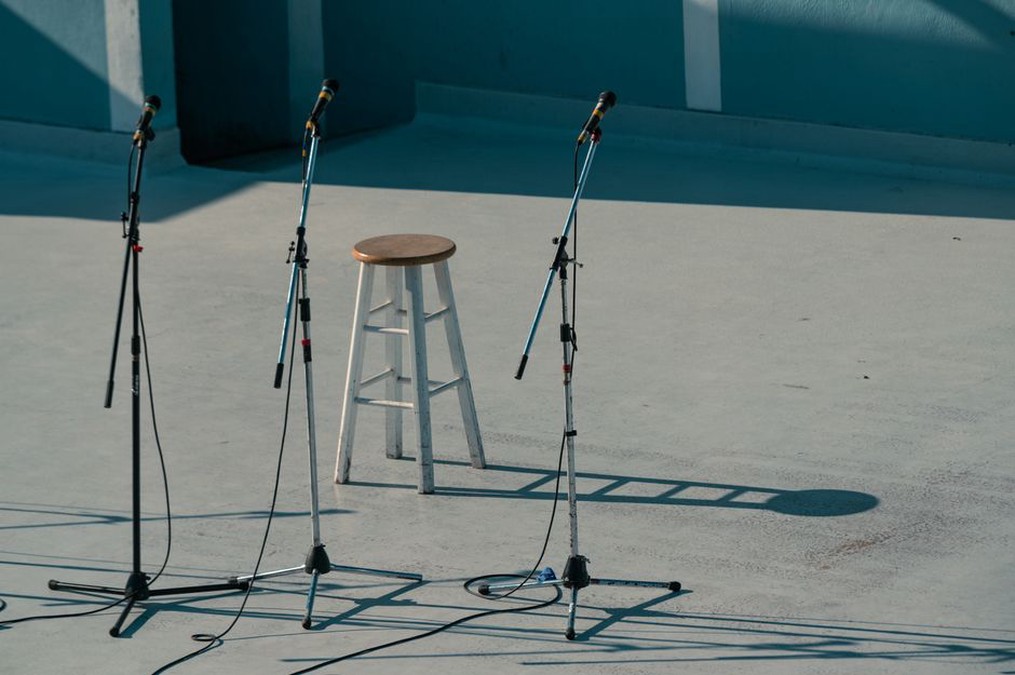
In field recording, the number three often appears in microphone placement. While stereo recording relies on two channels, many Japanese sound artists use a third microphone — either a central omni or a spaced pair with a coincident center — to capture spatial depth that stereo cannot convey. The technique is not binaural; it is a deliberate addition of a phantom axis. A typical setup: one microphone pointed at the source, a second at the reflective surface, and a third at the ambient air. The resulting mix gives the listener a sense of triangulated space, where the source is not a point but a volume.
Three in Label Culture and Cataloging
Cassette labels and DIY distributors in Japan often use three-digit catalog numbers, not because they have 999 releases, but because the three-digit system imposes a mental limit. Labels like 004tt and 008tt (which we have covered in separate articles) use numeric codes that evoke a sense of incomplete series. The number three, when it appears in a label name or release code, suggests a break from the binary logic of “volume 1, volume 2.” A label that stops at three releases, or that organizes its output in triads, forces the listener to consider each set as a closed triangle rather than an open sequence. This is a deliberate strategy to resist accumulation.
While the power of two dominates many minimalist compositions (as discussed in our article on binary structures in Japanese experimental music), the number three offers a different kind of tension — one that resists resolution. A binary system can be balanced or unbalanced; a ternary system always contains a remainder. In a drone piece built on two tones, the ear seeks a third to complete the harmonic series. In a noise performance with two performers, the absence of a third is palpable. Many Japanese musicians exploit this incompleteness, leaving the third element implied rather than stated.

Practical Applications for Musicians and Collectors
For musicians working in experimental genres, the number three can be a tool for breaking habits. If you usually layer two tracks, try adding a third that is out of phase or at a different tempo. If you record with a stereo pair, place a third microphone at a 90-degree angle to the source and mix it at a low level — the result is a room tone that stereo cannot reproduce. For live performance, consider a trio where each member has a defined role: one sustains, one disrupts, one moderates. The moderation role is the most difficult, because it requires listening rather than playing.
For collectors, paying attention to three-part structures in releases can reveal hidden patterns. Some labels release albums in trios — three artists, three tracks, three formats. A tape with three untitled sides (A, B, and C) forces a different listening order than a standard two-sided cassette. The third side, often a locked groove or a blank loop, becomes a conceptual boundary. The number three, in this context, is not a quantity but a limit.
In field recording, the next time you set up a three-microphone array, listen not to the left-right but to the center — the phantom image that exists only in the space between the two, and the third that anchors it. That center is where most information resides, yet it is the hardest to capture. The number three, in Japanese experimental music, is not about completeness. It is about the gap that remains when two things are placed together.