
A splice can sound like a tiny percussion hit. Worn tape may soften one passage while the next stays sharp. In sound collage, those differences need not be flaws to clean up; they can mark the point where one fragment gives way to another. A sonic artifact is an audible trace of recording, editing, copying, playback, or file processing. What it does depends on where it falls. A click between unrelated sounds may expose a cut; repeated at regular intervals, it may become the pulse.
Japanese sound collage has no single technological lineage. Composers working with tape, underground performers assembling records and cassettes, and artists editing digital files have used different tools for different ends. They do, however, face a similar question: when material taken from elsewhere enters a new work, how much of its original medium remains audible?
Tape: artifacts at the joins
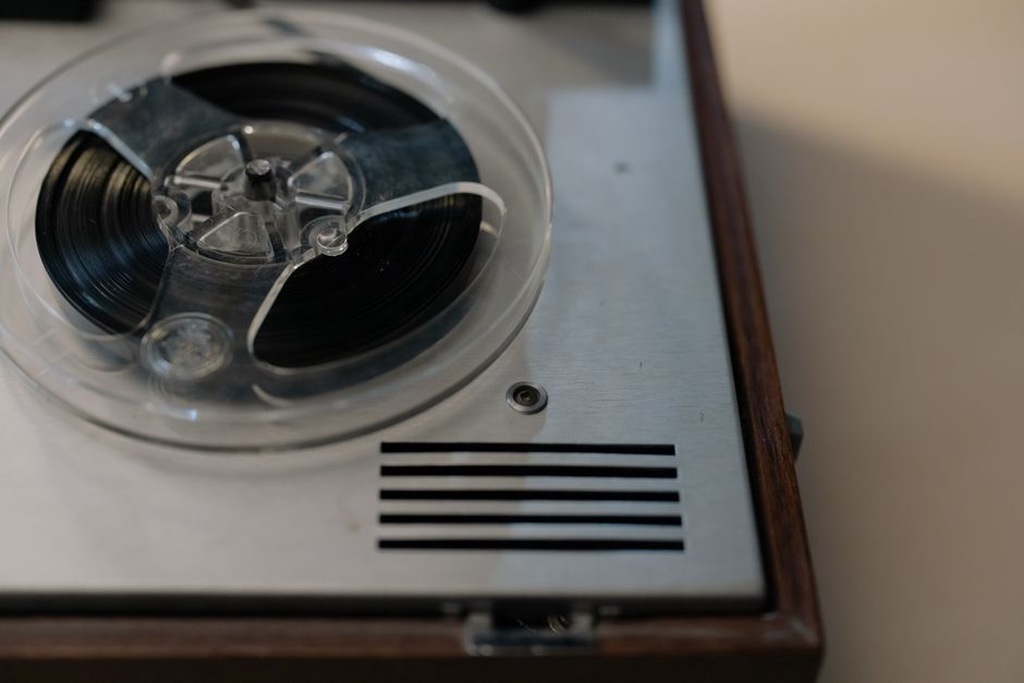
Magnetic tape made recorded sound movable. A phrase could be cut, reversed, looped, or set against one from another source. Those operations could leave traces: a brief interruption at a splice, a change in hiss, or a wobble in a loop played over and over. But a physical join was not always audible, and a well-maintained machine could be quiet. Tape matters here less for its supposed universal “warmth” than for the way an editing decision might be heard at the boundary it creates.
Japanese electroacoustic work developed alongside international tape-music practices. At NHK’s electronic music studio, established in the 1950s, composers had access to equipment for recording and manipulating sound as part of composition. That setting was far removed from later home-copying networks, yet in both, the recording surface could be heard. A studio collage might use a controlled timbral change to distinguish sources; a home dub might pick up an unintended drop in level. On its own, neither detail reliably identifies an era or a machine.
From source fragments to unstable objects
Outside the studio, turntables, radios, portable recorders, and reused tapes made other kinds of fragments available. In the 1980s, the Osaka group Ground Zero, led by Otomo Yoshihide, became associated with dense constructions built from turntables, sampling, and abrupt collisions between musical materials. Their work is one example, not a template for Japanese collage as a whole. Other artists favored long stretches of near-continuity or obscured the identity of their sources.
A turntable contributes more than the passage it plays. Surface noise, a skipping groove, or a sudden shift in speed changes how that passage behaves. Such traces can point to a particular playback event without telling you exactly which record was on the platter. The source becomes an unstable object, rather than just a quotation.
Sound collage also differs from field recording presented with little alteration. A train announcement or room tone may say something about a place, but cut against another recording, its original context becomes less certain. Even a burst of microphone handling noise might stay because it bridges two otherwise incompatible fragments. Its value comes from its placement, not from any claim that roughness is inherently more authentic.
What an artifact can tell you
- Hiss that changes suddenly may indicate a switch between recordings, though processing applied after the edit can produce a similar change.
- A repeated transient may reveal a loop point or serve as an intentional rhythmic element.
- Pitch drift may come from playback-speed variation, deliberate manipulation, or instability in the source recording.
- Clicks at a boundary can result from a cut away from a zero crossing; they are not proof of tape splicing.
Cassette copying and the shifting edge
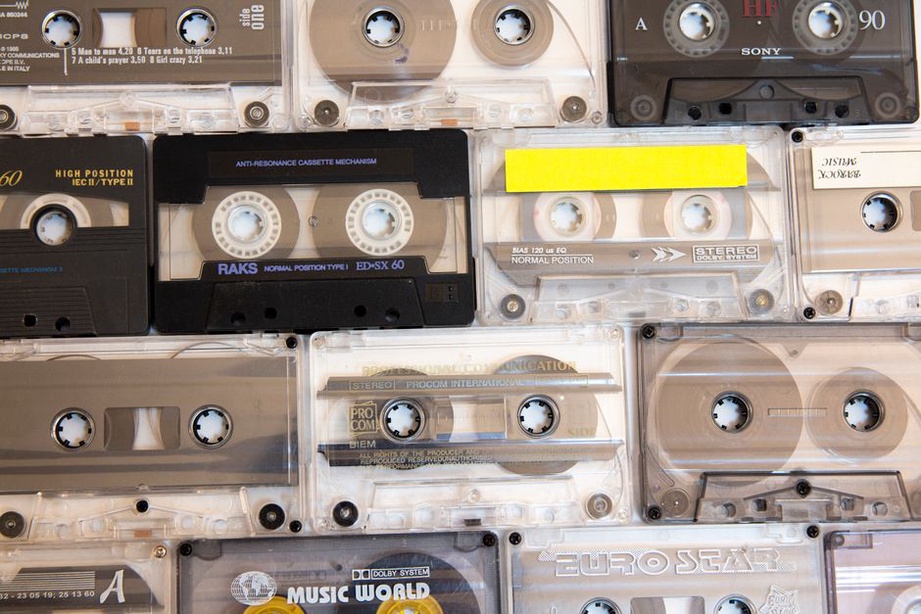
Cassettes made recording and exchange relatively accessible, but the sounds they added depended on the tape, deck, recording level, and number of copies. A dubbed collage could accumulate hiss, lose high frequencies, or develop brief dropouts. A damaged source beside a cleaner one might create an audible boundary without an explicit cut. In DIY circulation, listeners could hear different degrees of wear according to how each copy was made and played.
That complicates any judgment of a release. Noise on one cassette may not be present on the artist’s master; a clean digital transfer may not resemble what an early listener heard. Condition reports, photographs of the shell and insert, and details of the transfer chain can help distinguish chosen sounds from damage to an individual copy, though they cannot always settle it. When documentation is thin, describe where an artifact occurs and how it behaves before assigning intent.
Digital editing did not erase the seam
Digital tools make precise cuts and copies without adding tape hiss at each generation. They can leave other traces: clipping, clicks where a waveform changes abruptly, time-stretching smear, or the watery, granular sound of low-bitrate compression. None of these automatically makes a recording a collage. Compression may simply be a flaw in the file being heard; a rough digital edge may instead have been kept to interrupt a smooth sequence.
Sampling also changed the scale of assembly. A tiny fragment can repeat until it no longer sounds like a phrase from another source. Or a long, largely unprocessed recording can sit beside a short synthetic sound, with the transition becoming the strongest event. The issue is not simply whether the edit is hidden, but how much attention its edge draws. For more on the role of recording media in Japanese experimental music, see Japanese Experimental Music: Tradition, Noise, and the Medium.
Listening without mistaking every flaw for a choice
To examine a collage, follow an artifact through repeated passages. If a click returns at the same point in every loop, it is probably embedded in the repeated material or produced at the loop boundary. If it occurs only once on one copy, playback or transfer damage becomes more plausible. Listen to the background, too: a continuous bed of noise can mask a source change, while a sudden shift in noise floor can give it away.
These are clues, not forensic proof. A release may combine several generations of analog and digital material, and the same symptom can have more than one cause. When comparing editions or transfers, match a short passage at a similar listening level rather than assuming the louder version has more detail. At a suspected join, check the foreground sound, background hiss, and room ambience separately. If all three change together, a source boundary is a stronger explanation than it would be for a lone click.