
On Hiroshi Yoshimura’s Music for Nine Post Cards, a short synthesizer phrase returns with a slight change, then falls away. The space around each phrase lets you hear its timing and decay. This is quiet music, but hardly an electronic wash: the melodies stand apart. That difference is worth keeping in mind when listening to Japanese ambient music. Low volume tells you little about how a piece works.
The label covers music made for particular rooms, records meant to be heard at home, electroacoustic work, environmental recordings and pieces close to pop or installation art. Their histories and aims differ. Was a sound meant to occupy a space or command attention? Is an apparent background a recorded environment, a synthesized imitation or an arrangement of instruments? And what happens when music leaves its original setting for headphones?
Ambient as a use, not a national sound
Ambient music is often described in terms of attention: you can concentrate on it or let your attention drift without losing the piece altogether. But not every Japanese record sold under that label was designed as background music. Some reward close listening; others were commissioned for built environments. Some found an ambient audience long after they were made. The term is most useful when it describes a relationship among sound, duration and attention, rather than a shared national aesthetic.
One strand is kankyō ongaku, commonly translated as environmental music. Here, “environmental” need not mean a recording of birds, rain or traffic. It can describe music conceived in relation to an architectural or commercial setting, helping shape the experience of being there. The compilation Kankyō Ongaku: Japanese Ambient, Environmental & New Age Music 1980–1990 brought this history to a wider audience. Its broad title also gathers quite different approaches. A compilation is a starting point, not proof that every track served the same purpose.
The other labels need care too. “New age” may identify a period marketing category without saying much about a recording’s structure. “Minimal” could mean few notes, a restricted palette of timbres or change so slight it is easy to miss; those are different things. Neither Zen nor a presumed cultural preference for quiet explains a synthesizer patch, a production choice or a site-specific commission.
Two records, two kinds of intimacy
First released in 1982, Yoshimura’s Music for Nine Post Cards brings repetition down to a domestic scale. Its phrases are easy to remember, but their pacing avoids the drive of a song with verses and a climax. In the pauses, each returning note becomes more distinct. Yoshimura continued to explore music’s relation to surroundings on later records, including Green. Those records still deserve to be heard on their own terms, not as interchangeable examples of one style.
Satoshi Ashikawa’s Still Way (Wave Notation 2), also released in 1982, makes a useful contrast. Its instrumental sounds are carefully spaced, drawing attention to the edges of an event: how a note arrives, how long it remains audible, what another sound does before it fades. Ashikawa developed “wave notation” in connection with music intended to alter the experience of an environment. Listening at home cannot recreate an intended setting, but it does let you examine the album’s restraint closely.
These records often sit side by side in ambient histories. Play them consecutively and the category begins to loosen. Yoshimura’s recurring figures can give a room a gentle pace; Ashikawa’s gaps can make the distance between events feel acute. Neither effect requires the music to be barely audible or interchangeable with silence.
When the room becomes part of the work
Music conceived for a particular site changes when it leaves it. Through headphones, a track has no corridor, lobby or installation to share its sound field. Details once masked by footsteps or conversation may become clear, while the scale and social function of the original setting fall away. That is not a wrong way to listen. It is a different encounter.
Yoshio Ojima’s Une Collection Des Chaînons: Music for Spiral makes the distinction concrete. The album was connected to Spiral, a cultural complex in Tokyo; the title names that relationship. At home, you can follow its sequences and tonal contrasts. In a designed space, the sounds would instead meet changing positions, competing noise and people who had not chosen to sit down with an album.
Before calling a record “site-specific,” check what is documented. Was it commissioned for a location, played there or simply inspired by it? Were listeners expected to move through the space? Reissues and playlists can detach tracks from the notes and packaging that might answer those questions. For a closer account of how a built environment affects listening, Hearing the Seams in Japanese Experimental Music considers crossings among practices; with ambient music, the question of where a sound is heard is especially hard to set aside.
Beyond the quiet keyboard
The familiar picture of Japanese ambient—soft synthesizer, unhurried chords, little percussion—shows only part of the field. Midori Takada’s Through the Looking Glass, first released in 1983, builds intricate cycles from layered percussion. You can take in its motion as atmosphere, but the physical attacks and intersecting rhythms reward close attention. To call it ambient without mentioning the percussion is to miss the work that gives it shape.
Haruhisa Tanaka’s later recordings, and work by contemporary Japanese musicians moving among electronic composition, improvisation and installation, also resist a single historical playlist. “Japanese ambient” is a present-day tag across independent releases, not only a name for records from the 1980s. A musician might apply it to sustained tones, processed instruments or location recordings without claiming any link to environmental commissions. Release notes and the sound itself are better guides than cover art or platform categories.
At the noisier edge, the boundary between ambient and drone has less to do with loudness than with how a piece changes. A sustained tone can reveal beating frequencies, shifting harmonics or gradual changes in density. A field recording may use no instruments yet still present a carefully edited sequence of events. Electroacoustic pieces can alter an identifiable sound until its origin becomes uncertain. Our piece on Japanese electroacoustic music and its sources, circuits and spaces follows those questions more closely.
What to listen for within a track
Rather than asking whether a recording feels peaceful, find its smallest repeatable event. In a Yoshimura piece, it might be a short phrase; in a percussion-led work, a strike returning at a different interval. In a diffuse electronic track, perhaps a high tone briefly surfaces above a steady low layer. Once you have that reference point, listen to its return. Has the sound itself changed, or has everything around it changed?
Five useful listening cues
- Attack and decay: Does a sound begin sharply or fade in? Is its ending cut off, echoed or left to dissolve?
- Foreground and background: Which sound draws you in first? Can you hear another layer more clearly when you stop following it?
- Intervals between events: Are the gaps regular enough to create a pulse, or do they keep changing length?
- Recorded space: Does reverberation suggest a room, or does the sound seem unusually close and dry? The space you hear is not necessarily where it was recorded.
- Scale of change: Does the piece develop over seconds, over minutes or barely at all? A lack of dramatic events is not a lack of structure.
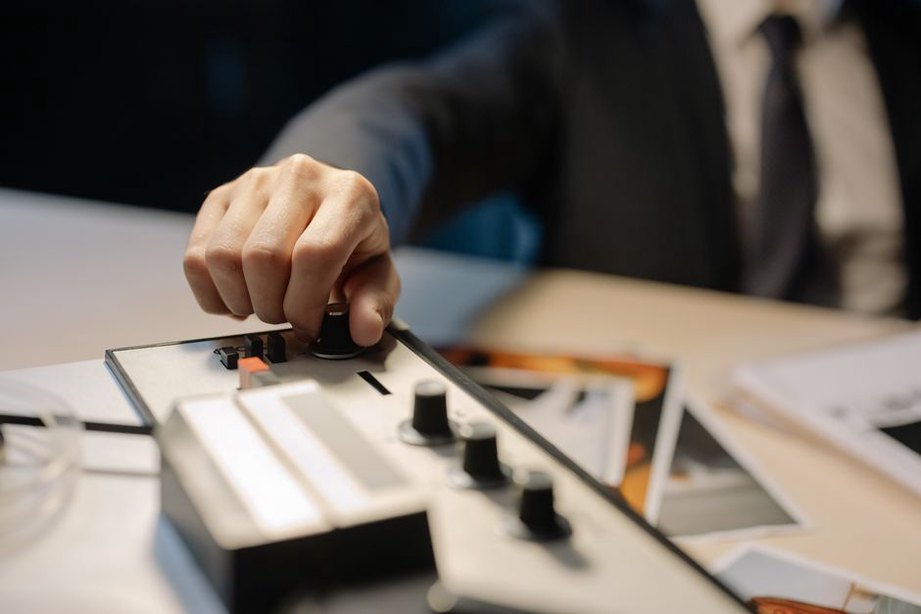
These cues help separate the composition from your playback conditions. At low volume, intricate overlaps may blur into a haze; too loud, music meant to sit lightly in a room can feel intrusive. Find a comfortable level at which quiet events remain audible, then leave the control alone when the texture thins. You will have a steadier basis for hearing the music’s own changes.

The recording is not the whole environment
Headphones help locate faint details, but they can exaggerate the separation of sounds that would mingle in a room. Speakers let sound interact with furniture, walls and everyday activity. That may bring some environmental work closer to its intended function, though it cannot reproduce a historical installation. Neither method is automatically more authentic; each lets you hear something different.
Format matters too, though not always as collectors expect. A transfer of an older recording may reveal tape hiss or level changes handled differently on another edition. There is no need to praise those features automatically as warmth or dismiss them as damage. Check release information when you can: a reissue may have a remaster, a new sequence or notes that affect how you understand a track. Rarity and packaging, meanwhile, say little about a record’s influence when it first appeared.
Streaming playlists make comparisons easy, but their sequencing can turn contrasting works into one continuous mood. If a track catches your ear, find where it sits on its original album. The surrounding pieces might alternate between dense and sparse textures, or trace a gradual shift lost when the track stands alone. For music associated with a location or installation, liner notes may also separate a documented commission from a later curatorial association.
A route through the records without flattening them
A useful starting sequence is Music for Nine Post Cards, Still Way (Wave Notation 2), Une Collection Des Chaînons: Music for Spiral and Through the Looking Glass. These are not four steps toward a definitive Japanese ambient sound. Each poses a different listening problem: melodic recurrence, the spacing of instrumental events, a record’s relationship to a named site and percussion that builds an enveloping pattern.
Give each recording one uninterrupted listen before comparing tracks. Then pick a short passage—two or three minutes will do—and note when sounds enter, repeat and disappear. On a second pass, listen for what stayed underneath. A simple record of timing will often tell you more than a first impression such as “calming,” especially when the interest lies in a small shift of rhythm or tone.
Keep those notes tied to what you hear. If a sustained electronic tone resembles wind, record the resemblance without declaring wind its source. If percussion sounds distant, distinguish that impression from a claim about microphone placement. The gap between sound and imagined origin is part of the pleasure here. With Still Way, try replaying one passage through speakers after hearing it on headphones. Mark where each note’s decay becomes inaudible. The room may move that point without changing a note of the recording.