
Press a contact microphone against a sheet of metal and a slight bend becomes a loud, detailed event. Onstage, it lasts seconds. On a recording, it can be replayed; in an installation, the material might respond to someone moving through the room. Calling any of these fine art changes nothing about the sound itself. It changes what we need to ask: Where does the work begin and end? What must be preserved for someone else to encounter it?
Japanese experimental music offers no single answer. Noise, ambient, drone and electroacoustic work move between records, live venues, galleries and artist-run spaces. One musician may treat a performance as an unrepeatable physical act; another may make speaker placement and architecture essential to a piece. The difference lies in the conditions under which the work exists, not in whether it is quiet, abrasive or academically composed.
When sound becomes an artwork
Start with the unit of attention. A track asks us to follow sound through time. An installation may also make distance, direction and our own movement matter. A performance brings bodies, instruments and decisions into view. These forms overlap, but they leave different evidence behind: recordings, scores, instructions, speaker diagrams or documentation of a particular event.
Japanese composer Tōru Takemitsu moved across artistic contexts early on. His work encompassed concert music, film scores and electronic experimentation; Britannica’s account of Takemitsu offers a concise introduction to that breadth. His career is no template for later noise artists. It does, though, challenge the neat division between music made for focused listening and sound made for images or spaces.
Fine art is a lens here, not a rank conferred when music enters a gallery. It draws attention to how a work is presented. An artist might require a recording to play through small speakers in a confined space; another might leave playback open to interpretation. Replacing the speakers could alter the first work. For the second, the recording may be its most stable element.
Noise is not automatically sculpture
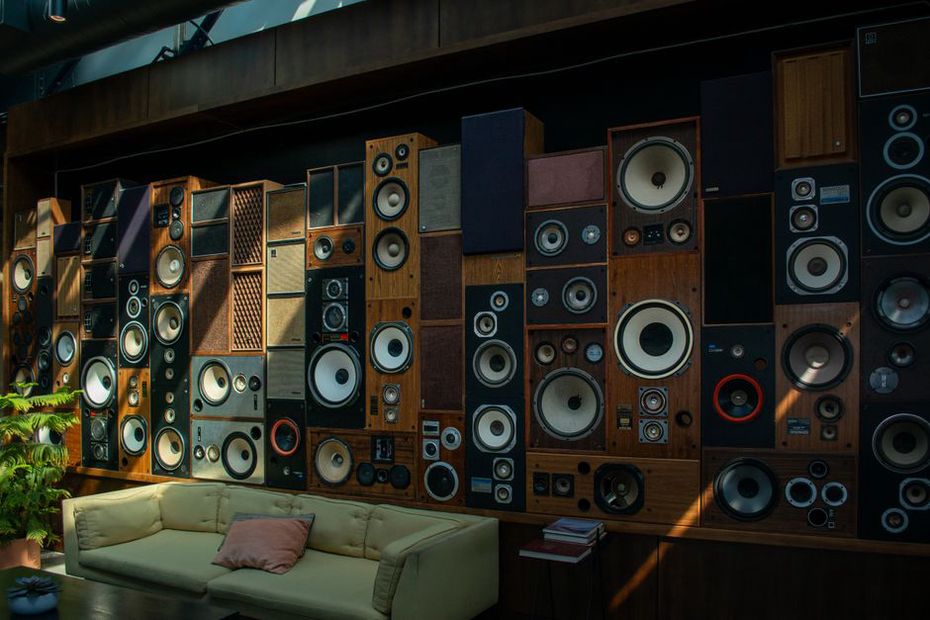
Merzbow, Masami Akita’s long-running project, often comes up when Japanese noise is discussed in the language of visual art. Its density can make shifts in frequency and texture feel almost tangible. But calling a recording a “wall of sound” does not make it sculpture. Viewers can move around a sculpture; a stereo recording conveys space through whatever system plays it. Both reward close attention, though they remain different media.
With a recording, ask what survives a change of setting. Does an abrupt cut hit as hard on headphones as it does on speakers? Does a low-frequency passage need the room to shake? Such questions tell us more about the work’s dependence on playback than a claim that noise is inherently immersive. They matter in galleries, too, where sound leaks into neighboring works and visitors may arrive halfway through a piece.
Keiji Haino’s performances expose another limit of art-object language. Voice, guitar and electronics can figure in his work, but a recording cannot fully convey the duration, physical presence and shared attention of a live event. Documentation matters; it is not a transparent substitute. An exhibition of performance-based music has to decide whether visitors meet the work itself, a trace of it or a new presentation built from that trace.
Three ways to identify the work
- Recording-led: the released audio is primary. Sleeve design, edition and playback medium shape its reception without necessarily defining the sound.
- Performance-led: timing, gesture and the circumstances of a specific event matter; audio or video captures only part of them.
- Site-dependent: speaker positions, acoustics, duration or visitor movement are specified closely enough that relocating the piece calls for decisions.
These are working distinctions, not permanent labels for artists. One person may make all three kinds of work.
The visual object and the circulating copy
Records and cassettes make sound collectable, but the objects can draw attention away from listening. A handmade sleeve, photocopied insert or altered tape case may be an integral artistic choice. It may just as readily be a practical solution to making a small release with limited resources. An unusual appearance alone cannot settle the question.
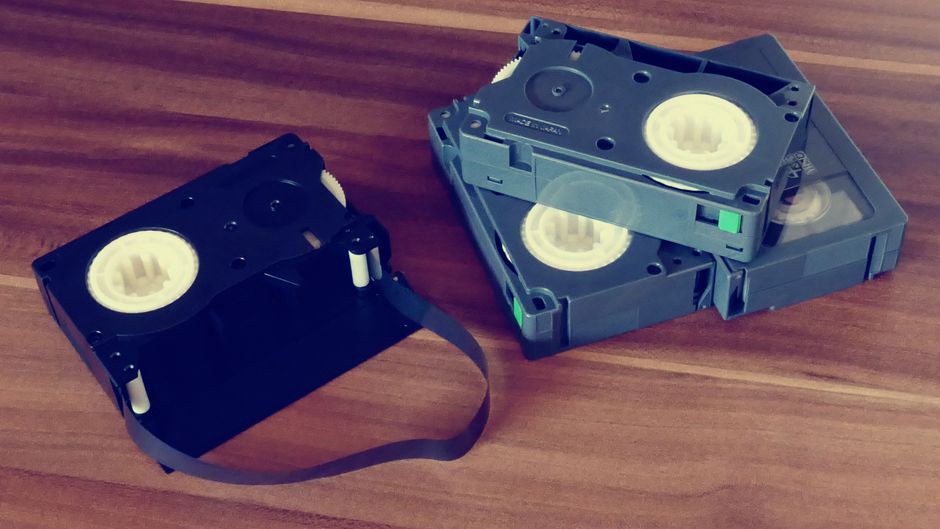
For collectors and archivists, the difference matters. A tape may preserve a performance while its insert records who assembled and circulated it. An unsigned cover is not proof that the artist intended anonymity. A later digital transfer can make the audio accessible yet lose information about sequencing, packaging or where each cassette side ends. Japanese Noise Recordings as Cultural Memory considers what recordings retain and what their histories still require us to establish.
Collections face the same problem. A display copy can protect an original cassette, but the label should say whether visitors hear the original medium, a transfer or a newly prepared mix. Photographs of equipment arranged in a room document an installation; they may not tell anyone enough to rebuild it.
What galleries can clarify—and obscure
A gallery can give a long, quiet work room to unfold without the demands of a concert set. It can also tempt visitors to hear every accident as intentional. Footsteps, ventilation and sound from neighboring installations affect the experience; that does not automatically make them part of the composition. An exhibition description should make clear whether the piece has a fixed duration, loops, responds to visitors or is performed at scheduled times.
A short label can answer four practical questions:
- Are visitors hearing a recording, a live signal or sound generated in the room?
- Which parts of the setup did the artist specify?
- Is the piece meant to be heard from one position or while moving?
- How does the audible work relate to any objects on display?
These details help visitors without flattening the differences between a noise performance, an electroacoustic recording and a site-specific installation. Before putting a cassette beside a listening station, check the side order of the playback copy. A transfer that joins both sides removes the moment when the listener had to stop, turn the tape over and begin again.