
On Sachiko M’s Bar Sachiko, a sine wave can seem so exposed that you notice the hum in your room before you notice a change in the recorded tone. The piece works with silence without relying on much literal silence: with so little else competing for attention, the playback space becomes part of what you hear. Turn the volume up carelessly, though, and that exposed tone can become physically uncomfortable.
“Silence” is a loose label for Japanese ambient and experimental music. It might refer to a compositional pause, a barely audible electronic signal, a low noise floor, or an invitation to hear what is happening beyond the speakers. Each asks something different of a listener. Looking at particular works reveals less of a national aesthetic than a set of ways to direct attention.
What remains when almost nothing is playing?
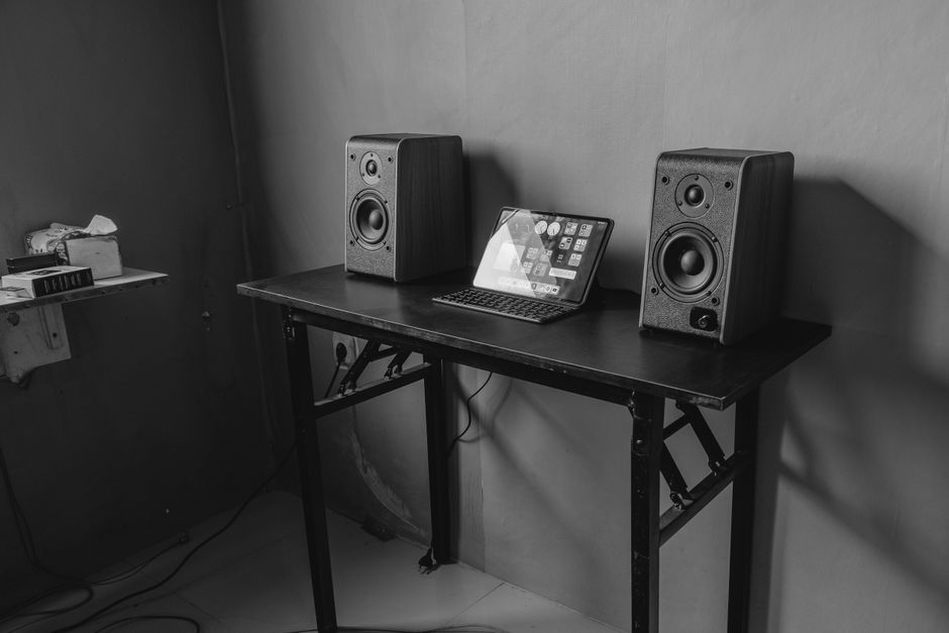
Quiet sound is not empty time. It still has pitch, texture, and duration; an interval without a note changes your expectation of when the next event might come. Neither gives you acoustic silence in an ordinary room. Ventilation, traffic, bodily movement, and playback equipment fill the gaps. Headphones change the balance rather than erase it: they shut out some external sounds while bringing breathing, cable noise, or the electronics themselves closer.
Artists working near ambient, drone, and electroacoustic music use those conditions differently. Some make environments that are easy to inhabit. Others strip the signal back until you are unsure whether you can hear it at all. Calling both approaches “calming” misses the distance between a welcoming space and an uncertain one.
Hiroshi Yoshimura: a room need not disappear
Hiroshi Yoshimura’s Music for Nine Post Cards, released in 1982, is a useful place to start. Its repeating keyboard figures and unhurried pace invite sustained listening without demanding that you follow every note. The music can coexist with ordinary activity, but it is not interchangeable with the room’s sound. Turn your attention back to the recording and small shifts in a phrase come into focus.
Green, first released in 1986, is more densely furnished. Its synthesized colors and recurring melodic shapes give the ear several layers to follow rather than a blank backdrop. Where Music for Nine Post Cards seems to leave space between objects, Green puts more things in that space. Both give the listener some freedom to choose where to focus.
Yoshimura is often grouped under kankyō ongaku, commonly translated as environmental music. The term points to a conversation about music and its setting, but it can make individual works sound like décor. Music that accommodates a room can still unfold in a carefully shaped sequence. You have to listen past the first impression of softness to hear it.
Sachiko M: the signal, the pause, the listener
Sachiko M’s sampler work, often pared back to pure sine-wave tones, approaches quiet from another direction. There is little harmonic cushioning around an event. A tone may seem static, yet its effect changes with its level, its length, and the pause around it. On Bar Sachiko, released in 2004, that austerity draws attention to small differences in the room—and to the experience of waiting.
A sine wave is not necessarily gentle. At some frequencies and volumes it can be piercing; at lower levels it may mingle with room or equipment noise. Volume is part of the listening situation, not a test of commitment. Start softly, especially with headphones, and resist turning the level up sharply to catch a faint passage. The next tone may be much more present.
Sachiko M’s association with onkyō, the improvisational scene linked to Tokyo’s Off Site venue, also troubles the idea of silence as a private retreat. In small-scale improvisation, sparse sound exposes the decisions of other performers. Without a dense musical bed, each contribution can change how the group hears the room and one another. The discussion of disciplined listening in Japanese experimental music gives that attention a wider context; it is not merely an ambient production technique.
Toshimaru Nakamura: hearing a system at work
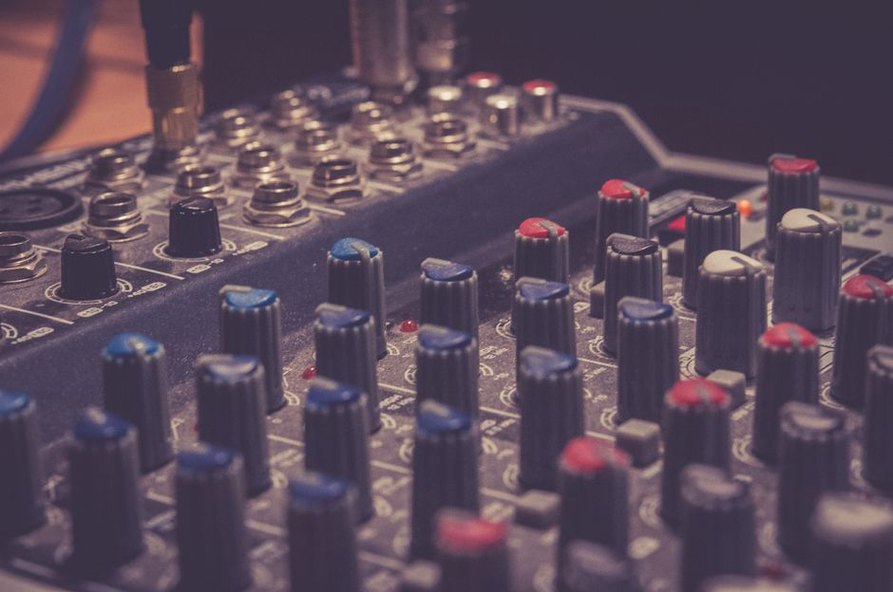
Toshimaru Nakamura’s no-input mixing board makes a different case against the idea that quiet music lacks friction. Instead of mixing incoming instruments, he routes the board’s outputs back into its inputs. The feedback produces whistles, pulses, crackles, and unstable tones. Adjusting gain or routing changes a live electronic system, not just the quality of a sustained note.
Nakamura’s work can be loud and abrasive, so it does not fit neatly under ambient music. In its subdued passages, though, the apparatus becomes easier to hear. A faint texture shifts or vanishes, and the ear registers the changing state of a circuit as well as a performer’s gesture. Silence is not some natural condition waiting beyond the equipment. It makes the equipment’s activity perceptible by contrast.
That distinction matters on recordings of improvisation. A brief quiet interval could be a chosen pause, the result of someone adjusting a control, or a signal dropping below what your playback system can reproduce. Without a score or firsthand account, assigning every gap a definite meaning would be guesswork. Close listening does not require that certainty.
Akio Suzuki and the sound outside the work
Akio Suzuki treats the surrounding environment as something to hear, not interference to shut out. His Oto-date project marks places where a person is invited to stop and listen. The marker promises no particular sound. It sets up a moment in which sounds that usually pass unnoticed might become apparent; what you hear depends on the site and the time.
It is a counterpoint to the assumption that an ambient layer must be composed and played through speakers. A marked listening point has no fixed mix. Distance, weather, human activity, and your position all change its contents. The result is not automatically peaceful: machinery, voices, or an uncomfortable acoustic boundary may be as present as birds or wind.
A recording introduces another limit. A microphone selects a position; someone on site can turn, walk, or wait. A field recording preserves an interval for later attention but cannot preserve every choice available at the location. The field notes on recording the Japanese city and its ethics consider that gap between captured sound and lived place. Suzuki’s invitation remains dependent on where—and when—someone accepts it.
Ryoji Ikeda: near-silence is not always comfortable
Ryoji Ikeda’s +/-, released in 1996, uses precisely organized frequencies and contrasts. Some passages make fine differences at the edge of audibility the focus; others bring in sharper signals. Ikeda is often discussed in terms of sound art and electronic minimalism rather than ambient music, and the distinction matters. A sparse surface need not offer rest or work as background.
What reaches the listener also depends on playback. Age-related differences in hearing, speaker response, compression, and room acoustics can all affect high frequencies. Two people may hear markedly different balances in the same recording without either being inattentive. To describe the work only as empty is to overlook the frequencies that give its gaps their force.
Three ways to hear an ambient layer
These artists do not form a single school of silence. One way to hear the differences is to ask what each work leaves exposed:
- Composition within a room: Yoshimura’s recurring figures can share attention with the setting while keeping their own shape.
- A signal against a pause: In Sachiko M’s sparse work, timing and level carry unusual weight.
- A listening condition: Suzuki’s marked sites draw attention to sounds no recording can specify in advance.
Nakamura’s circuitry and Ikeda’s frequency work complicate those categories. One exposes the instability of equipment; the other tests what the ear and playback system can resolve. Both also mark a limit to the word “ambient”: a piece can give silence a structural role without sitting comfortably in the background.
Checking what the playback space adds
You can test part of the distinction at home. Play a short, quiet passage through speakers at a moderate level. Pause without moving and notice which hums or outside sounds continue. Then replay it, listening for the point where a recorded tone enters or leaves. This will not disclose every production choice, but it can keep the room’s steady noise from being mistaken for a deliberate drone.
With Music for Nine Post Cards, try it during a repeating figure rather than at the end of a track. The keyboard phrase returns; the sound between its notes may not all belong to Yoshimura’s recording. That boundary is where the music and the room meet.