
Seven is an awkward number. It does not divide neatly into two, three, or four. It resists the binary logic that underpins most Western musical notation — the even bar, the symmetrical phrase, the downbeat that returns like a heartbeat. In the world of Japanese experimental and underground music, where tape loops decay unpredictably and field recordings capture the unquantifiable, seven often appears not as a mystical quantity but as a deliberate structural irritant. It is the number that forces a skip in the gait, a crack in the grid.
This is not a numerology article. This is about practical decisions made by musicians and label operators who worked with limited means — four-track cassette recorders with three working tracks, secondhand drum machines that only offered odd time signatures, or simply the desire to make something that felt slightly off. The number seven shows up in three distinct areas: time signatures and rhythmic cycles, track counts on limited-edition cassettes, and the duration of pieces that refuse to resolve on a comfortable downbeat.
Let us start with rhythm. The most obvious appearance of seven is in 7/4 or 7/8 time. In Japanese noise and drone, strict time signatures are often dissolved into texture, but when rhythm is present — on early Merzbow tapes, on Hijokaidan recordings, on the more percussive side of the Kansai noise scene — the choice of an odd meter functions as a deliberate sabotage of the listener’s internal pulse. A 7/8 pattern, played at high tempo on a distorted drum machine, does not roll like 4/4. It lurches. The accent falls on the first beat, then the fourth, and the grouping (3+2+2 or 2+2+3) creates a micro-hiccup every two bars. For a genre that deals in overload, this irregularity prevents the body from settling into a trance. You are kept alert, slightly off-balance, waiting for a downbeat that never comes as expected.
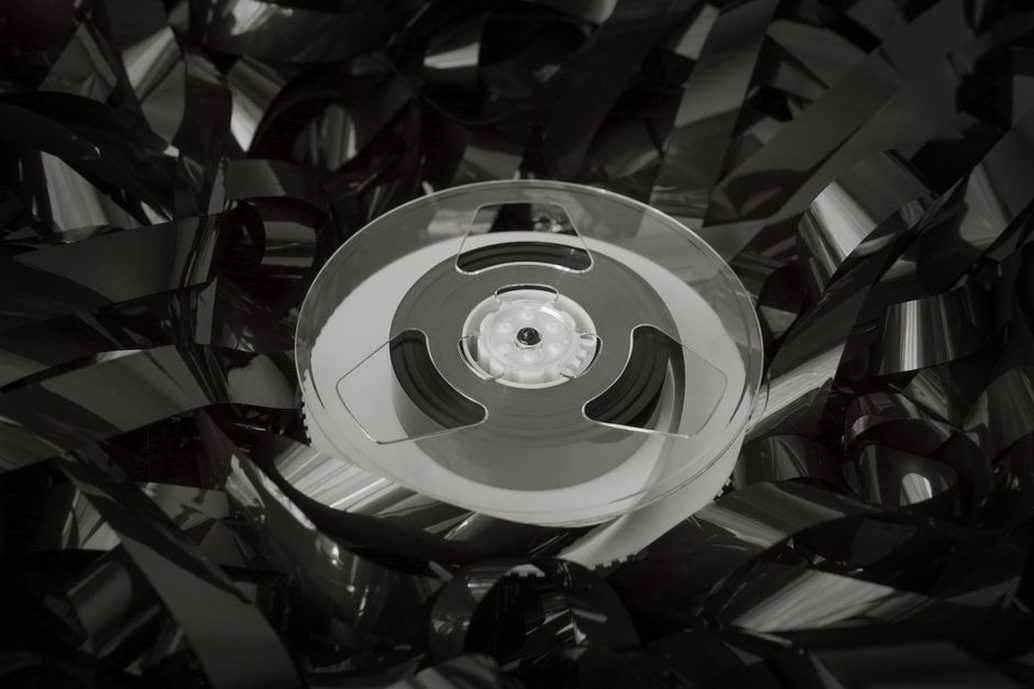
On the ambient and drone side, seven appears differently. It is not the meter but the duration of a piece or the number of repetitions in a loop. A drone track lasting exactly seven minutes and seven seconds, or a loop that cycles through seven harmonic layers before returning to the root, creates a duration that feels intentionally unresolved. Seven minutes is long enough to induce a shift in perception but short enough that the listener cannot fully habituate. The ear waits for the eighth minute — the resolution, the fade, the logical endpoint — and instead the piece stops, or loops back to the beginning without a cadence. This is a compositional choice that borrows from the aesthetics of the "incomplete form" found in some Japanese traditional music: the idea that a piece does not need to return to a tonic, that it can simply cease.
Labels operating in the cassette underground often used seven as a constraint. A C60 cassette holds roughly 30 minutes per side. A C90 holds 45. But a C74 — that oval oddity — holds exactly 37 minutes per side, and some Japanese DIY labels deliberately sought out these non-standard lengths for specific releases. Seven tracks per side, each averaging around five minutes, became a structural template: not enough for a full album statement, too many for an EP, but precisely the quantity that forces a listener to flip the tape at an unexpected moment. The track list on a seven-track cassette does not break neatly into halves. The artist must decide which track sits at the center, and that center track — track four, if we count from one — is never the climactic piece. It is usually the most asymmetrical, the longest, or the most abstract. It is the track that destabilizes the A-side/B-side symmetry.
The number seven also appears in the catalog numbers of several key labels. This is not a coincidence of counting. When a label releases its seventh title — as with the early runs of the 004tt series, or the later 008tt and 012tt imprints — the number seven often marks a shift in approach. The seventh release is rarely a debut; it is the point where a label has defined its sound and begins to subvert it. Look at how 004tt handled its seventh release: it was a split cassette that paired two artists who had never appeared on the label before, in a format (one long track per side, no metadata on the shell) that forced the listener to disambiguate the content without labels. The number seven becomes a threshold, a moment where the label refuses to repeat itself. The same structural logic applies to 008tt's seventh title, which was pressed on a transparent shell with no track listing — an invisible document that required the listener to decode the duration of silence between pieces to understand where one ended and the next began.
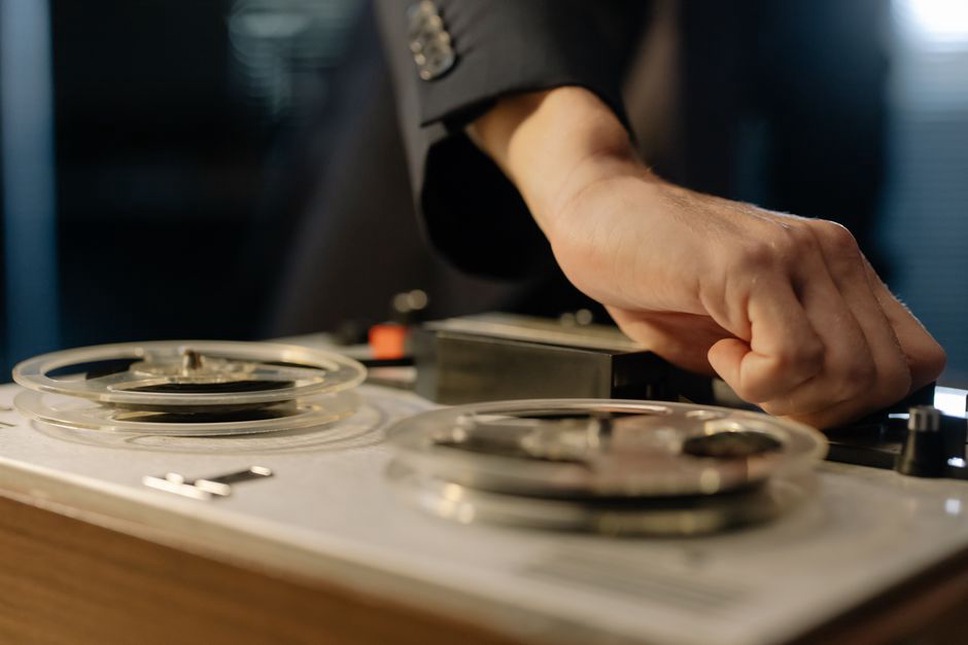
In the realm of field recording and electroacoustic composition, seven often governs the number of microphone placements or the number of layers in a mix. A common technique among Japanese sound artists working with binaural or contact microphones is to record seven discrete sources — a metal gate, a water pipe, a concrete floor, a plastic sheet, a wooden plank, a glass bottle, and a pile of gravel — then mix them so that each source appears only in a specific frequency band. The result is a composite texture that no single microphone could capture. Seven is not arbitrary here: it is the smallest number of sources that reliably produces a frequency spectrum dense enough to avoid holes, yet sparse enough that each source remains identifiable. With fewer than seven, the mix feels thin. With more, it becomes mush. This is empirical knowledge, not mystical.
Collectors of Japanese underground cassettes will also recognize seven as a recurring quantity in edition sizes. While most limited runs are 100, 50, or even 30 copies, some label operators deliberately chose 77 or 74 copies — numbers that end in seven. The significance is partly practical (a run of 77 is cheaper to duplicate than 100 but still feels legitimate) and partly aesthetic. A tape with an edition of 77 copies is more collectible than one with 100, not because it is rarer by much, but because the odd number signals intentionality. The label thought about quantities. They did not simply press the minimum viable run. They chose a number that would leave seven copies unsold, or seven copies for trade, or simply a number that looks good on the spine of a collector's shelf.
There is also the matter of silence. In the context of live performances — particularly the "no input mixing board" technique pioneered by Toshimaru Nakamura and others — a piece often unfolds in seven distinct sections: introduction, three developmental phases, a breakdown, a silence, and a coda. The silence is never the center; it is placed at the seventh position, so the piece does not end on the silence but after it. The silence becomes a structural element that is not the climax but a pause that resets the listener's attention. The number seven here mimics the asymmetry of memory: we remember events not in equal intervals but in peaks and gaps. Seven segments, with one gap, feels more natural than eight segments with none.
For the practicing musician reading this — whether you work with tape loops, contact microphones, or software — the practical takeaway is not to fetishize the number seven but to recognize it as a tool for breaking out of binary habits. If your compositions always fall into even phrases, try forcing a structure that requires seven events before a repeat. If your field recording mixes always use four or eight layers, try seven. If your cassette releases always have six or eight tracks, try seven. The asymmetry will force you to make different decisions about pacing, density, and silence. It will not make your work "Japanese" or "experimental" in any superficial sense, but it will introduce a constraint that your ear has not yet automated.
Seven is not lucky in Japanese culture — the word shichi does not sound like death the way shi (four) does, but nor does it carry the auspicious associations of seven in the West. It is simply a number that does not fit. In a music scene built around the cassette — a format defined by its finite duration, its two sides, its limited-edition runs — seven is the number that refuses to settle into the binary. It is the crack in the shell, the splice in the tape, the track that runs seven seconds longer than the rest for no reason the listener can identify. That is precisely why it matters.