
On Deep and Quiet (1999), Sachiko M lets a sine wave sound long enough for tiny shifts in pitch and volume to register as events. She uses a sampler, though not for the sounds a listener might expect from one. The decisive choice is what to attend to in the instrument—not a new machine, and not an old sound reproduced intact.
That distinction helps when tracing relationships between generations of Japanese experimental music. A feedback circuit, portable recorder or acoustic instrument can pass between musicians without keeping the same meaning. The questions change: How much control should a player exercise? What should a recording preserve? Where does the composition end and the room begin?
A timeline with several starting points
There is no single line running from a traditional art to present-day noise. Postwar composers working with electronic technology, jazz musicians drawn to free improvisation, performers investigating amplified objects and artists releasing recordings outside major-label channels developed different practices. Their paths sometimes crossed, but they did not share one origin or one audience. A resemblance between two works is a reason to investigate a connection, not proof of direct influence.
It is more useful to follow a specific operation than to search for a timeless national sound. Is the musician sustaining a tone, exposing a machine’s unwanted behavior, treating silence as part of the performance, or making the recording format part of the work? Such choices can recur decades apart and serve very different aims.
Electronic sound before the independent circuit
Tōru Takemitsu’s Water Music (1960) is an early example of tape composition in Japan. Its manipulated recordings of water show that recorded sound could be composed rather than merely documented. The piece does not predict the later underground; a composer working with tape occupied a very different setting from a small-room improviser handling a recorder. What they share is a possibility offered by playback: an everyday sound can be cut, repeated and heard closely.
By the late 1960s and early 1970s, Group Ongaku and Taj Mahal Travellers had opened other routes into experimental sound through improvisation. Their approaches do not form a tidy school. Each, in its own way, lets form emerge over time from players, equipment and surroundings rather than from a score alone. Later electronic improvisers could work with that proposition even when their instruments and venues were different.
What can travel between generations?
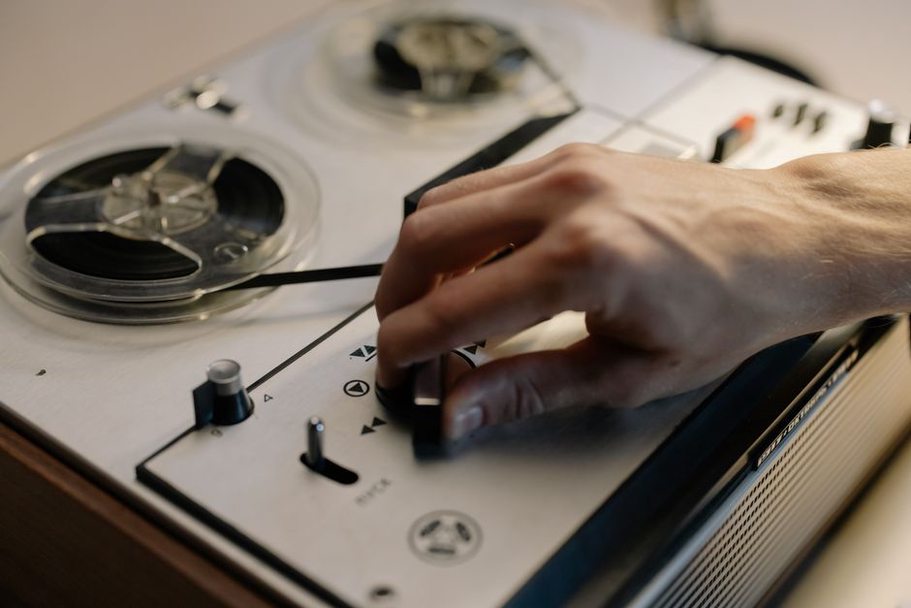
Equipment is the most visible connection, and often the least revealing. The presence of an analog synthesizer in two studios tells us little until we hear what its operators do. One performer may hold a pitch steady; another may push the circuit toward instability. A microphone can reproduce a source clearly or bring handling noise, electrical interference and room acoustics forward. What gets passed on may be permission to make a by-product the main event.
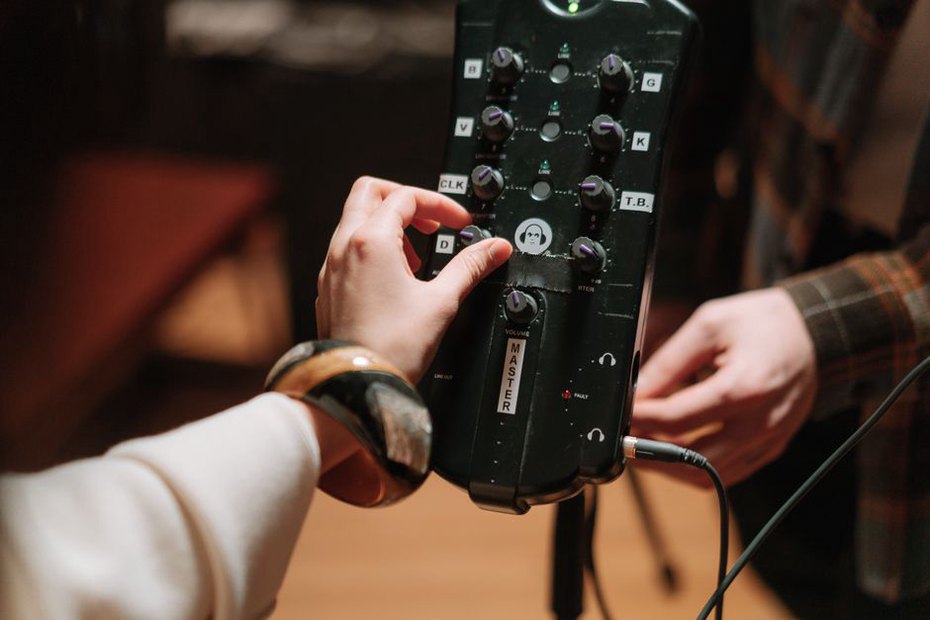
Consider feedback. In Merzbow, Masami Akita’s long-running project, dense distortion and feedback can shift rapidly within what first sounds like a solid wall. Toshimaru Nakamura’s no-input mixing-board performances use a different setup: he connects a mixer’s outputs back to its inputs, creating a system he adjusts in real time. These are not versions of one recipe. The comparison asks where change happens—in a mass of noise, or in a circuit with no conventional sound source plugged into it.
Improvisational habits travel too, though musicians may put them to opposing ends. Guitarist Keiji Haino has worked solo and in groups including Fushitsusha, drawing on rock volume, extended technique and long-form improvisation without settling into one genre. Sachiko M’s sustained tones can seem almost opposed to that intensity. Yet both ask us to hear duration: when a sound enters, how much pressure it maintains, and when a change becomes perceptible. The label “Japanese experimental” tells us less than that difference in how each handles time.
Continuity does not require imitation
A musician can take up a problem posed by an earlier practice while rejecting its sound. A postwar tape composer’s ability to isolate a fragment has no straightforward stylistic equivalent in a live no-input mixer set. Both, however, test what happens when a medium stops acting like a transparent carrier. An artist using a portable recorder need not evoke Takemitsu to make changes to recorded sound central to a piece. That is a more precise connection than a chain of influence asserted without evidence.
The present changes how the past is heard
Earlier recordings rarely reach new listeners under their original conditions. A tape work may now arrive as a digital file; a live improvisation survives as an edited recording; a cassette may be digitized with its hiss, dropouts and level changes intact. Each transfer affects access and, potentially, interpretation. A low-frequency passage that felt forceful in a venue may seem restrained on small speakers. Headphones may bring a quiet detail forward.
This matters for Japanese noise, whose reputation for extremity can obscure differences in pacing, restraint and dynamic range. Loudness alone does not explain why one recording feels continually volatile while another stays near a fixed level. The relationship between silence, pressure and recorded evidence is examined more closely in Silence, Pressure, and Evidence in Japanese Noise. Formats do not deliver the past unchanged; they affect what remains audible.
Reissue notes, release credits and surviving documentation can establish dates and personnel, but they cannot recreate every circumstance of a performance. Nor does a present-day similarity in timbre establish that an artist heard a particular predecessor. For collectors and researchers, that limit is useful. “These works handle sustained sound differently” may be both more defensible and more illuminating than an unverified lineage.
Where a familiar sound becomes a new proposition
Some of the most interesting connections involve instruments with recognizable histories. In Otomo Yoshihide’s turntable work, the device is not a neutral playback machine. Scratches, feedback and interrupted playback bring its workings forward. We hear both a trace of recorded sound and the action disturbing it now—a different relationship to the past than treating archival audio as a nostalgic object.
Electroacoustic practice offers another case. An environmental recording may retain clues to a location, while filtering, spatial placement or juxtaposition makes those clues less certain. The past may be the recorded moment itself, heard later through a different system. Rather than asking whether the sound is “authentic,” ask which parts of the original event remain recognizable and which the work makes harder to place.
That helps explain how apparent opposites can share a scene without merging into a style. A sustained electronic tone, a burst of feedback and a recorded ambience can each shift attention away from melody toward thresholds, changes in density or the listener’s position. They are not interchangeable. Their sources and degrees of performer control differ, as do their ethical stakes—especially when a recording captures people or a place beyond the performer.
How to compare works without flattening them
A short listening comparison can reveal more than a sweeping claim about tradition. Choose two works from different periods and keep one question steady, without expecting the same answer:
- Identify the source: Is the audible material generated by an instrument, a feedback loop, a recorded event or some combination?
- Track the performer’s intervention: Listen for cuts, level changes, gestures and stretches when the system seems to run with little audible adjustment.
- Mark changes in scale: Does the piece move through distinct sections, or do small variations carry its form?
- Check the release context: Distinguish a composition from a live recording, and an original issue from a later transfer or reissue.
Take Takemitsu’s Water Music and a Sachiko M performance. Instead of calling both minimalist or arranging them in a story of succession, listen for what counts as an event. In the tape piece, familiar recorded material becomes available for manipulation. With a held sine wave, a slight change in tone—or in the noise around it—may take on that role. The comparison finds a shared concern with attention without overlooking their different materials and circumstances.
For noise, compare the openings of two pieces before considering their loudest passages. Does sound arrive abruptly, gather in layers or begin so quietly that background noise competes with it? What happens when the level drops? The sequence can tell you more about an artist’s decisions than a genre label, and it resists treating every abrasive recording as evidence of the same intention.
Networks preserve ideas imperfectly
Artists do not inherit practices only by listening to canonical records. They meet through performances and collaborations, and through labels and the practical work of making recordings available. Small editions can preserve a performance that might otherwise disappear, but their information may be incomplete. Credits can be sparse; a date on a later issue may mark publication rather than recording. Those gaps are reasons to separate what the object tells us from what we infer by ear, not invitations to fill them with invented history.
The same caution applies to stories that cast the past as heroic and the present as derivative. Earlier artists faced limits of access, money and available technology; present-day artists face constraints of circulation and attention. Neither period has a monopoly on risk. An old device used in a new way can matter precisely because its familiar function makes the departure audible.
Try writing a comparison in two columns: what is documented and what is heard. Put a release credit or recording date in the first; observations about tone, pacing and audible intervention in the second. If “artist B was influenced by artist A” fits neither, leave it open. You can still describe the moment when each work makes the listener hear the medium itself.