
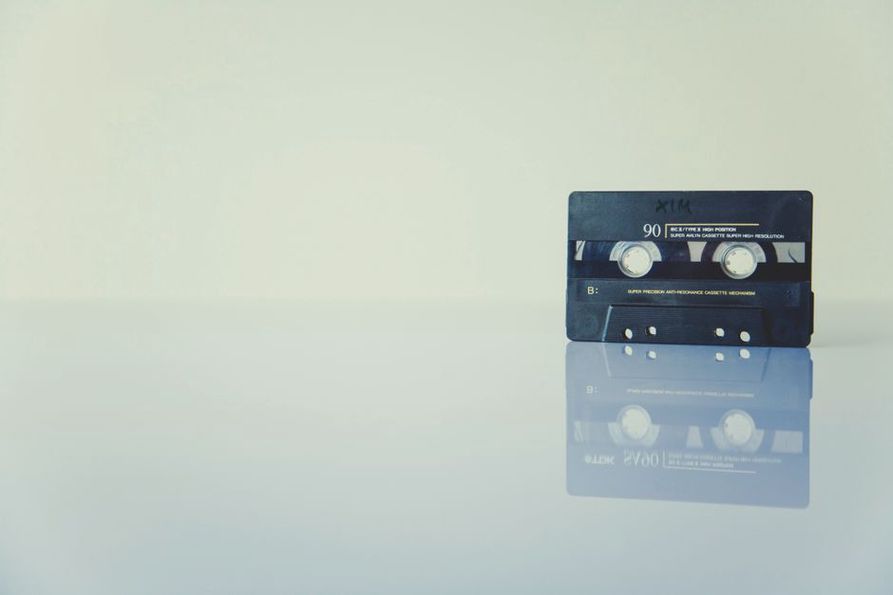
A cassette can look slight: two short programs, a hand-assembled J-card, perhaps an edition number written in pen. That modest scale is often what allows a Japanese underground project to exist without the expense and expectations of vinyl, formal distribution, or a conventional album cycle. For noise, drone, ambient, field recording, and electroacoustic work, tape is more than a nostalgic container. It can determine a piece’s duration, preserve a rough mix, support local exchange, and make a small artistic statement physically available.
The renewed visibility of cassettes is not a simple return to an earlier format. Japan has never had a single, unified cassette underground. Current activity connects artists across cities, home studios, small venues, mail order, online platforms, and international correspondence. What persists is the format’s practical usefulness: an inexpensive, editable, compact medium that can circulate alongside digital files rather than compete with them.
Why the cassette remains workable
Vinyl is costly to manufacture, requires long lead times, and can impose practical limits on quiet or extended material. Compact discs remain useful, particularly for high-resolution audio and longer works, but they lack the cassette’s immediate handmade quality. Tapes can be duplicated in small runs, assembled by an artist or label, and adjusted between batches. That matters when a release grows out of unstable electronics, changing tape loops, one-off performances, or recordings still being tested in public.
Its restrictions are not neutral. Side A and Side B force a sequencing decision. The limited duration of a cassette encourages either a concentrated document or a sustained listening environment. Mechanical noise, head alignment, hiss, and minor speed variation may become part of the work—or simply remain conditions of circulation. Not every flaw deserves romantic treatment: poor duplication and deteriorating tape are not automatically aesthetic choices. Still, many experimental artists know the medium well enough to work with its coloration, compression, and unevenness.
For a small label, tape can connect design and sound without turning packaging into luxury merchandise. A folded insert may include recording notes, a score, a contact address, or a brief statement of method. The object then functions as documentation: it identifies a collaboration, records a place or date when the artist chooses to disclose it, and gives a fragile digital-era release a physical point of reference.
Resurgence is not the same as revival
Calling the present moment a “revival” can hide the format’s continuity. Cassettes remained part of Japanese independent music well after their peak as a mass-market listening medium. Their scale and visibility changed, but the basic practices—small editions, direct exchange, event tables, and mail-based circulation—never disappeared completely. Contemporary cassette culture adds digital storefronts, social media announcements, international shipping, and file-based mastering workflows.
This hybrid arrangement helps explain why tapes still circulate despite the convenience of streaming. Digital access lets a listener hear an artist immediately; a cassette can place a particular version of the work in a collection, on a performance table, or in a personal archive. The two forms often work together. A download may provide a lossless version while the tape presents a sequence and material design chosen by the artist or label.
That division matters in underground music, where discovery rarely depends on major media channels. A listener might hear a short clip online, learn of an event through a flyer or post, and find a tape at the show. The physical release becomes evidence of a temporary network: people who performed, organized, recorded, duplicated, designed, and exchanged music at a particular time. It does not prove that a scene is coherent or large, but it can preserve traces that algorithmic platforms flatten or lose.
What the tape changes in experimental sound
Different practices use cassettes in different ways. Describing all tape-based work as “lo-fi” overlooks the specific decisions involved.
Noise and abrasive electronics
For noise artists, cassette saturation can reinforce density, blur transients, and soften the hard edge of digital clipping. Some may want that result; others master carefully to avoid it. The question is not whether a tape sounds “raw,” but whether its limitations are audible in a way that serves the piece. A work built around sharp feedback events may demand cautious level setting, while a dense wall of sound may be less vulnerable to modest variation in playback.
Ambient and drone
Long-form ambient and drone can benefit from the cassette’s invitation to hear a side as a bounded duration. The listener turns the object over and accepts an interruption that can become part of the form. Slow material also exposes the medium’s behavior: low-level hiss, slight pitch drift, and the differing tonal balance of individual decks. These qualities can create intimacy, but they can also obscure delicate detail. Artists using very quiet passages need to decide whether the tape’s noise floor is integral or obstructive.
Electroacoustic work and field recordings
For electroacoustic composition or location recording, a tape edition may function as a document of process rather than an archival master. Original high-resolution files should be preserved separately. The cassette can be a distinct listening object with its own sequence, level decisions, and notes. Keeping that distinction avoids a common archival mistake: treating the distributed consumer copy as the only version worth retaining.
The ethics of recorded sound do not change with format. A cassette sleeve does not make recordings of people, ritual activity, private spaces, or vulnerable environments automatically acceptable. Context, consent, and the decision to withhold precise location data can matter more than an attractive physical edition.
Small labels as infrastructure, not just brands
A cassette label is best understood as a set of tasks. It may select work, coordinate mastering, source shells, duplicate tapes, prepare artwork, keep inventory, sell copies at events, mail orders, and maintain enough documentation for listeners to identify what they own. One person may handle all of this; a collective may divide the work; an artist may run a label for one project only.
That labor is easy to overlook because the final object is small. A label’s credibility often rests less on visual consistency than on clear information: artist name, title, format, release date or year where available, credits, running time, edition details if stated, and practical contact information. Sparse design does not require sparse documentation. For collectors and future researchers, an accurate catalog entry is more useful than a mystifying press phrase.
The underground’s informal character also brings risks. Releases disappear from platforms, labels stop updating pages, names change, and a tape may be announced before it is finished. These are ordinary problems of small-scale production, not evidence of secrecy or mythology. The digital afterlife of obscure noise has its own gaps and false trails, as shown by the investigation of the orphan file known as “wasted 8” in the Japanese noise underground. The practical lesson is simple: save reliable metadata while it is available, and separate confirmed information from hearsay.
How to approach a cassette release critically
Collectors can support small-scale work without treating scarcity as the sole measure of value. A low edition number may reflect budget, time, or storage limits; it does not establish artistic importance. A digital-only release is not less serious because it lacks an object. Attention to sound, documentation, and the conditions of release makes for a more useful collection than rarity hunting alone.
- Check the credits. Identify performers, recording and mastering information, and collaborators named on the sleeve or release page.
- Compare formats when possible. If a digital version exists, listen for whether the cassette uses a separate master, faithfully duplicates the files, or presents a deliberately altered edition.
- Inspect before replaying old tapes. Look for warped shells, loose tape, mold, or shedding material. Do not run visibly moldy tapes through a deck.
- Use a maintained player. Clean heads and a functioning transport reduce the risk of damage and make comparisons more meaningful.
- Record provenance modestly. Note where and when a tape was acquired, but do not invent missing dates, edition sizes, or artist identities.
Musicians considering a cassette edition should plan for the format technically. Test duplicates on more than one deck. Leave sensible headroom, especially with harsh high-frequency material that may distort unpredictably. Check the transition between sides, where abrupt cuts can seem accidental unless they are deliberately composed. If the release includes a download, label the files clearly and preserve the source master outside the distribution platform.
Listening beyond format fetish
Cassette culture can attract a language of authenticity that is not always useful. A tape is neither more sincere than a file nor inherently closer to an artist’s intention. It is a medium with a particular cost structure, sonic behavior, handling ritual, and distribution history. Its value depends on how those qualities are used.
This matters in Japan’s experimental underground because the work often resists easy classification. A short tape may hold near-silent room tone, radio interference, cracked electronics, bowed metal, a sustained synthesis patch, or documentation of a collaborative performance. The cassette does not unify these methods. It offers a shared practical scale: an affordable object able to carry difficult, private, provisional, or highly specific sound into circulation.
A practical cataloging method
When adding a tape to a personal archive, make a basic record before the sleeve becomes separated from the shell. Keep it factual, and leave unknown fields blank rather than guessing.
| Field | What to record |
|---|---|
| Artist and title | Copy spellings exactly as printed, including Japanese characters where present. |
| Label or catalog number | Record it only if it appears on the object or in reliable label documentation. |
| Format details | State cassette type, side lengths if given, and whether a download accompanies it. |
| Credits and notes | Transcribe named performers, recording locations, dates, and technical credits carefully. |
| Condition | Note shell cracks, pad condition, leader damage, mold, or playback issues. |
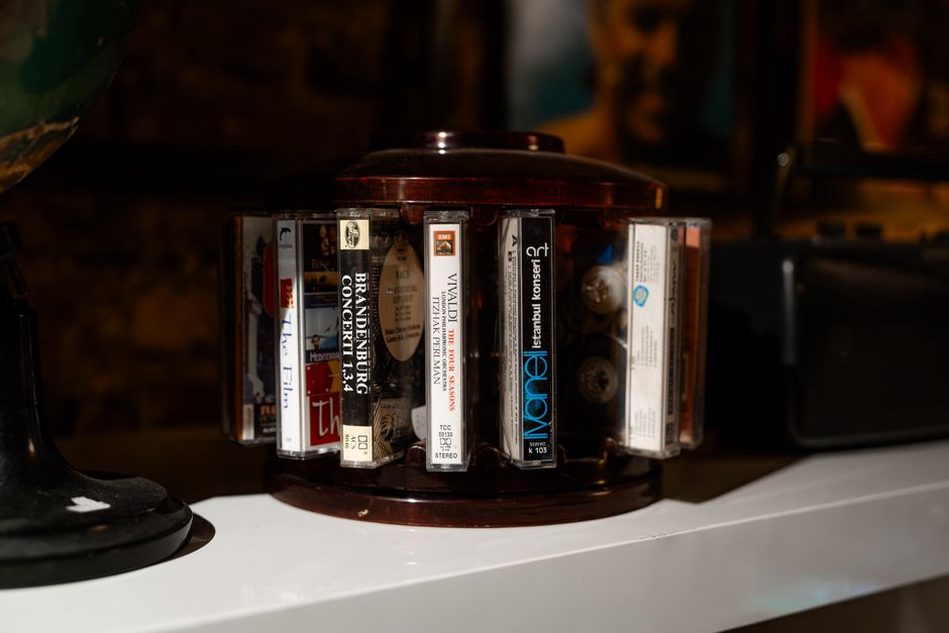
Store the cassette upright in its case, away from heat, direct light, moisture, and strong magnetic sources. If the contents matter to you, make a careful digital transfer on a maintained deck, label the files with the same factual metadata, and retain the original tape as the physical reference. A handwritten catalog number on a J-card can remain what it was meant to be: a trace of a release, not a substitute for its history.