
A noise installation is not simply a concert without seats. Sound may run for hours, emerge from an object rather than a stage, shift as visitors move, or be activated by a room’s architecture. In Japan, some of the most revealing examples sit between experimental music, sound art, media art, and site-specific practice. Calling all of this “Japanese noise” can obscure what the works actually do: arrange pressure, duration, machinery, bodies, and acoustic space.
The word noise is particularly unstable here. It can mean distortion and feedback, but also interference, mechanical repetition, electrical leakage, dense information, or sound considered unwanted. An installation may be quiet in volume yet noisy in structure: a broken transmission, a restless relay, a loop that refuses a stable foreground and background. Conversely, extreme volume alone does not make a work a noise installation. The key question is whether sound is organized as an environment or situation, rather than presented chiefly as a time-bound performance.
Installation changes the unit of listening
At a club set, the audience usually faces a performer and shares a beginning, middle, and end. In an installation, each visitor assembles a partial version of the work. Where they enter, how long they stay, where they stand, and who else is present all affect what they hear. A speaker concealed behind a wall can make a corridor feel unstable; a transducer fixed to metal can turn a railing into a resonant surface; hiss from a video monitor may compete with ventilation and footsteps.
This has practical consequences for documentation. A recording may preserve sounds used in an installation, but rarely its scale, directionality, or effect on movement through the room. Photographs have the opposite weakness: they show apparatus and layout while hiding the work’s temporal experience. Useful accounts identify both materials and listening conditions—how many channels were used, where sound traveled, whether it ran continuously, and whether visitors could affect it.
Sound sources are often visible—and that matters
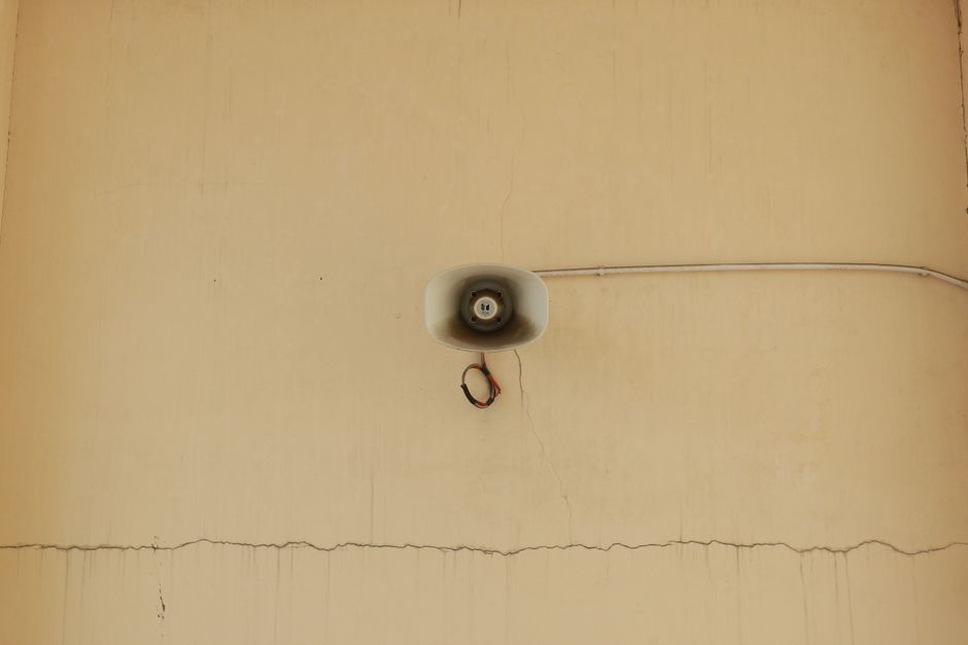
Noise installations often leave their means of production exposed. Cables, contact microphones, discarded electronics, motors, tape machines, fluorescent fixtures, radios, computer fans, and speaker cones may remain in view. This is more than an industrial visual code. Seeing the source alters the meaning of a sound. A low pulse heard without context may seem abstract; attached to a slow motor pressing against a resonant object, it becomes an event shaped by friction, load, and risk.
Japanese experimental art has long crossed music, visual art, performance, and technology. It is therefore more accurate to follow particular lineages and venues than to assume a unified scene. Musicians may exhibit in galleries; artists trained in visual practice may build systems that invite musical listening; independent spaces may host formats that fit neither concert nor exhibition convention. Those boundaries can be productive, though they also complicate attribution and preservation.
Three ways noise functions in installation work
Calling every abrasive sound “noise” flattens important distinctions. The following categories often overlap, but they offer a useful way to listen.
- Material noise: the audible behavior of objects and devices—scraping, vibration, motor chatter, loose connections, electromagnetic hum, tape wear, and speaker distortion.
- System noise: errors, feedback paths, unstable circuits, delayed signals, corrupted data, radio interference, and processes that produce results beyond exact authorial control.
- Social or spatial noise: competing voices, traffic bleed, gallery etiquette, surveillance signals, architectural reverberation, and ambient activity that a work admits rather than excludes.
A work may move among these functions. A radio-based installation can begin with literal broadcast static, reveal the political and geographic limits of transmission, and then make visitors aware of how their own bodies interrupt reception. Sound is not decorative atmosphere around an idea; it is the means through which the system becomes perceptible.
Space is a compositional element, not a neutral container
Exhibition spaces in Japan vary sharply in acoustic character: compact artist-run rooms, institutional galleries, repurposed industrial sites, public spaces, university facilities, and hybrid venues that also host concerts. Their differences cannot be reduced to polished museums versus underground rooms. Ceiling height, wall material, door placement, street noise, electrical infrastructure, and crowd capacity can determine whether a work feels immersive, oppressive, fragile, or nearly inaudible.
Noise installations often work with this variability rather than trying to overcome it. A sustained tone in a hard-walled room can produce standing waves, with one frequency blooming in a particular spot and fading a few steps away. A low-frequency source may be felt through the floor before it is clearly heard. A small speaker close to a surface can create a private listening zone, while a distant high-frequency signal may be difficult for some visitors to perceive at all.
These conditions also expose the limits of idealized “immersion.” No one hears from exactly the same position, with the same hearing range, or for the same duration. The room includes interruptions: conversation, late arrivals, staff activity, passing vehicles, and accessibility equipment. An installation that accounts for such contingencies may be more rigorous than one that pretends to seal them out.
How to inspect an installation without reducing it to equipment
- Locate the sources. Identify speakers, objects, cables, projections, resonant surfaces, and points where sound enters from outside the room.
- Map the changing sound. Walk slowly, pause at thresholds, and note whether level, pitch, rhythm, or spatial focus changes with position.
- Separate designed sound from incidental sound. Do not dismiss HVAC, corridor noise, or street leakage too quickly; then consider whether the work frames or ignores them.
- Observe the time scale. A process may become clear only through repetition, drift, mechanical fatigue, or delayed interaction.
- Read available technical information. Titles, diagrams, and equipment lists can clarify a system, but they should not replace firsthand listening.
This approach avoids two common errors: treating a work as a puzzle solved by its gear list, or treating it as pure sensation without material or institutional context. Both miss the relation between signal, object, and space.
Feedback: from effect to architecture
Feedback is central to noise practice, but it takes different forms in installation. During a performance, a player may steer a feedback loop moment by moment through amplifier position, microphone angle, gain, and bodily movement. Installed feedback can operate as a more autonomous system. Microphones and speakers may be arranged so room acoustics continuously shape the loop; sensors may alter gain or filtering as visitors approach; resonant materials may select frequencies with little need for visible intervention by a performer.
Such systems are often less predictable than recordings suggest. Temperature, power conditions, speaker placement, and the sound absorption caused by a group of bodies can all alter the result. That instability matters aesthetically, but it also requires careful installation and maintenance. A work dependent on high gain needs safeguards against sudden extreme levels, damaged equipment, and unsafe proximity to sensitive ears.
| Element | What it can reveal | What documentation should record |
|---|---|---|
| Feedback loop | Room resonance, instability, bodily interference | Speaker and microphone positions, gain limits, room dimensions |
| Object resonance | Material properties and vibration | Object type, transducer placement, amplification method |
| Radio or signal reception | Transmission boundaries, interference, time-specific content | Receiver type, frequency range, antenna arrangement, date and place |
| Tape or mechanical playback | Wear, recurrence, delay, physical labor | Playback speed, loop length, maintenance requirements |
Historical references without turning them into a myth
Several Japanese artists and collectives offer useful points of orientation, though none should be treated as representative of an entire national practice. Takehisa Kosugi, associated with Group Ongaku and later Fluxus contexts, expanded musical attention toward instruction, action, environment, and unstable sound events. His importance is not a ready-made template for “noise,” but the way sound could be distributed across acts, objects, and conditions.
Akio Suzuki’s long-running practice provides another important model for listening to site, movement, and acoustic response. His work has often treated environments as active participants rather than backdrops. That orientation helps explain why an installation can be intense without relying on constant density or conventional spectacle.
In a different register, Ryoji Ikeda’s audiovisual installations and works have made precision, data, frequency, and perceptual limits central to the encounter. Their extreme clarity counters the assumption that experimental sound installation must look improvised or materially rough. Artists working through sculptural, electronic, and participatory methods have likewise continued to make sound’s physical transmission a primary subject.
These examples need to be considered through specific works, venues, and periods. “Japan” is not a sufficient explanation. Funding structures, curatorial decisions, available technology, architectural constraints, touring networks, and artists’ individual concerns offer more useful accounts than national character.

Why documentation is unusually difficult
Noise installations leave awkward archives. Audio recordings can clip, lose low-frequency vibration, collapse multichannel separation, or miss the scale of a room. Video adds spatial clues but replaces shifting attention with a fixed camera perspective. Installation views may beautify equipment while erasing loudness, duration, and visitor behavior. A catalogue entry can retain a title and date while omitting the signal chain needed for future reconstruction.
For artists, curators, and independent organizers, the most useful record is often a small bundle rather than a definitive file: a floor plan, photographs from several listening positions, a channel map, equipment list, signal-routing notes, level limits, short environmental recordings, and a statement identifying variable elements. If a work uses found broadcasts or live network material, documentation should state that dependency without assuming the same content can later be reproduced.
Rights questions need equal care. A recording made inside an installation may contain protected music, visitor conversations, projected images, and broadcast material. Permission to exhibit a work does not automatically include permission to release its documentation. The practical issues are explored more broadly in Understanding Intellectual Property in Experimental Music, particularly where experimental methods blur the boundary between source material and finished work.
Access, safety, and curatorial responsibility
Noise is sometimes defended through a rhetoric of endurance, as though discomfort alone proved seriousness. That attitude is neither necessary nor especially useful. Strong work can make demands while still giving clear information about sound levels, duration, strobe effects, darkness, confined layouts, or participatory components. Ear protection should be available where needed, and visitors should be able to leave or observe from a lower-intensity position without being treated as inattentive.
Accessibility also includes non-auditory ways into the work. Tactile vibration, visible signal behavior, readable diagrams, transcripts of speech elements, and descriptions of spatial layout can deepen rather than dilute an installation. Such measures acknowledge a basic fact: sound is embodied, but bodies do not encounter it in identical ways.
Curators should resist using “noise” as shorthand for disorder or provocation. Technical riders, maintenance plans, staff briefings, and realistic setup time are part of the artistic conditions. A carelessly installed feedback work can become a generic shriek; a precisely calibrated one can reveal the particular acoustic signature of a site. The difference is often audible within minutes of commissioning.
Finding a workable critical vocabulary
Writing on noise art often swings between vague words of intensity—raw, brutal, immersive—and technical inventories that stop at brand names. More useful descriptions name relationships: a pulse occupies a corridor but disappears at the doorway; a motor’s rhythm is masked by a projector fan; a cluster of frequencies becomes directional only when a visitor faces a reflective wall; a supposedly autonomous loop changes when the room fills with people.
Such language also leaves room for disagreement. One visitor may find exposed circuitry materially persuasive, while another may see it as a familiar visual code that contributes little acoustically. One may hear a drone as spatially complex, another as over-amplified and static. Critical attention does not demand consensus; it makes the terms of perception explicit.
When encountering sparse archival traces—a title, a low-resolution installation view, an unlabeled audio file—avoid building a complete mythology around them. Record what is known, distinguish inference from evidence, and preserve original filenames and context. The archive fragment examined in The Mystery of ‘wasted 6 596’: A Noise Archive Fragment illustrates why uncertainty itself can matter in responsible noise history.
For a first field note, draw a simple plan of the room and mark three listening points: the entrance, the point of greatest physical vibration, and the quietest edge. Add the time spent at each point and one sentence describing what changed when another visitor entered. Those details preserve more of an installation’s operating logic than a verdict such as “immersive” or “chaotic.”