
A burst of amplifier feedback can work like a film cut: it breaks continuity, exposes the apparatus, and changes the meaning of what follows. In Japanese sound art and experimental music, noise often gains force through sequence, contrast, recurrence, and the trace of an action rather than through melody or an explicit program. A scrape can establish a surface; a sudden low-frequency swell can turn that surface into a room; a return to near-silence can draw attention to editing, duration, or the listener’s own physical attention.
Calling this “narrative” does not mean forcing every recording into a plot. Much of the strongest work resists characters, dialogue, and resolution. Narrative, in this sense, is a way of listening: one event changes the meaning of another, and the work organizes time rather than simply filling it. Noise is particularly suited to this because it can make recording, amplification, performance, and listening themselves audible.
From sound event to narrative function
A sound becomes narratively active when it does more than decorate a texture. It may introduce a condition, interrupt one, return as evidence, or signal a shift. The same harsh electronic tone can register differently depending on where it appears. At the opening, it may set pressure or scale. After a long quiet passage, it can feel intrusive. Repeated softly near the end, it may read as residue rather than climax.
This is different from treating noise as a synonym for extremity. Volume and density are only parameters. A brief radio fragment, an unidentifiable knock, clipped speech, mechanical cycling, tape hiss, or a poorly spliced loop can carry narrative weight when its timing makes it legible as an event. What the listener follows are relations: before and after, near and far, continuity and rupture, intention and accident.
The broader history of sound art offers useful context, especially where recording and transmission are treated as materials rather than transparent containers. Encyclopaedia Britannica’s overview of electronic music places tape, electronic sound production, and studio practice within a longer twentieth-century history. Japanese experimental work intersects with that history through local venues, independent distribution, artist-run activity, university studios, galleries, and informal exchange. It should not be reduced to a single national style.
Four ways noise can move a piece forward
- Threshold: a change in level, spectrum, or spatial character signals that the work has entered a different condition.
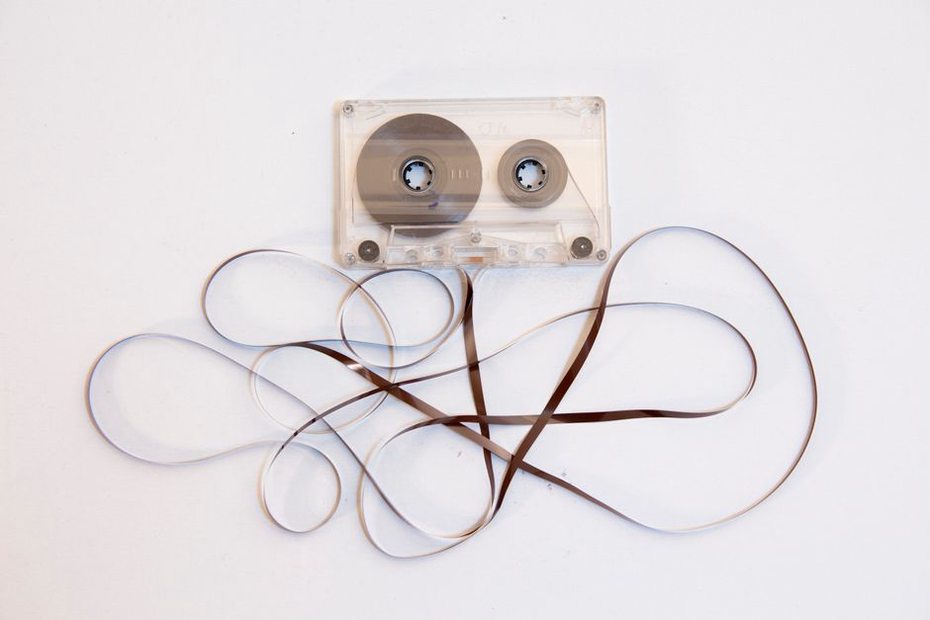
- Evidence: handling noise, room bleed, a faulty connection, or tape damage can make the medium and the performer’s presence perceptible.
- Memory: a loop, recurring pulse, or recognizable fragment returns altered by time, degradation, or new surrounding material.
- Withholding: a pause, filtered frequency range, or abruptly cut-off gesture creates an expectation that remains unresolved.
These functions often overlap. A tape loop can act as memory because it repeats, as evidence because its splice or wear is audible, and as a threshold when it enters or vanishes. The point is not to assign a fixed meaning to a device, but to hear what it does within a particular arrangement of time.
Material tells part of the story
Japanese noise and related experimental practices have often made their materials conspicuous. Contact microphones pick up vibration rather than an imagined “pure” source. Overloaded mixers blur the line between instrument and signal path. Cassette duplication brings hiss, compression, pitch instability, and dropout; cheap pedals or damaged speakers introduce unstable behaviour of their own. None of this automatically proves authenticity. These are audible conditions that may be shaped, ignored, exaggerated, or set against cleaner sound.
Medium-specific details matter because they give a work a kind of narrative evidence. A digital edit can place two recordings in an impossible proximity. A cassette loop can make duration feel circular, while its gradual failure introduces irreversible time. A contact microphone can enlarge a small vibration until assumptions about scale begin to fail. A field recording may preserve acoustic traces of a place, yet editing can detach it from its original time and location.
That last point needs care. Environmental sound is not neutral raw material. Voices, domestic spaces, workplaces, religious sites, transit systems, and private conversations retain social context even when listeners cannot identify them precisely. A recording may invite imaginative interpretation, but it can also obscure who was recorded, under what conditions, and whether consent was possible. Narrative listening should account for these absences rather than treating every captured sound as freely available atmosphere.
Sequence matters more than a genre label
One useful way to hear narrative in a difficult recording is to map events before assigning feelings too quickly. This avoids the lazy shortcut of calling a passage “chaotic” and moving on. Even dense noise can have form: a sustained feedback frequency becomes a reference point; irregular cuts establish pacing; a slowly opened filter changes the apparent depth of the sound; a fragment of speech shifts the piece from abstraction toward documentary ambiguity.
A close-listening pass
- Mark entrances and exits. Note when a sound source seems to arrive, recede, or stop. Do not assume a continuous wall is unchanged.
- Track recurrence. Identify exact repeats, approximate echoes, and gestures that return in another register or degree of distortion.
- Listen for the recording chain. Hiss, clipping, hum, edits, microphone movement, and room reflections may be structural information.
- Separate event from interpretation. “A pulse repeats every few seconds” is an observation; “it suggests machinery” is an interpretation. Both may be useful, but they are different claims.
- Locate the decisive transition. The narrative turn is often a small substitution: a sustained tone replaced by air noise, a loop becoming unstable, or a quiet interval after saturation.
A short timeline can make this process clearer. A five-minute piece might be described as: 0:00–1:20, dry rubbing sounds and intermittent clicks; 1:20–2:10, a low hum enters and masks the clicks; 2:10–3:30, the hum cuts out, revealing room noise and a repeated scrape; 3:30–5:00, the scrape persists beneath a widening band of distortion. Notes like these do not explain intent, but they prevent vague listening and keep later interpretations tied to audible detail.
| Audible feature | Possible narrative effect | Question to test |
|---|---|---|
| Repeated loop | Return, fixation, stalled time | Does each cycle remain identical? |
| Abrupt edit | Rupture, juxtaposition, withheld continuity | What disappears or arrives at the cut? |
| Increasing distortion | Escalation or loss of detail | Which frequencies or gestures survive? |
| Room ambience | Distance, presence, documentary trace | Does the room locate or unsettle the source? |
| Near-silence | Suspension, reset, exposure of playback space | What becomes audible in its place? |
Performance: action, risk, and documentation
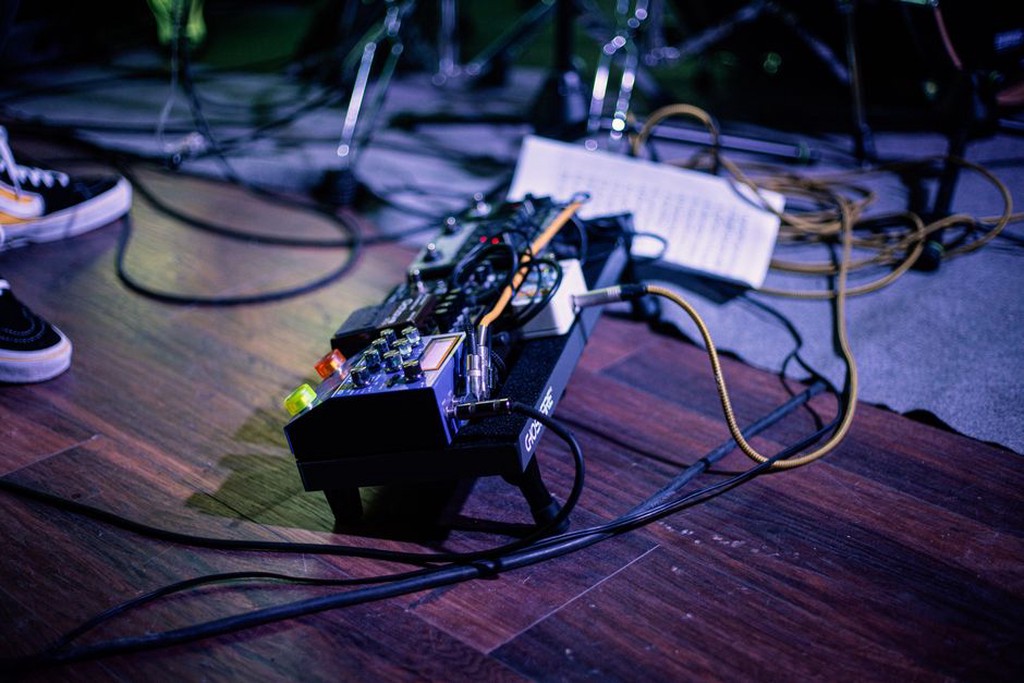
Live noise performance complicates narrative because the visible act and the recorded result do not always align. A performer may work with a mixer, objects, electronics, tape machines, or acoustic instruments. The audience sees gestures, waits through setup, notices equipment failure, and hears changes in the room. A recording removes much of that information, then creates another form through microphone placement and editing. Neither version is simply definitive.
For listeners encountering documentation, it helps to separate three layers: the sound heard in the room, the recording’s perspective, and the release’s arrangement. A close microphone can make a quiet object seem monumental. Audience noise can turn a private sound into a social event. A selected excerpt can suggest a compact arc when the original performance was more diffuse. Such shifts are not necessarily deceptive; they are part of how sound becomes mediated narrative.
Titles, track divisions, and liner notes also need careful handling. They can provide real orientation, especially when a work identifies recording locations, sources, collaborators, or dates. They may also overdetermine the response. A title can establish an image that the sound neither confirms nor denies. Strong criticism keeps both levels in view: what the work says about itself and what can actually be heard.
Voice, language, and partial intelligibility
Speech in Japanese sound art may be fully intelligible, fragmented, processed beyond recognition, or heard as distant acoustic residue. Listeners who do not understand Japanese may be tempted to treat all vocal material as texture. That may be a practical first encounter, but it is incomplete. Language can carry content, register, gendered or social cues, and references unavailable through sound quality alone.
A responsible approach is to describe what can be confirmed. Note whether speech is clear or obscured, foregrounded or buried, repeated or interrupted. If translations, artist statements, or reliable documentation are unavailable, do not invent a semantic plot. Partial comprehension is part of the work’s encounter with an international listener, but it should not become an excuse to exoticize opacity.
The same restraint applies to claims about “Japanese” sensibilities. Noise, minimalism, ritual, restraint, excess, technology, urban life, and nature recur in criticism, but none explains a recording by itself. Such terms matter only when they are supported by specific sonic decisions and documented context. A small cassette issued through a DIY network, a gallery installation, and a conservatory electroacoustic composition may share techniques while operating under very different practical and institutional conditions.
Listening across incomplete archives
Experimental music often survives through partial documentation: homemade covers, broken file links, circulating rips, inconsistent transliteration, incomplete credits, and recollections that cannot be verified. These conditions shape reception. A listener may encounter a file without knowing whether it is a finished release, an excerpt, a rehearsal, or an unidentified recording. Uncertainty becomes part of the object’s afterlife, but it should be named rather than turned into mythology.
That issue is central to investigations such as The Ghost File ‘wasted1’ and the Japanese Noise Underground, which examines an uncertain digital fragment rather than pretending it has settled provenance. The same archival caution is useful when discussing sound: distinguish metadata from evidence, evidence from inference, and inference from imaginative response.
For collectors and researchers, basic records preserve context that can make future listening more precise. Keep the source of a file or physical item, visible credits, catalogue information when present, the date of acquisition, playback format, transfer method, and any audible anomalies introduced during digitisation. Photograph packaging before repair. Retain original filenames even when making cleaner working copies. These practices cannot resolve every attribution problem, but they keep later accounts tied to material evidence.
Noise does not need a plot
Some works are better understood as environments than as linear progressions. Their force lies in sustained attention to grain, pressure, repetition, or spatial ambiguity. Yet even an apparently static drone can narrate at the scale of perception: the ear adapts, internal overtones emerge, fatigue changes what seems prominent, and tiny deviations begin to matter. In such cases, narrative may arise between the recording and the listener rather than through dramatic events in sequence.
Replay at different levels. Start at a moderate volume, then return at a lower level, where large gestures recede and persistent frequencies can be easier to identify. On a third pass, make a simple event map using only three categories: recurrence, interruption, and residue. An entry as modest as “4:42: hiss remains after the pulse stops” gives the ending an audible fact to work from, rather than an imposed conclusion.