
The most revealing moment in a Japanese ambient-noise recording often arrives when neither label quite holds. A sustained electronic tone carries grit; a field recording is processed until its location vanishes; a harsh burst functions less as an attack than as a shift in acoustic scale. Hearing ambient as “calm” and noise as “violent” can obscure what matters: texture, duration, density, and attention.
This is less a fixed genre than a set of working methods shared by musicians, sound artists, and small-label circles. Distortion may remain inside an otherwise quiet recording. A drone might grow out of amplified objects. Environmental sound can sit beside electronics, while unstable feedback interrupts a sparse passage. The result may be immersive, abrasive, barely audible—or all three in one piece.
Fusion as a method, not a compromise
Ambient and noise are often treated as opposites: one for background listening, the other for confrontation. That contrast is too blunt. Ambient music can hold tension, masking, mechanical hum, and low-frequency pressure. Noise can reward close attention to micro-variation: a feedback overtone shifting in place, a frequency band gradually narrowing, the uneven pulse of an overloaded device.
In Japanese experimental music, artists have often moved between these materials without treating genre as a hard boundary. Environmental music, improvised music, musique concrète, free electronics, underground cassette culture, and sound installation all feed into that movement. The connection is not nationality as sonic essence, but networks of practice, venues, formats, and listening habits in which restraint and excess can coexist.
Merzbow is frequently reduced to an image of maximal harshness, yet his extensive work also shows how sustained electronic material can be shaped by timbre and pacing rather than conventional melody. Hiroshi Yoshimura, often placed within environmental music, complicates the idea of ambient as passive decoration through carefully organized electronic surfaces. Their better-known reputations remain far apart, but some of the same listening tools apply: attention to texture, spatial placement, recurrence, and the behavior of sound over time.
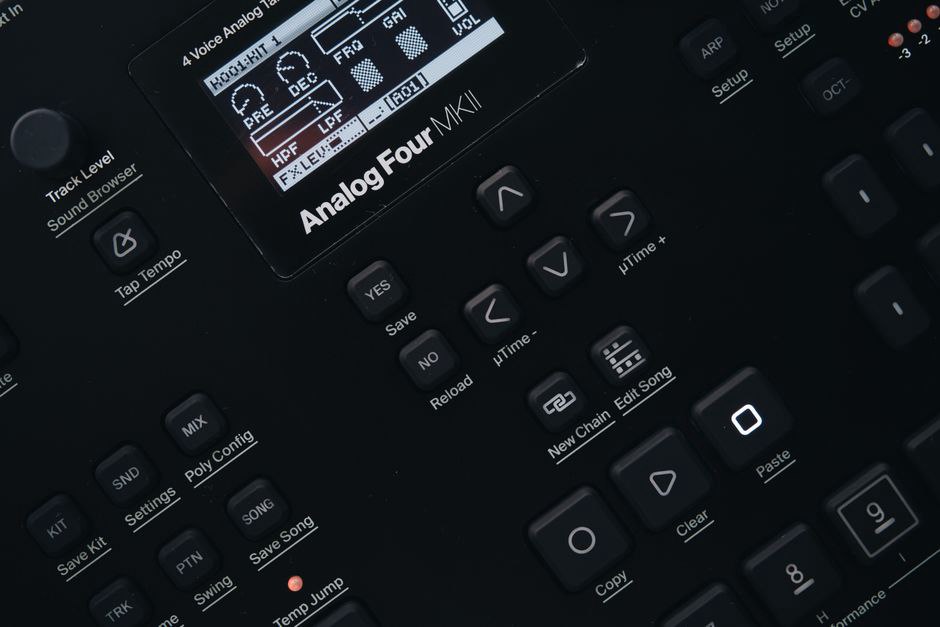
Where the materials meet
The overlap becomes clearer when considered in terms of materials rather than genre labels. A piece may begin with an ambient source—air-conditioning, rain, distant traffic, a soft synthesizer pad—and alter it through amplification, looping, equalization, degradation, or feedback. It may begin with an abrasive source and become spacious through silence, long decay, repetition, and restraint.
Drone, saturation, and unstable tone
Drone is one of the clearest bridges. A long tone can seem stable, yet minute shifts in pitch, beating, distortion, or loudness make it physically active. Saturation introduces upper harmonics and pressure; a slight oscillator adjustment creates a new interval; feedback brings in movement no performer can fully control. These are not effects laid over a composition. They shape the composition itself.
Japanese experimental practitioners have often used modest equipment—effects pedals, contact microphones, cassette recorders, small mixers, homemade circuits—because it exposes the behavior of materials. A tape loop wobbles. A cheap preamp overloads unevenly. A microphone against glass, metal, or wood turns a familiar object into an unstable resonator. None of this needs to be romanticized as “lo-fi.” It can be precise, severe, and tightly controlled.
For a fuller account of duration and material attention, the blog’s discussion of minimalism and resonance in Japanese drone music is useful alongside noise-oriented listening. Drone does not remove events; it relocates them into pressure, beating, decay, and small departures from apparent stasis.
Field recordings without documentary certainty
Field recording is another point of contact, though it should not automatically be heard as documentary truth. A recording of a station platform, shoreline, factory perimeter, apartment corridor, or domestic appliance already reflects choices of microphone, distance, framing, and level. Once edited or electronically altered, it may retain an environmental quality while no longer offering reliable evidence of a particular place.
In ambient-noise work, environmental sound can provide grain rather than scenery. Wind becomes broadband hiss. Footsteps become irregular percussion. An insect chorus becomes a high-frequency cloud. Identifiable people, private spaces, and culturally sensitive sites still require care in recording and publication. Aesthetically, though, location may be both present and obscured: the listener recognizes “outside” without knowing where.
Tape as an instrument of erosion
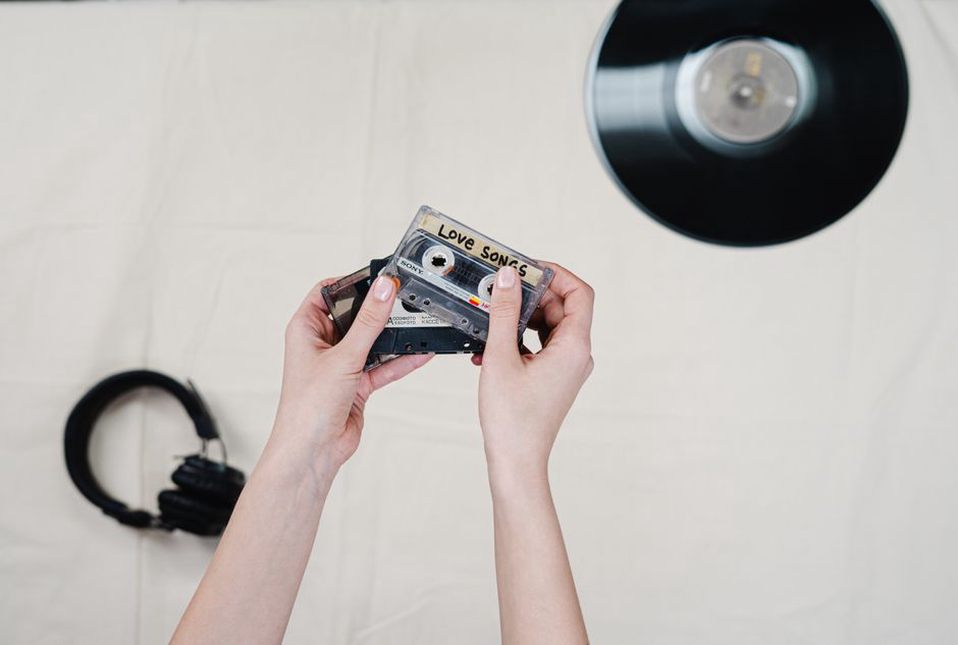
Cassette-based work has been important to the DIY circulation of experimental sound. Tape provides a portable way to record, duplicate, exchange, and manipulate audio, but its appeal is not merely nostalgic. Re-recording introduces loss, flutter, compression, and spectral imbalance. Splicing alters time physically. Loops make repetition audible as a mechanism. A damaged or imperfect cassette can turn silence into a field of hiss and intermittent dropouts.
Small editions and informal exchange networks let artists circulate work outside conventional release structures, while creating archival problems of their own: titles vary, artwork becomes separated from tapes, and digital transfers may omit side designations or speed information. The legacy of Japanese tape labels in experimental music provides context for the labels and DIY systems that made this circulation possible.
Listening without the calm-versus-chaos shortcut
When a recording seems “static” at first, track several kinds of change at once. Rather than waiting for a beat, melody, or dramatic climax, listen for shifts in width, roughness, distance, periodicity, and density.
- Frequency: Is the energy concentrated in the bass, midrange, or high frequencies? Does it migrate gradually?
- Density: Are there only a few layers with ample space, or many overlapping sources? Does a dense passage suddenly thin out?
- Dynamics: Does the volume rise sharply, breathe in waves, or stay level while the timbre changes?
- Texture: Is the surface smooth, granular, metallic, fibrous, crackling, or unstable?
- Space: Does the sound suggest a room, an enclosed device, a wide field, or an artificial stereo image?
- Time: Is repetition exact, looped with variation, or shaped by gradual accumulation and decay?
This avoids a common mistake: judging a piece only by intensity. A two-minute feedback blast may contain less internal change than a twenty-minute low drone, though either can be compelling. The question is not which is more extreme, but whether the materials are allowed to develop, collide, or resist resolution in a meaningful way.
Artists and reference points
No single canon can represent this whole field. It is more useful to begin with distinct practices. These reference points suggest different routes between atmosphere, electronic abstraction, acoustic material, and noise.
| Artist or project | Useful listening focus | Why the connection matters |
|---|---|---|
| Merzbow | Dense electronic timbre, feedback, transformation | His work demonstrates noise as detailed sound organization rather than undifferentiated force. |
| Aube | Restricted-source concepts and process | Akifumi Nakajima’s project shows how a narrow material premise can produce highly varied texture. |
| KK Null | Electronic processing, improvisation, instability | His work crosses noise, electronics, and free-form experimentation without requiring a stable genre frame. |
| Keiji Haino | Voice, amplification, silence, intensity | Across solo and collaborative contexts, his practice places fragility and extremity side by side rather than treating them as opposites. |
| Hiroshi Yoshimura | Environmental listening and delicate electronic structure | His work makes clear that ambient composition can be active, formal, and demanding at low volume. |
| Tetsu Inoue | Microscopic electronic detail and suspended space | His recordings are useful for hearing ambient music as a field of fine-grained sonic events. |
These names are not interchangeable. A collaboration, live set, or reissue may sit far from an artist’s better-known work, and extensive catalogues invite context-dependent listening. Checking the recording date, personnel, format, and source of a reissue can prevent a misleading first impression.
Conditions of playback matter
Ambient-noise recordings can suffer at either playback extreme. Tiny speakers may erase low-frequency mass and subtle spatial detail, while excessive volume can reduce harsh textures to fatigue. Headphones reveal close detail, channel movement, and tape artifacts, but can make aggressive high frequencies feel more severe than they would in a room. Speakers reveal air and physical pressure, especially in drones, though room acoustics may obscure quiet components.
Begin at a moderate level and leave it there long enough to understand the recording’s internal dynamic range. If sustained high-frequency energy becomes uncomfortable, turn it down rather than trying to push through. Hearing damage is not evidence of commitment. Then replay a short section—perhaps three to five minutes—while following a single element: the entry and exit of layers, the behavior of a hiss band, or the way a loop fails to repeat exactly.
For collectors: document the object and the transfer
Collectors working with cassettes, CD-Rs, and small-run physical editions have concerns beyond ordinary music-library management. Keep a simple record of what is known and what remains uncertain. Photograph covers, inserts, labels, and handwritten information before storage. When digitizing a cassette, note the deck used, playback speed, side designation, transfer date, and whether noise reduction was applied. Preserve an unprocessed archival transfer when possible; a cleaned listening copy can be made separately.
Do not correct every irregularity by default. Azimuth drift, uneven gain, and tape hiss may belong to the physical source, but they can also signal damage or a poor transfer. Label interventions clearly so a future listener can distinguish the cassette’s audible condition from choices made during digitization.
Making work in this space without imitating surfaces
For musicians, the easy trap is treating ambient-noise fusion as a recipe: add rain, add distortion, slow everything down. Start instead with a material question. What does a particular source do under pressure? How does a room respond to a speaker? What happens when a loop is allowed to drift rather than forced into perfect synchronization?
- Choose one primary source: a synthesizer tone, contact-miked object, cassette loop, radio signal, or field recording.
- Define one process: feedback, re-recording, filtering, time-stretching, physical resonance, or repeated dubbing.
- Make a long recording without immediately adding a second source.
- Mark moments when the source changes character on its own: flutter, resonance, overload, accidental rhythm, or loss of detail.
- Edit only after deciding whether those changes already provide form.
This gives noise a structural role and lets ambience emerge through duration, space, and recurrence rather than generic softening. A contact microphone on a metal bowl, routed through a small amplifier and recorded at varying distances, can produce a complete study: low resonant bloom, electrical buzz, a feedback threshold, and decaying room tone. The edit may need only to preserve the moment when the bowl’s resonance and the amplifier’s hum briefly lock into the same pitch.