
In Japanese experimental music, “harmony” rarely means conventional chords returning after disorder. More often, it is a temporary alignment: radio hiss settling beside a sustained guitar tone, a clipped tape loop finding a pulse, or a field recording exposing its own layered pitches. The point is not a march from chaos to beauty, but close attention to relationships between sounds that first seem incompatible.
This matters because Japanese noise is too often reduced to sheer volume, while ambient music is treated as passive calm. Both descriptions overlook the practical ingenuity of artists who work with electronics, room acoustics, damaged media, found objects, and recorded environments as materials with their own structure. What matters is rarely a single “Japanese sound.” It is a method: changing a signal chain, extending a performance, allowing mechanical failure, or pressing nearly inaudible detail into the foreground.
Noise as an active material
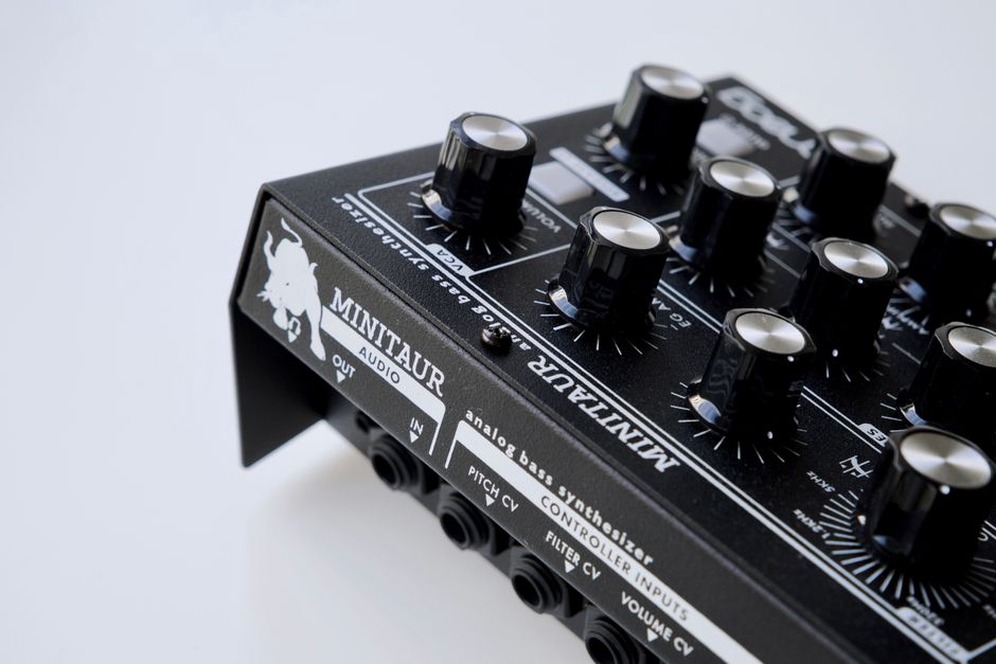
Noise is not simply unwanted sound. In experimental practice, it can act as density, friction, instability, masking, or a changing texture. Feedback makes this especially clear. A microphone, amplifier, speaker, and room form a loop shaped by distance, gain, resonant frequencies, and physical movement. The performer may not dictate a fixed result; instead, they establish conditions, listen to the system, and intervene as it shifts.
This approach has international precedents, yet Japan’s experimental scenes gave it particular settings: small venues, independent releases, artist-run events, and close contact between improvised music, rock, electronic sound, visual art, and performance. The term noise music is useful as a broad point of reference, but it should not compress radically different practices into a single spectacle. A harsh-wall recording, a sparse feedback performance, and a collage of household recordings may all use noise while demanding very different kinds of attention.
What to listen for beyond loudness
- Frequency: Notice whether the sound gathers as low-end pressure, midrange abrasion, or sharp high-frequency detail.
- Grain: A sound may be coarse, dusty, metallic, electrical, breath-like, or smooth without becoming conventionally melodic.
- Motion: Ask whether a drone is truly static. Small changes in beating, pitch, and distortion may carry the piece’s main drama.
- Space: Room reflections, microphone proximity, stereo placement, and the silence around an event all shape the work.
- Thresholds: Listen for the moment when repetition becomes rhythm, saturation settles into a sustained tone, or an apparently accidental sound returns as a motif.
These details are why a short excerpt can misrepresent a piece. A work based on gradual accumulation may seem empty after one minute and carefully balanced after twenty. An abrupt recording, on the other hand, may use shock as form rather than asking the listener to treat intensity as an end in itself.
Ambient and drone: harmony without resolution
Ambient and drone offer another route from noise to coherence. Their materials may include sustained synthesizer tones, processed guitar, organ-like electronics, tape decay, environmental recordings, or acoustic instruments held close to audibility’s edge. Melody is often secondary to the interaction of partials: frequencies that reinforce one another, rub together, or gradually drift apart.
Long tones turn listening into an acoustic laboratory. When two nearby pitches sound together, they can produce beating: a rhythmic fluctuation caused by interference. Reverb may blur an attack into a cloud; compression can make a fragile source feel physically close. These are not incidental production choices. They determine whether a recording feels spacious, enclosed, brittle, suspended, or oppressive.
Japanese composers and artists working with environmental sound have also widened the vocabulary of listening. The idea of environmental music is often associated with sound intended to coexist with a setting, but experimental recordings can complicate that function. A train platform, ventilation system, rain on a window, or distant construction site may begin as evidence of place, then be edited or layered until its familiar meaning becomes uncertain.
Media is part of the composition
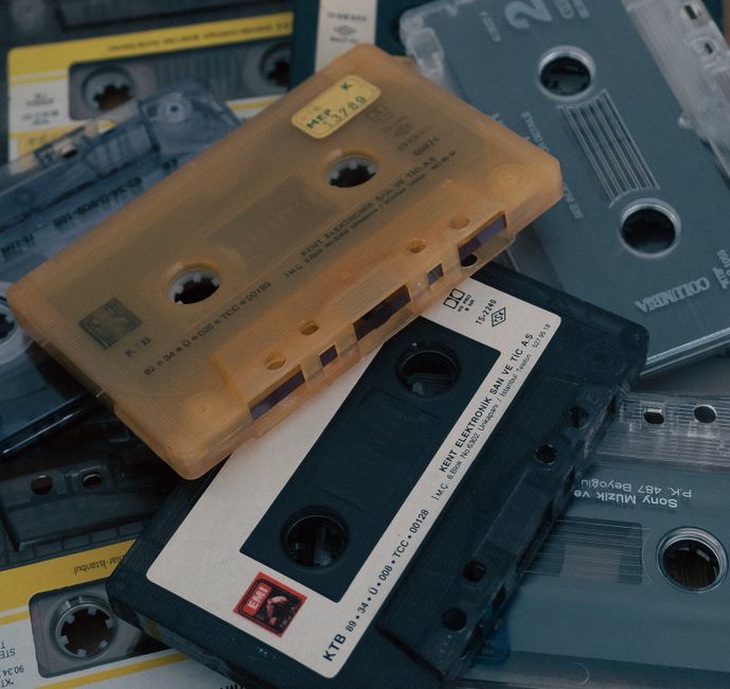
Cassette culture matters because tape alters sound and circulation at once. It introduces hiss, dropouts, unstable pitch, and uneven duplication, while remaining inexpensive enough for small editions, mail exchange, and hand-assembled artwork. The cassette is therefore more than a neutral container. A splice can make a loop rhythmic. A decaying copy can add another layer of history to an already fragile recording.
Digital formats did not remove these concerns; they changed them. Files travel quickly, yet their context is easily lost: folder names are truncated, images separate from audio, and metadata may be incomplete or incorrect. The blog’s investigation of z1.wav, an orphan file from the Japanese noise underground is a reminder that uncertainty is often part of archival work. An unidentified file should remain unidentified, rather than being assigned an author, date, or scene on the strength of a familiar texture.
A practical method for careful listening
- Listen once at a moderate level without trying to classify the piece.
- On a second pass, mark changes in density, register, repetition, and silence.
- Check whether apparent “randomness” follows a process: a loop length, feedback cycle, recurring source, or edit pattern.
- Read available credits and notes separately from what is audible. Treat documentation as evidence, not a substitute for listening.
- When the source is uncertain, record only verifiable facts: filename, format, running time, provenance, and audible characteristics.
Innovation through constraints
The strongest account of Japanese sound innovation is not a story of technological novelty alone. Constraints repeatedly generate form: limited access to equipment, the dimensions of a room, the finite length of a cassette side, a single contact microphone, a borrowed recorder, or an unstable amplifier. Such limits encourage performers to learn what a material can do instead of endlessly adding options.
| Material or condition | Possible musical consequence |
|---|---|
| Tape loop | Repetition becomes a shifting rhythm as pitch and fidelity drift |
| Feedback circuit | Pitch and timbre respond to gesture, room acoustics, and gain |
| Field recording | Place supplies irregular timing, distance, and unplanned layers |
| Long sustained tone | Minute frequency differences create beating and tonal tension |
| Low-cost duplication | Noise, compression, and degradation become audible characteristics |
For collectors and musicians, provenance deserves the same attention as sound quality. Keep original filenames, scan inserts, note where and when an item was acquired, and distinguish confirmed credits from a seller’s claim or a guess. When digitizing a cassette, make a flat transfer first. Save any noise reduction, EQ, or level adjustment as a separate listening copy. That preserves the tape’s audible evidence while leaving room for a cleaner personal version.