
Japan’s underground experimental music resists a single lineage of noise or a clean split between amplification and silence. Its acoustic practices often arise where those terms overlap: contact microphones enlarge minute gestures, ordinary objects become resonant bodies, field recordings enter performance spaces, and cassettes carry intimate documents between distant listeners. Here, “acoustic” does not mean unprocessed or conventionally musical. It refers to the physical origin of sound and to the conditions in which vibrations are captured, altered, circulated, and heard.
Outside Japan, experimental work is often framed through spectacle: extreme volume, technological novelty, or a vague sense of cultural otherness. Methods offer a better way in. What is vibrating? How is it transduced? What survives processing? Who shapes the conditions of listening? Those questions can connect a free-improvised tabletop set, an electroacoustic composition, a drone performance, and a privately duplicated tape without forcing them into one genre.
Acoustic as method, not a genre label
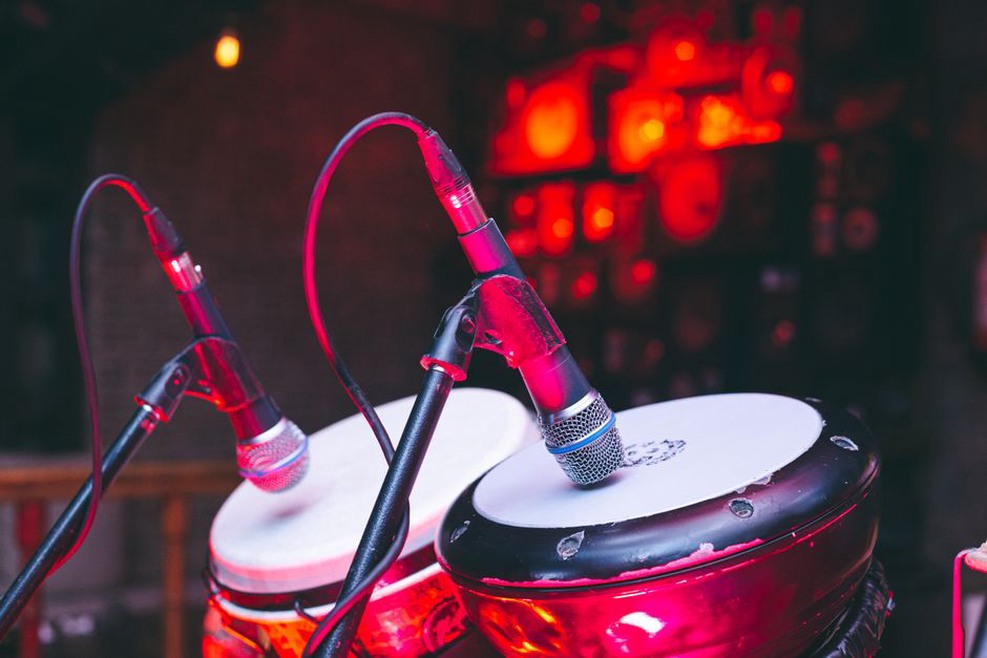
Acoustic practice may involve instruments, objects, rooms, environmental sound, and recording media. A performer might bow metal, scrape glass, strike wood, manipulate a small motor, or place microphones close enough to magnify friction and unstable resonance. The source may be familiar, while its apparent scale is not: a faint vibration becomes a dense field; a brief impact acquires a long electronic tail; a room’s ventilation system enters the work.
Electroacoustic work unsettles the usual divide between “live” and “recorded.” Microphones, mixers, pedals, tape machines, and computers do more than document an acoustic event; they reorganize it. Feedback makes this especially clear. It emerges from a loop involving microphone, speaker, room, gain settings, and performer decisions. The sound may be electronically sustained, yet placement, material surfaces, and the changing acoustics of a particular space continue to shape it.
Attention to source and mediation also asks for more than identifying sounds. Learning that a noise began as a metal bowl or a train brake does not explain its function in a piece. Listen instead for envelope, texture, recurrence, pitch drift, spatial depth, and interruption. The more useful question is not “what is it?” but “what does its alteration make audible?”
From objects to systems
Japanese experimental scenes have repeatedly accommodated practices that treat instruments as contingent systems rather than fixed tools. Takehisa Kosugi, associated with Fluxus and the collective Group Ongaku in the early 1960s, remains important here. His scores and actions could foreground sustained tones, environmental conditions, chance operations, or simple materials. They shifted attention away from virtuoso execution toward instruction, duration, and the instability of sound itself.
Toshi Ichiyanagi likewise brought indeterminacy and experimental notation into Japanese musical life through compositions that challenged conventional relationships between composer and performer. These histories do not form one underground route leading neatly toward later noise or ambient music. They show instead that experimental practice in Japan has long held differing approaches to authorship, acoustic action, notation, and listening.
Improvisation provided another important setting for acoustic experimentation in the 1970s and 1980s. Musicians such as Kaoru Abe and Masayuki Takayanagi are often discussed in relation to free jazz, but their work also shows how instrumental sound can be pushed toward grain, rupture, breath, overload, and near-abstraction. It would be a mistake to treat this simply as a prelude to noise. Its bodily risk, shifting dynamics, and responsiveness to other players belong to improvisation as a social practice, not merely to a search for extremity.
Noise and the material ear
Japanese noise is often marketed or remembered through a narrow language of assault and excess. That account overlooks the close material listening present in much of the field. Merzbow, Masami Akita’s long-running project, matters not because it represents all Japanese noise, but because its extensive output traces changing relations among analog equipment, digital processing, recorded source material, and density. A sustained wall of sound can contain considerable internal movement: filters shift, frequency bands open and close, pulses surface beneath saturation, and the pressure of distortion changes.
Other artists use feedback and damaged sound differently. Keiji Haino has worked across voice, guitar, percussion, improvisation, and collaborative settings, often treating timbre as an unstable physical force. Otomo Yoshihide has used turntables, guitars, electronics, and ensembles to expose recorded media and instrumental mechanisms rather than hide them. Their work intersects with noise at times, but each calls for its own listening frame.
“Underground” is not a style label. It can describe the practical conditions under which work persists: small venues, short-run physical editions, artist-run events, informal collaborations, mail exchange, and documentation that remains incomplete or difficult to verify. Those conditions affect the sound itself. A performance intended for a small room may depend on low-level detail that would vanish in a larger venue. A cassette may retain overload, hiss, and channel imbalance as part of its character rather than defects to be corrected.
Ambient, drone, and duration without passivity
Japanese ambient and drone are often described in soothing terms that obscure their formal rigor. Long duration does not necessarily mean calm, and quietness does not automatically make music background sound. Drone can reveal minute changes in tuning, beating patterns, amplification, and room resonance. Ambient work can frame environmental sound, domestic scale, or studio layering without asking to be ignored.
Hiroshi Yoshimura is central to discussions of Japanese environmental music, especially through recordings such as Music for Nine Post Cards and Green. His work is often filed under ambient, but its clarity and restraint reward concentrated listening. Repetition is not static: slight changes in decay, timbre, and interval relationships determine how the pieces breathe. Reducing it to lifestyle soundtrack material removes the specificity of the composition.
Yasuaki Shimizu’s Kakashi, released in 1982, offers another reminder that minimal, spacious music can draw on several compositional and instrumental histories without settling into an easy genre category. Its sonic economy is not neutral. Silence and near-silence frame each entrance, giving unusual weight to attack, sustain, and the acoustic character of individual instruments.
- For drone: follow beating frequencies, tuning instability, and the point at which a sustained tone shifts from object to atmosphere.
- For ambient: listen for foreground events that interrupt the apparent smoothness of the mix.
- For field recording: separate a location’s identifiable sounds from its rhythmic and spectral patterns.
- For noise: reduce the analytical scale: follow texture, density, silence, and shifts in frequency pressure rather than waiting for melody.
Field recordings: evidence, composition, and responsibility
Field recording occupies a particular place in acoustic practice because it carries sound together with circumstance. Rain, traffic, insects, machinery, public announcements, or a domestic interior may function as documentary evidence, raw material, or compositional space. Those roles are not interchangeable. Editing, looping, equalization, juxtaposition, and the conditions of playback shape what a listener believes is being presented.
Ethical practice begins before the recorder is switched on. Public audibility does not erase questions of consent, vulnerability, or context, especially where conversations, private distress, religious activity, or identifiable individuals are concerned. In dense urban areas, incidental capture is another problem: a microphone can collect far more than its operator intended. Careful editing, anonymization where appropriate, and clear process notes are more useful than vague claims of authenticity.
Field recordings in experimental work should not be treated as transparent windows onto “Japan.” A station platform, coastal path, shopping street, or apartment wall is not a national essence. It is a particular acoustic situation shaped by architecture, regulation, weather, labor, transport, technology, and human activity. Good listening keeps that specificity intact instead of turning a location into atmosphere for an imagined elsewhere.
Cassettes, small editions, and incomplete records
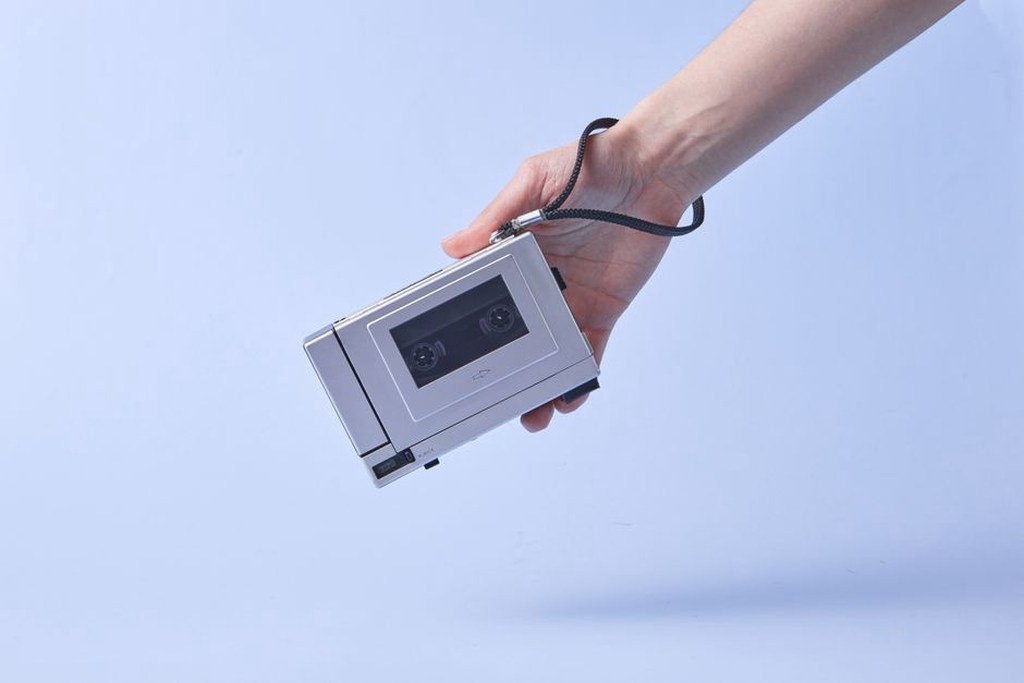
Cassette culture matters not because tape is inherently more authentic than digital distribution, but because it has supported inexpensive duplication, mail exchange, personal packaging, and small-scale release practices. A tape can make a work portable while retaining traces of local handling: handwritten inserts, altered cases, side-specific sequencing, and recording limitations all affect reception. Cassette circulation also creates archival problems. Titles may be inconsistently transliterated, catalog numbers may be absent, labels may be short-lived, and online listings may repeat unverified information.
Collectors and researchers need to separate observation from inference. A scanned J-card can confirm wording, visual design, and some credits; it cannot automatically establish a release date, edition size, or artist identity. A marketplace listing may preserve a useful photograph while offering unreliable metadata. When documenting a tape, note what is physically present, where each detail came from, and what remains uncertain. The problem is explored at close range in Decoding an Orphan File in Japanese Noise Archiving, which examines how fragmentary naming and metadata complicate archival claims.
A practical listening and documentation routine
- Listen once without pausing. Note duration, overall dynamics, and the moments that alter your attention.
- Listen again at a safe level, focusing on one layer: low frequencies, transient sounds, room tone, or tape artifacts.
- Record only verifiable release information from the object or its accompanying materials.
- Keep descriptions separate from facts: “a metallic pulse appears around the middle” is observation; “this is a factory recording” may be speculation.
- Leave uncertainty in your notes rather than filling gaps with repeated online claims.
| Listening object | Useful focus | Common mistake |
|---|---|---|
| Feedback performance | Room response and gain changes | Calling all sustained high sound “random” |
| Field-recording piece | Editing and framing decisions | Assuming it is unmediated documentation |
| Cassette release | Sequencing, hiss, dropouts, physical notes | Treating every defect as intentional |
| Drone recording | Microtonal drift and harmonic beating | Equating long duration with sameness |
A useful archive entry can remain modest: artist name as printed, title as printed, format, label or catalog detail when present, acquisition source, date of observation, and a note marking uncertainty. This discipline matters most when a file, tape, or image circulates without stable provenance. It gives the next listener something firmer than a confident guess: a traceable account of what was actually encountered.