
A sustained tone, a loop left running until its surface begins to fray, a microphone held close enough to reveal handling noise: none of these acts belongs to a religious tradition, yet each can take on a ritual character. In Japanese experimental music, “ritual” is most useful as a way of listening. It points to repeated gestures, sustained attention, and the arrangement of bodies, objects, rooms, and recording media. Used loosely, however, it becomes an exotic shorthand for anything slow, severe, or noisy.
The better question is not whether a performance is mystical, but what procedure organizes it. Does the performer return to the same action? Is the piece shaped by breath, machine cycles, feedback thresholds, or the gradual exhaustion of a material? Does the recording retain traces of a particular room and moment? Such details show ritual as practice rather than atmosphere.
Ritual as repeated procedure
Repetition has practical as well as expressive value. It makes small changes audible. Rub a contact microphone across metal for ten minutes and the basic gesture remains simple, but pressure, angle, fatigue, amplification, and resonance keep altering the result. Instead of following melody, the listener attends to variation within a fixed constraint.
This applies to noise, drone, ambient work, electroacoustic composition, and performances using found materials. A repeated procedure might mean turning devices on in a set order, routing a tape loop through the same chain, pressing objects against a speaker, or testing the point at which feedback begins. It can be compositional too: a score may specify a duration, a restricted sound source, or a sequence of listening tasks.
Repetition is not valuable simply because it repeats. It lets sound be measured against itself. A listener can hear a frequency widen, a room enter the signal, or a performer shift from controlling an instrument to responding to it.
Three elements often mistaken for one another
| Element | What it does | What to listen for |
|---|---|---|
| Repetition | Establishes a reference point | Minute shifts in pitch, attack, density, and timing |
| Duration | Allows material to develop beyond first impression | Fatigue, drift, accumulation, decay, and altered attention |
| Space | Shapes the sound through placement and resonance | Room reflections, leakage, audience presence, and distance |
None of these elements automatically makes a work ritualistic. A brief tape piece can feel intensely procedural, while a long performance may simply remain static. The difference is whether the form allows actions, materials, and conditions to become audible.
From sound sources to acts of attention
Japanese experimental practice has often treated ordinary technology as a source of unstable agency. Tape recorders, radios, effects units, microphones, small motors, speakers, and damaged electronics do more than reproduce a composition: they resist it. Motors fluctuate, circuits bleed, tape stretches, and feedback will not stay fixed. The performer repeatedly has to negotiate with those behaviours.
That negotiation is central to artists associated with noise and improvised electronics, including Masami Akita (Merzbow), Toshimaru Nakamura, and Sachiko M. Their methods are sharply different. Merzbow’s extensive noise practice has moved through changing instruments, recording methods, and conceptual concerns. Nakamura is known for the no-input mixing board, where a mixer’s feedback system becomes the sound source. Sachiko M. has used sine waves and sampled sounds with an austerity that makes placement, level, and silence structurally decisive. Calling all of this ritual would flatten important differences. What some of these works share is an exposure of processes that conventional music production usually conceals.
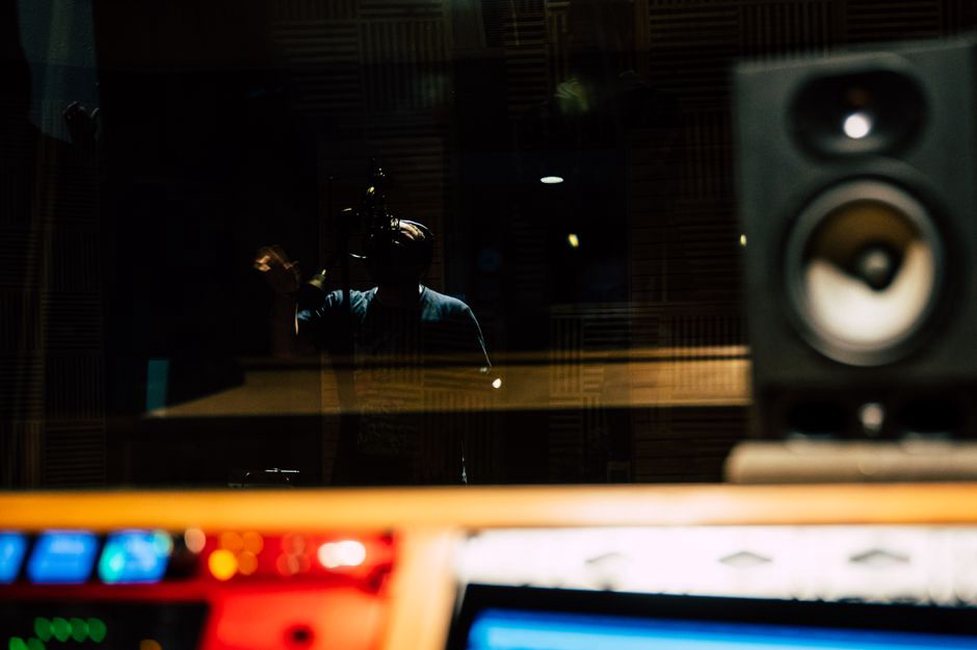
In Onkyo-related improvisation, near-silence can make a small operational event matter: an equipment switch clicking, a system hum, a chair moving, or a barely controlled feedback tone. The heightened rules of attention may suggest ritual, but the basis is concrete—signal flow, room acoustics, instrumental restraint, and collective timing.
Duration is not empty time
Long drone and ambient recordings often invite ritual language because they alter a listener’s sense of scale. A stable tone eventually stops seeming stable: harmonics surface, the ear adapts, and sounds in the listening environment begin to mingle with playback. Still, duration by itself is not depth. It helps to ask what is actually changing.
- Register: Does the sound move between low pressure and high-frequency detail?
- Density: Are layers added, removed, or obscured by saturation?
- Surface: Does a smooth tone pick up grain, flutter, distortion, or room noise?
- Position: Does a sound seem to recede, approach, or move across the stereo field?
- Threshold: When does a recurring sound become feedback, pulse, hiss, or silence?
These questions are useful with work that first appears monolithic. Across solo and collaborative settings, Keiji Haino’s output often uses vocal intensity, bowed strings, percussion, and amplification to make sustained pressure feel physical rather than static. Elsewhere, drone may be built through quieter means: layered recordings, electronic oscillation, processed acoustic instruments, or environmental sound. Its ritual quality may arise through patience and recurrence rather than volume.
Listening conditions matter. Headphones reveal micro-events but can obscure air and resonance; speakers return the recording to a room, where low frequencies and feedback-like textures interact with walls and furniture. Neither is inherently more authentic. Moving between them can show whether a perceived change belongs to the recording or to the playback environment.
Performance spaces and the social mechanics of concentration
A sonic ritual is never solely a performer’s private act. Venue size, entry and exit noise, lighting, audience proximity, and scene expectations all shape what can be heard. In a small room, amplifier hiss and bodily movement may become inseparable from the performance. A gallery can encourage slower circulation, while a club may frame volume as a collective physical event rather than an isolated aesthetic choice.
Japan’s independent venues, art spaces, record shops, and temporary DIY sites have supported many kinds of experimental activity, but there is no single Japanese performance etiquette. Some events welcome conversation and movement; others depend on concentrated quiet. Treating all Japanese audiences as uniformly disciplined, or every experimental performance as solemn, is a cultural stereotype rather than analysis. Watch the local conditions instead: what the room permits, how the set starts and ends, and how artists and listeners handle interruption.
Documentation can change the ritual
Recording a performance turns a situated action into an object that can circulate. That has value, but it changes the work. A cassette may retain overload, room rumble, and interrupted signal as evidence of a particular event. A clean digital transfer may expose frequency detail that was barely audible in the venue. Video introduces image and gesture, often drawing attention away from sound.
For collectors and archivists, contextual data matters as much as the audio itself. Record the performer name as printed, the date if known, the venue or city if verified, source format, transfer chain, and any uncertainty. Do not fill gaps with assumptions. Orphaned digital remnants make the problem plain: filenames, truncated metadata, and tiny image files can create the appearance of a documented release without proving one. Our examination of an orphaned file labeled Wasted 02 520 in the Japanese noise underground shows why a suggestive fragment should not be treated as a confirmed discography entry.
Objects, wear, and the discipline of limitation
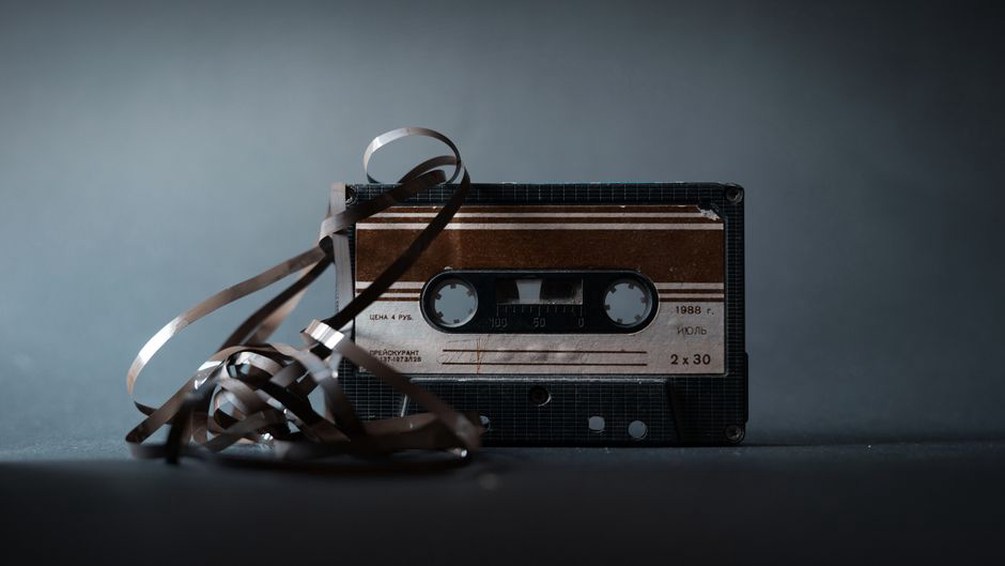
Material limits often give experimental pieces their ceremonial force. A cassette loop has a fixed length, and each pass adds wear while reducing clarity. A broken radio offers intermittent reception instead of full control. A cheap microphone exaggerates handling noise and proximity. Under these conditions, routine maintenance can become part of the composition: rewinding, replacing batteries, patching cables, moving a speaker, waiting for a loop to align.
This is not a uniquely Japanese preference for imperfection. Artists in many places use obsolete, damaged, or inexpensive media because they are accessible, expressive, or simply at hand. In Japan, as elsewhere, cassette labels and small-run releases have been important channels of exchange. Their meaning rests on specific networks of production and circulation, not nostalgia for analogue objects.
With tape-based work, listen for the difference between intentional and mechanical recurrence. Intentional recurrence is a compositional decision: a phrase, impact, or recorded environment returns at selected intervals. Mechanical recurrence comes from the medium itself—loop length, capstan irregularity, dropout, side breaks, or tape hiss. The strongest pieces often let these layers interfere.
Field recording: procedure, permission, and context
Field recordings are often called sonic documents, but no recording captures a place without mediation. Microphone choice, distance, weather, editing, monitoring level, and the recordist’s route all determine what remains. Once identifiable people, private conversations, workplaces, ceremonies, or vulnerable communities enter the recording, ethical questions cannot be separated from aesthetic ones.
For musicians working with found sound, ritual may lie in returning to a site: recording at the same hour, following a transit route, monitoring a machine over time, or placing microphones to reveal vibrations outside ordinary hearing. Repetition makes comparison possible. It can reveal seasonal shifts, changes in infrastructure, or the distance between human expectation and acoustic reality.
- Keep a log with location, time, weather, equipment, and recording decisions.
- Separate what was audible on site from what emerged only after amplification or editing.
- Seek permission when a setting is private, controlled, or socially sensitive.
- Do not treat proximity to another person’s life as raw material without considering consent and consequence.
- Describe edits honestly when presenting a recording as documentary evidence.
These practices do not make field recording less poetic; they make its claims more precise. A hum, rail vibration, or distant public-address system carries more weight when listeners understand how it was encountered and altered.
How to listen without turning ritual into mythology
Critical listening begins by resisting two easy stories. One treats experimental sound as pure chaos beyond description. The other turns every restrained gesture into proof of a timeless cultural essence. Both obscure technique, labour, and historical circumstance.
A more grounded habit is to make a short listening note after a set or recording. Name sources only when you can identify them; otherwise describe their behaviour. Mark when your attention shifted and what caused it. Separate an audible fact—“a high tone entered after a long low-frequency passage”—from an interpretation—“the tone felt like a rupture.” This small discipline helps musicians, reviewers, and collectors alike.
When cataloguing a difficult item, preserve ambiguity in the record: write “unidentified electronic tone,” “possible cassette-generation loss,” or “venue unconfirmed” instead of forcing certainty. Then replay a short section at low volume and again at a level where the room begins to participate. Note which details remain in the recording and which emerge only through the speakers in front of you.