
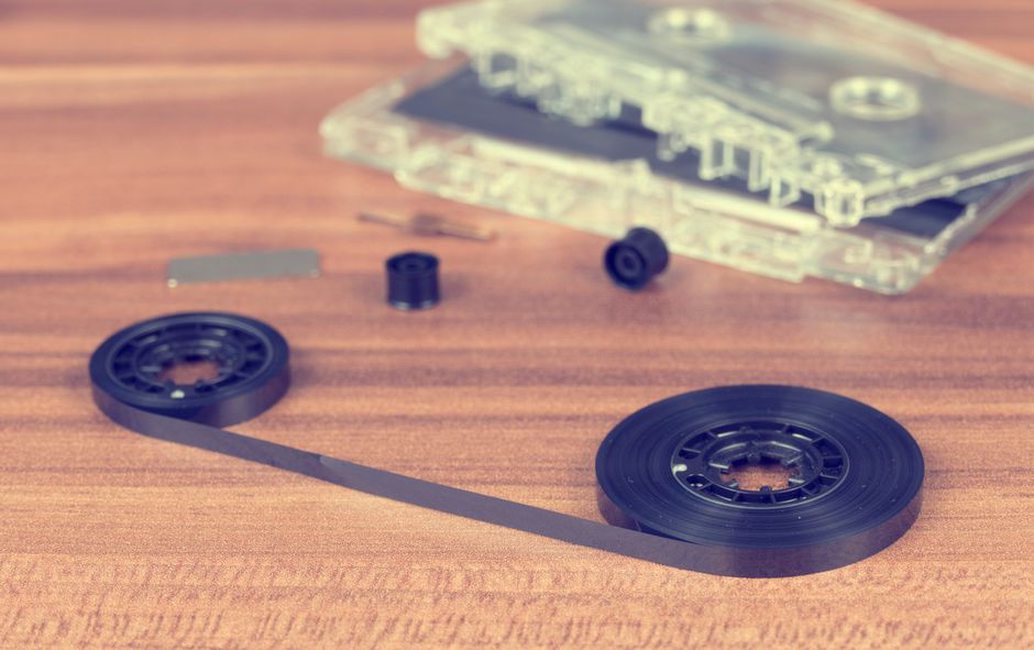
A cassette loop is more than a tape played repeatedly. It is a length of magnetic tape physically joined into a circuit, usually threaded through a cassette shell or around external guides, so that a few seconds of sound return on each pass. The splice may click, high frequencies may wear away, timing can waver, and the recorder’s motor becomes part of the sound. In Japanese experimental practice, such apparent defects have often been treated as compositional material rather than faults to eliminate.
That distinction matters. A loop can sustain a drone without becoming drone music, or carry a field recording without functioning as documentary sound. Its force lies in recurrence under mechanical pressure. Each repetition preserves an event while exposing the medium doing the preserving: oxide wear, uneven tension, head alignment, room noise, and the operator’s choices.
A small device with an unstable memory
Commercial cassette recorders made repetition accessible long before inexpensive computer sampling. A musician could record a sound, cut the tape with a razor blade, join the ends with splicing tape, and create a phrase that cycled continuously. The gesture is simple; the variables are not. Tape length sets the duration, speed affects pitch and density, the transport introduces fluctuation, and recording level determines how soon saturation appears.
The technique belongs to a wider history of tape music, built around recording, editing, and playback in studio settings. Portable domestic equipment later brought related methods into bedrooms, rehearsal rooms, and improvised performance spaces. For a concise account of that broader history, Wikipedia’s overview of tape music traces the medium’s roots in musique concrète and early electronic composition. DIY cassette loops belong to the same lineage, though their conditions are different: limited resources, practical compromise, and little distance between making a recording and circulating it.
In Japan, cassette-based experimental activity has intersected with noise, ambient, improvised music, industrial methods, home recording, and sound collage. It should not be flattened into a single national aesthetic. The shared ground is material access: inexpensive recorders, blank tape, duplication, postal exchange, and a readiness to leave the process audible. A loop might serve as a compositional unit, a performance tool, a break between harsher passages, or a fragile master used for further copies.
Why loops fit DIY conditions
Looping makes practical limits into a method. A short strip of tape cannot replace a multitrack studio, but it can hold an insistent interval. A cheap recorder may not reproduce a clean signal, yet its preamp can compress and roughen a source in useful ways. Without a sampler, a performer can still build layers by recording one machine into another, allowing playback to leak into the next recording, then repeating the process.
Repetition is never perfectly identical
Digital loops are often designed to hide the join. Cassette loops rarely do. A splice can create a small bump or scrape. Minor shifts in tension may alter the rhythm. Long sessions can warm the motor and change its behavior. Tape moving repeatedly across a head loses detail and accumulates noise. These are physical results, not guarantees of authenticity; they can be welcomed, ignored, or controlled with care.
For close listening, it helps to separate at least four layers:
- Recorded source: voice, instrument, radio, room tone, found sound, or feedback.
- Loop duration: a very short cycle may read as texture or pulse, while a longer one can retain an identifiable event or phrase.
- Transport behavior: drift, speed variation, dropouts, reverse playback, and interruptions caused by the machine.
- Recording history: prior overdubs, accidental bleed, copies of copies, and the accumulated noise floor.
This avoids a common listening mistake: treating every dense or degraded tape recording as undifferentiated “lo-fi” atmosphere. A repeated metallic strike may be the selected source. Its blurred tail may come from duplication, while an irregular accent may be the splice. Each has a different cause and expressive role.
From workshop technique to compositional form
A loop becomes composition when its boundaries, source, alteration, and relation to time are deliberate. That need not involve notation or conventional melody. It may mean leaving a six-second recording of ventilation unchanged for ten minutes before feedback gradually obscures it. It may mean letting two loops of unequal length drift in and out of alignment, or recording one loop onto another machine until the original source is nearly gone.
| Method | What changes | What to listen for |
|---|---|---|
| Single closed loop | One fixed segment repeats | Splice noise, minute timbral shifts, attention to internal detail |
| Two independent loops | Cycles gradually fall out of phase | Accidental counterpoint and changing density |
| Sound-on-sound overdub | New material accumulates over existing tape | Compression, masking, and the fading of earlier layers |
| Re-recording between decks | Playback is captured by another recorder | Generation loss, room leakage, and machine-specific coloration |
| Manual intervention | Pause, pressure, speed, or direction is altered by hand | Interruptions that reveal performance rather than automation |
These methods explain why a tape loop can sit beside noise without simply supplying a background drone. Repetition makes small changes easier to hear. If a feedback frequency rises slightly after dozens of cycles, the shift can feel structural. If a recorded door closes at the same moment on every pass, it becomes percussion. When that sound is gradually buried under hiss, the subject may become disappearance rather than the door itself.
Japan’s cassette networks were also working environments
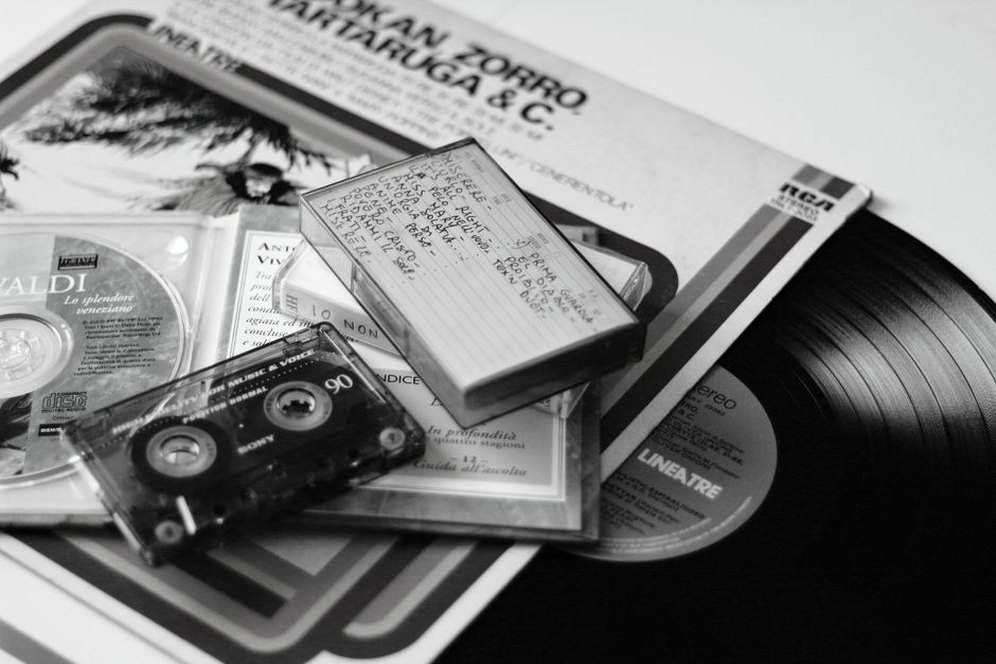
Small labels and self-released cassettes mattered as working conditions as much as distribution channels. The format was portable, recordable, duplicable, and inexpensive enough for small-scale exchange. Artwork could be assembled with photocopies, stamps, handwriting, or simple inserts. A tape might circulate with imperfect information: inconsistent titles, abbreviated credits, uncertain dates, and catalog numbers meaningful mainly within a particular network.
That uncertainty affects present-day listeners and archivists. A cassette’s title card is evidence, not necessarily final authority. Track divisions may not match the audio. A copied label can introduce a spelling error. A later digital file may preserve neither the original sequence nor the side break. The archival problems around unidentified files are explored in “Decoding a Cryptic Filename in Japanese Noise Archiving,” which shows why cautious description is more useful than confident guesswork.
Loops make documentation harder still. A short cycle can leave duration unclear: is a five-minute piece one loop repeated many times, a continuously changing tape procedure, or an excerpt from a longer performance? Notes should separate what has been verified from what has been inferred. “Audible repeated mechanical cycle” is a sound-based observation. “Made with a specific recorder” requires evidence.
Listening without turning material wear into mythology
Tape has an aura, but it also needs maintenance and carries archival risk. Magnetic tape can develop print-through, sticky-shed problems in some formulations, damaged leaders, broken shells, and a loss of high-frequency detail. Repeated looping accelerates wear at the same points. A loop that sounds beautifully frayed may be one pass away from snapping. Preservation and performance can therefore pull in opposite directions.
For collectors, document before attempting repair: photograph the shell, label, J-card, inserts, and handwritten marks; record playing time and side sequence; note damage without assigning it a meaning. If playback is necessary, use a clean, stable deck and do not force a resistant tape. Avoid splice repairs on irreplaceable items unless you have the appropriate tools and experience. A high-quality transfer can preserve the tape’s current state, but it should not be presented as a neutral replacement for the object. The shell, packaging, sequence, and patterns of wear may all carry part of the work.
A practical loop-building workflow
For musicians making new loops, a disciplined process is safer and more revealing than treating old hardware as a disposable effect.
- Use a non-essential cassette and a recorder in sound mechanical condition.
- Record a source with enough internal detail to reward recurrence: a sustained instrument, a domestic machine, a short spoken fragment, or a controlled feedback tone.
- Make the first loop longer than expected. Extremely short loops quickly become a single pitch or rhythmic grain.
- Use proper splicing tape rather than household adhesive, which can leave residue and jam a transport.
- Mark the cassette shell and keep a brief log of tape type, speed, source, loop length, and modifications.
- Capture a digital reference early if the loop will be heavily performed or repeatedly re-recorded.
Recording a loop is not the same as preserving it. A digital capture fixes one performance state: one machine, one alignment, one moment of wear. That limitation is useful. The file records the loop’s behavior at a particular time, while the tape remains a changing object.
What the format makes audible
The strongest tape-loop work does not ask listeners to admire obsolete equipment. It makes recurrence audible as labor, memory, pressure, and duration. A cassette’s small mechanisms impose limits that software can imitate without fully duplicating: contact with the playback head, friction at the splice, unstable movement, and a storage medium altered by use.
When cataloging or making a loop-based piece, begin with audible facts. Record the repeated interval, whether the splice can be heard, the source material, the changes applied, and the transfer chain when known. “Field recording loop, approximately eight seconds, with progressive saturation across the piece” is more useful than a vague claim about analog warmth. It also leaves room for the tape to keep changing after the description has been written.