
A field recording begins before the record button is pressed. Recorder position, microphone pattern, gain, wind protection, and the patience to wait determine what reaches the file. On a pedestrian bridge above a rail line, trains, footsteps, traffic wash, electrical hum, and voices may arrive at once; shift two metres and their balance changes. In experimental music, that choice is already part of the composition.
Japanese field-recording practices are often discussed through locations—dense streets, coastlines, forests, transit systems—but place itself is not the whole subject. What matters is attention: how an ordinary acoustic event is framed, edited, sequenced, and shared. A vending machine’s cooling system may document a machine, yet it can also reveal a cycle of pulses, a tonal centre, or the uneasy closeness of private listening and public infrastructure.
Recording is not neutral capture
The term “field recording” can imply unprocessed evidence, as if a microphone simply preserves reality. It does not. Microphones hear differently than bodies do; headphones bring background layers forward; recorders may suppress, distort, or exaggerate certain frequencies. Trimming an opening, removing handling noise, raising quiet detail, or arranging separate takes extends that interpretation.
That does not diminish a recording’s documentary value. It makes the conditions of its making more visible. A useful field-recording work lets the listener sense a relationship between sound, location, duration, and method, even when the source has been heavily altered. An artist may preserve the continuity of an event, assemble fragments recorded at different times, or treat recordings as material for electroacoustic composition. Each approach asks for a different kind of listening.
Three ways recorded environments become music
- Documentary listening: an extended take preserves the changing activity of a site. Its musical interest may come from duration, spatial depth, repetition, and accident rather than overt intervention.
- Composed montage: recordings from several places or moments are arranged in sequence. Cuts, contrast, recurrence, and silence create the form.
- Material transformation: recorded sound is filtered, layered, looped, stretched, or otherwise processed until its source matters less than its texture and structure.
These methods often overlap. A nearly untouched recording may still be carefully staged through selection and editing, while a heavily processed work can retain a recognizable trace of rain, machinery, speech, or birds. The question is not whether a piece is “pure,” but what its treatment lets the sound do.
A sonic diary without a single narrator
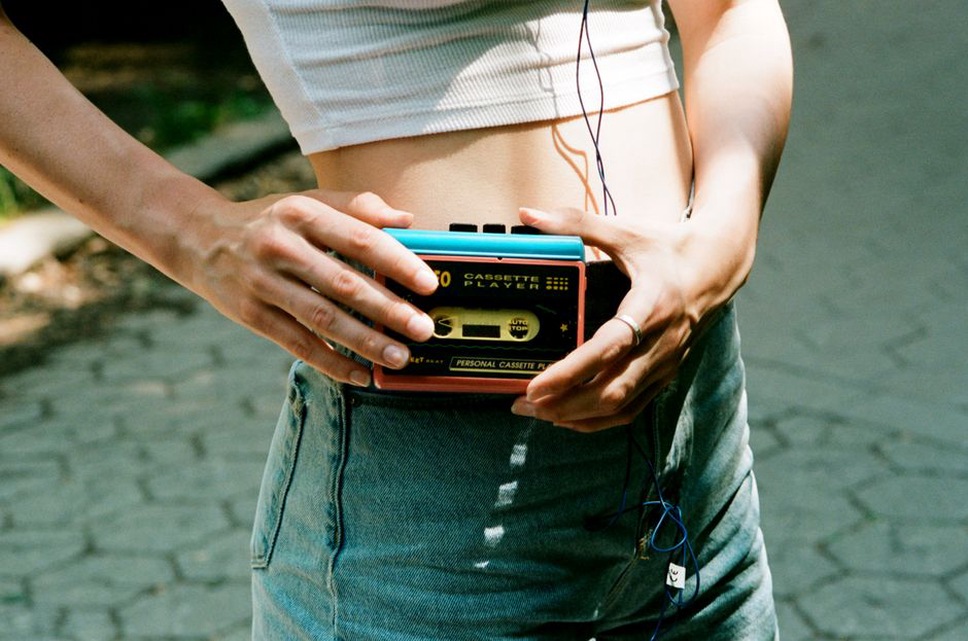
The diary metaphor is useful so long as it does not suggest confession. Field recordings can register daily rhythms that resist easy description: delivery carts before shops open, plumbing in an apartment block, a schoolyard heard beyond a fence, insects shifting after dark, a ferry terminal between departures. They preserve time as much as sound. Years later, seasonal shifts, repair work, redevelopment, closed businesses, altered routes, and changing technology may be audible in the same file.
A sonic diary is never a complete portrait of a city or region. It is a partial record made by someone with access to particular routes, hours, equipment, and permissions. Treating one recording as a universal image of “Japan” flattens both the work and the places it passes through. Better listening asks whose perspective is present, what falls outside the frame, and how the recording was shaped.
This is particularly important with urban material. A station platform is not merely a collection of recognizable signals. It is a workplace, a thoroughfare, and an acoustic system governed by announcements and safety measures. People there may reasonably expect not to become material for public release. Its density can be compelling without reducing anonymous people to background atmosphere.
Listening for scale, threshold, and repetition
Field-recording art calls for something other than following melody or naming instruments. Instead of asking immediately what a sound “means,” listen to its scale and behaviour. Is it in the foreground or at the edge? Does it return at regular intervals? Does a closing door alter the acoustic space? Does the perspective suggest an indoor room, covered walkway, open shore, or vehicle cabin?
A practical listening method
- First pass: listen without pausing and note broad changes in density, volume, or location.
- Second pass: identify recurring events: alarms, engines, footsteps, ventilation, waves, insects, or distant speech.
- Third pass: focus on thresholds—the moment a train arrives, wind reaches the microphone, a gate opens, rain begins, or a room is entered.
- Check the frame: notice fades, cuts, loops, stereo movement, and processing. These choices show how the piece was constructed.
- Read available notes after listening: location and method can deepen the experience, but prior information should not replace attention to what is actually audible.
A strong recording can make a familiar environment strange without making it exotic. Repetition is central to this effect. Mechanical cycles, pedestrian signals, escalators, ventilation fans, cicadas, and waves can form patterns that seem almost composed. Often, the interest lies in slight deviations: a delayed footstep, a shift in weather, a brief interruption in a motor’s pulse.
Tools shape the diary
Equipment does not decide artistic value, but it changes what can be heard. Built-in recorder microphones suit quick notes and close-range sound. External microphone pairs can provide quieter recordings, control over stereo width, and more flexibility in difficult conditions. Contact microphones reveal vibration through surfaces; hydrophones pick up submerged sound; electromagnetic pickups expose activity from electronic devices and power sources. Each establishes a different relationship to a site.
| Recording approach | What it emphasizes | Common limitation |
|---|---|---|
| Portable recorder with built-in microphones | Speed, proximity, spontaneous observation | Handling noise and limited wind resistance |
| Stereo microphone pair | Spatial detail and a more deliberate perspective | Setup time and greater visibility in public |
| Contact microphone | Internal vibration of objects and structures | Little airborne context |
| Hydrophone | Underwater movement and resonance | Specialized handling and monitoring needs |
| Electromagnetic pickup | Electronic fields from devices and infrastructure | Can be mistaken for ordinary environmental sound |
Wind protection is among the practical details that matter most. Even a light breeze can overload a microphone and turn a subtle recording into low-frequency turbulence. Basic foam covers do little in stronger air movement; a proper furry windshield and suspension system make outdoor work much more dependable. Headphones matter just as much. They expose clipping, cable noise, distant tonal intrusions, and the difference between what feels loud to the body and what the microphones actually receive.
Leave headroom. A quiet location can tempt you to set levels near maximum, but an announcement, passing vehicle, dropped object, or sudden gust can clip irreversibly. Recording at a conservative level in a high-resolution format leaves room for later adjustment while protecting unexpected peaks.
Ethics and permissions are part of the method
Public audibility does not mean every sound is suitable for publication. Intelligible private conversation, children’s voices, medical settings, workplaces, ceremonies, and sites with explicit rules demand particular care. Laws around recording, privacy, and publication vary by place and intended use, so an artist should distinguish between making a private study, presenting a work, and distributing audio widely.
When speech is central to a piece, consent is the clearest route. If it is incidental, ask whether it is identifiable, sensitive, or necessary. Editing, masking, shortening, or omitting a segment may protect people without weakening the work. Permission also has a practical side: railway facilities, shops, museums, performance spaces, private land, and managed natural areas may restrict recording or tripod use. Staff instructions take priority over an artistic plan.
Environmental care belongs to sound practice. Do not block paths, enter restricted habitats, approach wildlife for a closer signal, or leave equipment unattended where it creates a hazard. Long-duration recordings can be made quietly and responsibly from a legal, safe position; no take justifies damage to a site or disruption to the people who use it.

From file to usable archive
Unlabelled audio becomes hard to revisit sooner than expected. A consistent naming and note-taking routine turns accumulated files into an archive for future compositions, research, or renewed listening. Filenames do not need to be poetic. They need to remain understandable once they are separated from the recorder or memory card.
A practical pattern is YYYY-MM-DD_location_take, followed by a text note with microphone type, weather, time range, recording perspective, permissions, and notable events. Keep the original, unedited file. Make a separate working copy for edits, then back up to at least two different storage locations. If a site is sensitive, use a broader geographic label in public and keep precise coordinates in a private note.
Archival uncertainty is particularly difficult in underground music histories, where fragments circulate without dependable context. The blog’s examination of the orphan file “wasted 10 2” and Japanese noise archiving shows why filenames, provenance, and modest claims about uncertain material matter. A field recording should not be given a fictional history simply because its original context has been lost.
Minimal metadata worth keeping
- Date, local time, and general location
- Recorder, microphone, and recording format
- Microphone placement and orientation
- Weather and unusual site conditions
- Whether voices are intelligible or permissions were obtained
- Edits, processing, and the relationship between source and final work
Keep a final edit modest when possible: retain thirty seconds before and after the intended event, compare the unprocessed file with the processed version, and write one sentence explaining each substantial cut. That note may later be the only reliable account of why a distant construction rhythm, ferry horn, or room tone was allowed to carry the piece.