
The physical archive of Japanese noise music is an archipelago of scattered, often private collections held together by obsessive individuals, decaying magnetic tape, and a shared understanding that institutional memory has largely failed this corner of culture. There is no centralized national discography for the output of the 1980s cassette underground, no single repository that holds a complete run of a label like Vanilla Records or a comprehensive set of the self-released CD-Rs that flooded the Tokyo scene in the early 2000s. What exists instead is a fragile network of personal hoards, each shaped by the collector's taste, geography, and tolerance for the slow degradation of polyester-based media.
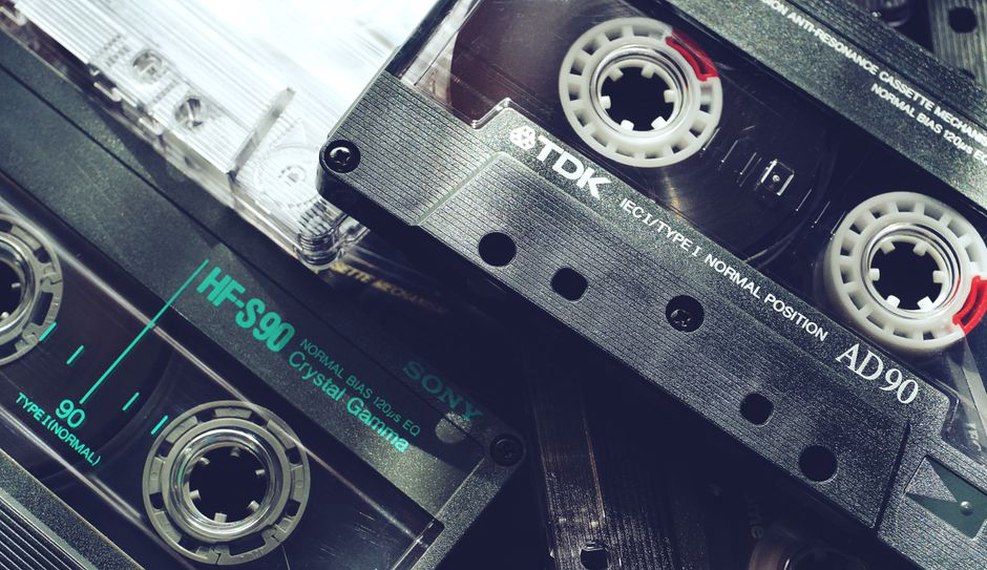
These collections are not libraries in the traditional sense. A collector in Osaka might hold the only known copy of a C46 tape by a short-lived duo who played three shows at Bears in 1987 and vanished. The tape sits in a shoebox alongside a photocopied insert, the ink now faintly purple, the fold lines worn white. The collector has no catalog number for it, because the band never assigned one. The music itself is a single 23-minute track of contact-miked scrap metal and heavily filtered radio static, recorded onto a second-generation dub of a TDK D60. This is the granular reality of noise archiving: not the heroic recovery of lost masterpieces, but the quiet maintenance of objects that a wider culture has deemed disposable.
The Geography of Private Collections
Japanese noise archiving has always been geographically diffuse, reflecting the decentralized nature of the scene itself. Unlike the jazz kissaten culture of Tokyo, which produced semi-public listening spaces with carefully maintained record libraries, noise collectors have tended to operate in isolation. The Kansai region, with its long history of experimental music stretching back to the Fluxus-influenced activities of the 1960s, has produced some of the most idiosyncratic holdings. A collector in Kyoto might specialize exclusively in the output of the Boredoms' pre-major-label period, accumulating not just the official releases but rehearsal recordings, alternate mixes circulated among friends, and the ephemeral side projects documented on micro-edition cassettes.
The Tokyo collections tend toward a different character, often reflecting the city's role as a hub for international tape trading. A collection assembled in the western suburbs might contain a disproportionate number of European and North American noise cassettes alongside Japanese material, the result of decades of correspondence with traders who communicated in broken English and padded envelopes. These cross-pollinated collections are particularly valuable for understanding the transnational flow of noise aesthetics in the pre-internet era, when a Xeroxed catalog from a label like Germany's Selektion could shape the direction of a Japanese artist's work as much as any domestic influence.
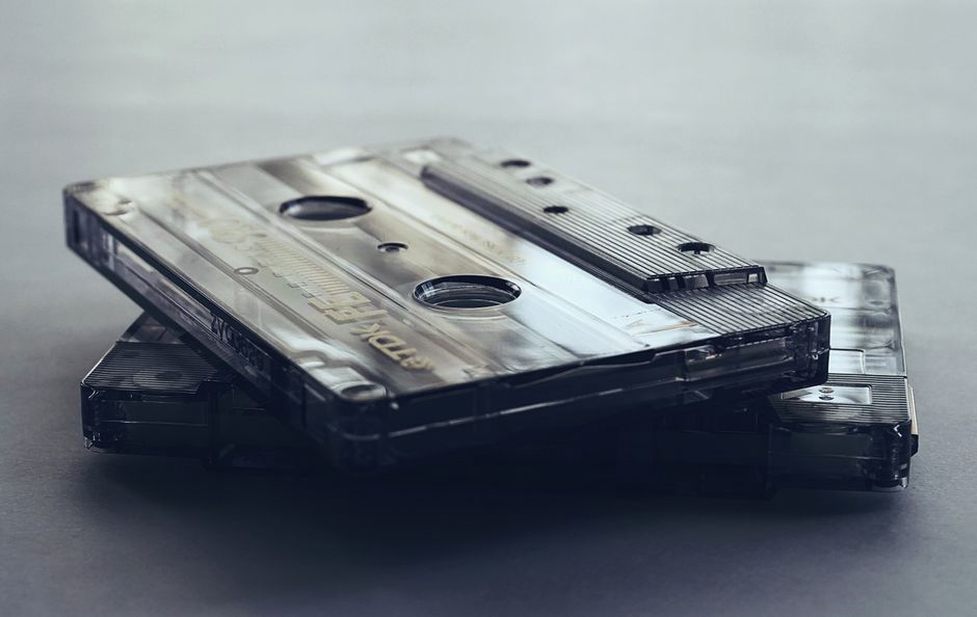
The physical condition of these archives varies wildly. Japan's humid summers are notoriously hostile to magnetic tape, and without climate-controlled storage, a cassette stored in a typical apartment can develop mold or suffer from binder hydrolysis within a few decades. Some collectors have taken meticulous precautions, transferring their holdings to climate-controlled rental storage units or investing in vacuum-sealed packaging. Others have simply accepted entropy as part of the medium's nature, treating the gradual degradation of a tape's high-frequency response as a kind of patina, an audible marker of the object's passage through time.
Institutional Gaps and Grassroots Responses
Japan's major cultural institutions have historically shown little interest in the noise underground. The National Diet Library's legal deposit system, which requires publishers to submit copies of their publications, does not apply to self-released cassettes and CD-Rs that fall outside the ISBN system. University archives, with a few notable exceptions, have not prioritized the acquisition of experimental music materials. The result is a documentary void that private collectors have filled by default, often without any formal archival training or institutional support.
This is not to say that no institutional efforts exist. The Osaka-based musicologist and archivist who has spent decades documenting the Kansai noise scene has placed portions of his collection in a university library, though access remains restricted and the cataloging is incomplete. A small museum in a provincial city holds a modest collection of noise-related ephemera, including flyers, posters, and a handful of rare cassettes, but the display rotates infrequently and the storage conditions are less than ideal. These efforts are the exception, not the rule, and they underscore the degree to which the material history of Japanese noise remains in private hands.
The grassroots response to this institutional neglect has taken several forms. Some collectors have become de facto publishers, digitizing their holdings and making them available through limited-run CD-R reissues or private file-sharing networks. The ethical questions surrounding these activities are complex: the artists are often untraceable, the original labels long defunct, and the notion of "rights" in a scene built on unauthorized sampling and anti-copyright rhetoric is murky at best. Other collectors have taken a more guarded approach, treating their archives as private research collections and granting access only to trusted visitors.
The Cataloging Problem
One of the most persistent challenges facing noise archivists is the sheer difficulty of cataloging this material. Many releases lack standard identifiers: no catalog numbers, no release dates, no track titles, sometimes no artist name beyond a cryptic symbol or a single kanji character. The same recording might circulate under different names in different trading circles. A tape labeled simply "Live at Antiknock 1993" could refer to any number of performances, and establishing which one requires cross-referencing flyers, personal correspondence, and the fading memories of scene participants.
The digital era has introduced new complications. The orphan files documented in the Japanese noise underground present a particular kind of archival puzzle. A file named "wasted 1ver" might be a mislabeled rip of a known release, or it might be a unique artifact with no physical counterpart, a digital ghost whose provenance has been lost to hard drive failures and dead file-sharing services. The article on Decoding 'wasted 1ver' examines one such case, tracing the clues embedded in the filename itself. Similarly, the investigation into tesuco520 bl reveals the layers of speculation and detective work that go into reconstructing the context of a single orphaned audio file.
Tape Label Discographies
For the dedicated collector, reconstructing the complete discography of a noise tape label is a project that can consume years. Labels like MSBR's Xerxes, which released some of the most uncompromising harsh noise of the 1990s, operated with a deliberate opacity that frustrates retrospective cataloging. Releases were not always numbered sequentially. Some were produced in editions so small that even the label operator cannot recall the exact quantity. A few were never publicly announced, existing only as private gifts or trades with close associates.
Collectors attempting to compile definitive discographies must rely on a patchwork of sources: old distro catalogs, zine reviews, Usenet posts preserved in the Internet Archive, and the recollections of aging noise musicians who may or may not remember the details of a release they made 30 years ago. The resulting discographies are almost always provisional, subject to revision as new information surfaces. The discovery of a previously unknown tape can upend years of received wisdom about a label's output, a reminder that the historical record is far from settled.
Preservation and the Digital Turn
The migration of noise archives from physical to digital formats has been underway for decades, but it has accelerated in recent years as the fragility of magnetic media becomes increasingly apparent. The typical workflow involves a high-quality cassette deck, an analog-to-digital converter, and software for noise reduction and normalization, though purists argue that the surface noise of a well-worn tape is part of the document and should not be cleaned up. The resulting files are typically stored as uncompressed WAV or FLAC, with CD-quality 16-bit/44.1kHz being the minimum acceptable standard.
Digital preservation introduces its own set of problems. Hard drives fail, file formats become obsolete, and cloud storage services go out of business. A FLAC file stored on a server in a data center is not inherently more durable than a cassette stored in a shoebox, and the sheer volume of digital material can make it harder to manage than a finite physical collection. Some collectors have adopted the LOCKSS principle (Lots of Copies Keeps Stuff Safe), distributing their digital archives across multiple hard drives and geographic locations. Others have embraced the anachronistic practice of transferring digital files back to analog tape, reasoning that a well-stored cassette will outlast any hard drive.
The Metadata Imperative
A digital audio file without metadata is an orphan, and the noise archive community has grappled with the question of what constitutes adequate documentation. At minimum, a file should carry information about the artist, title, label, release date, and transfer source. But the reality is often messier. A rip of a compilation tape might contain tracks by multiple artists, some of them uncredited. A live recording might have been transferred from a cassette that was itself a dub of a dub, with generational loss introducing artifacts that make it difficult to distinguish between intentional distortion and degradation.
Some collectors have adopted the practice of embedding extensive notes directly into the file's metadata fields, using the comment section to record provenance, condition notes, and unanswered questions. These annotations are not visible to the casual listener, but they serve as a form of institutional memory, a way of ensuring that the context of a recording does not disappear when the collector does.
The Social Dimension of Collecting
Noise archiving in Japan is not purely a solitary pursuit. The collectors who maintain these archives are connected through informal networks of trust and mutual obligation. A collector who digitizes a rare tape might share the files with a handful of others, with the understanding that they will not be publicly distributed. These private sharing circles function as a kind of distributed backup system, ensuring that no single collection is a single point of failure for the preservation of the material.
The relationships between collectors and the original artists are often direct and personal. Many noise musicians are still alive and active, and some have come to rely on collectors as custodians of their back catalogs. An artist who lost their master tapes in a flood or a move might turn to a collector for a digital copy of a release they no longer possess. This dynamic inverts the traditional relationship between artist and archivist, making the collector not just a passive recipient but an active participant in the ongoing life of the work.
These relationships are not without tension. Some artists are ambivalent about the archival impulse, viewing the obsessive documentation of a scene that was built on ephemerality and destruction as a kind of category error. The noise performance is, by its nature, a transient event; the recording is a poor substitute, a flattened representation of a physical experience that involved volume, space, and the presence of bodies in a room. To treat the recording as the primary artifact is to misunderstand the form. Yet the recordings persist, and the collectors who maintain them do so in the knowledge that they are preserving something that was never meant to be preserved.