
Dig into the discographies of the most elusive Japanese noise and drone outfits, and you'll eventually hit a dead end—a release that exists only as a ghost in the database, a catalog number that leads nowhere. That dead end is often 004tt. Not because the label is secretive, but because it operates on a logic that predates the streaming era: physical copies, no digital presence, and no intention of being found by algorithm. Founded in the late 2000s, 004tt has released fewer than twenty titles. The exact number is impossible to verify because the label does not maintain a website, a Bandcamp page, or a social media account. The only way to know what exists is to find the tapes in person or through private trades. This is not a marketing strategy. It is a rejection of visibility itself.
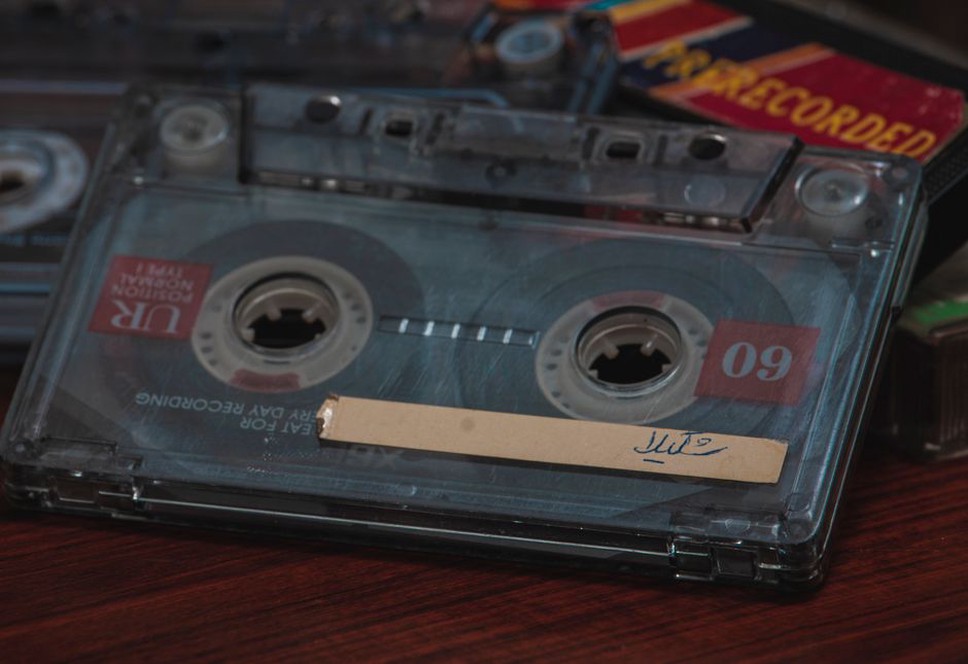
The name 004tt comes from the original price in Japanese yen—004 being four yen per tape, and tt standing for “tape” in a romanized shorthand. That price has long since become symbolic; actual postage and duplication costs now far exceed it. But the ethos remains: the music is meant to be disposable in the best sense—cheap to acquire, easy to circulate, and free from the weight of curation that plagues even the most niche digital platforms. Each release is limited to between 30 and 50 copies, hand-duplicated in real time on a four-deck TEAC cassette recorder that the label owner bought used in Akihabara in 2006. The machine has been repaired three times. It still works.
The Catalog as a Map of Underground Networks
004tt does not announce releases. A new tape simply appears at a show or is mailed to a few trusted distros—Mei-Ken in Kyoto, Tusk in Tokyo, sometimes a shelf at Disk Union’s Shinjuku annex for one week before it is gone. The catalog numbers run sequentially but with deliberate gaps: 004tt-01 through 004tt-18 so far, with 004tt-05, 004tt-11, and 004tt-16 never having materialized. Whether these are placeholder numbers for abandoned projects, lost masters, or deliberate voids is unclear. The label owner, who communicates only via a single ProtonMail address and refuses interviews, once wrote in a trade note: “Empty numbers let the tape breathe.”
The music itself spans a narrow but intense range: blown-out field recordings of industrial machinery in Kawasaki, twenty-minute drone pieces built from a single bowed cymbal, and electronic noise that sounds like a shortwave radio picking up a thunderstorm. There is no mastering—what you hear is what came off the mixer. Surface noise from the duplication process is part of the composition. Some collectors consider the generation loss from the third or fourth pass on the TEAC deck to be the most desirable version, because it introduces harmonics that do not exist on the first copy. This is not a gimmick. It is the inevitable result of using degrading physical media as a distribution method.
Materials and Micro-Editions
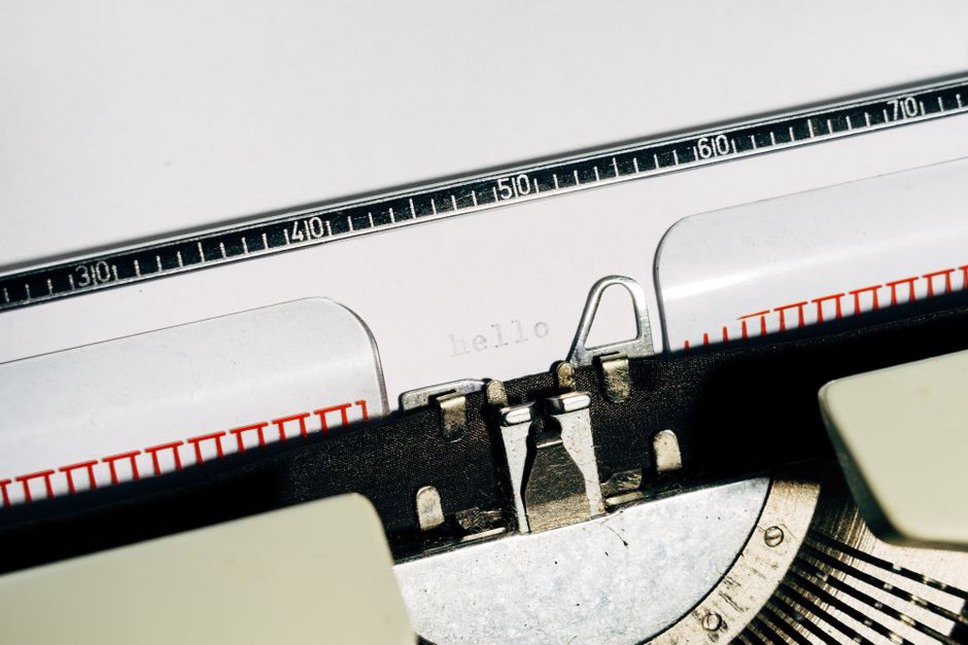
Every 004tt release comes in a hand-stamped cardboard sleeve with a single-color risograph print. The J-cards are always typed on manual typewriters—three different machines have been used over the years, identifiable by the slight variations in letter spacing and ink density. The label has refused to switch to inkjet, laser, or even digital risography. When the Olivetti Lettera 32 broke in 2019, production stopped for eight months until a replacement was found. That gap is 004tt-12 and 004tt-13, both of which bear the slightly heavier impression of a 1958 Olympia SG3.
- Duplication method: Real-time on TEAC 4-track, at 1⅞ ips, ferric stock only.
- Packaging: Hand-stamped cardstock, typewritten J-cards, no barcode, no shrinkwrap.
- Distribution: No distro contracts. Tapes are sent as blind parcels to a rotating list of recipients. If you want one, you have to know someone who knows someone.
- Pricing: Always ¥400 (approx. $2.70 USD) at point of sale. Secondary market prices vary wildly but the label does not benefit from or endorse resale.
Why It Matters in 2024
The cassette revival of the 2010s turned micro-labels into aesthetic commodities. Bandcamp made every private press release searchable, and the tactile fetish of the cassette became a marketing angle that large labels willingly exploited. 004tt avoids that cycle not by opposing it, but by existing outside the infrastructure that enables it. You cannot stream 004tt. You cannot pre-order it. You cannot even google it and find a complete discography—the only partial list exists on a three-year-old post on a Japanese noise forum that requires registration to view. That inaccessibility is not a barrier; it is the medium's natural state.
For the collector, 004tt presents a specific challenge: authentication without documentation. There are bootlegs of early 004tt releases, made by fans who attempted to replicate the packaging. The label's only response was to change the stamp color from black to a specific Pantone 877 silver metallic for 004tt-09 onward. The bootleggers did not bother updating their process because the demand is too small, but the shift tells you something about how the label thinks: even a trivial change in production detail can become a marker of authenticity for the dozen people who care.
Practical Notes for the Curious Listener
If you want to hear 004tt releases, do not start by hunting for the tapes. They are scarce and expensive on the secondary market—a 004tt-04 recently traded for ¥12,000 on Mercari Japan, which is thirty times the original price and not worth it. Instead, look for compilations. A few 004tt artists have appeared on multi-label cassette compilations from similar-minded European and North American labels: Oiseaux de Proie (2015) on the French label Transversales Disques includes a track by the 004tt-associated project Ueda Solo, and Microtonal Drift (2018) on the New Zealand imprint Siltbreeze contains a piece originally released as 004tt-08 under a different title. These compilations are easier to find and give you the sound without the hunt.
Do not email the label asking for a catalog. Do not ask for a digital file. The label owner will not respond, and even if they did, there is no digital file—the master recordings are on the same type of ferric cassette that the releases are duplicated onto. The only digital trace of 004tt is a single 30-second clip that someone recorded on a phone at a live show in Koenji in 2017 and uploaded to a now-deleted SoundCloud account. That clip is probably the most widely circulated piece of audio from the label, and it sounds exactly like what it is: a room recording of a damaged PA system feeding back into a contact microphone.
If you do manage to obtain a tape, treat it as a document of a specific moment, not as a collectible to be preserved. The ferric stock used by 004tt is known to shed oxide after about fifty plays. The label designed it that way—not maliciously, but practically. Tapes are meant to be heard, and when they wear out, the music becomes memory. That impermanence is the point. The label has never reissued a single title. When a tape degrades, it is gone. The next duplication pass will never bring back the exact same noise.