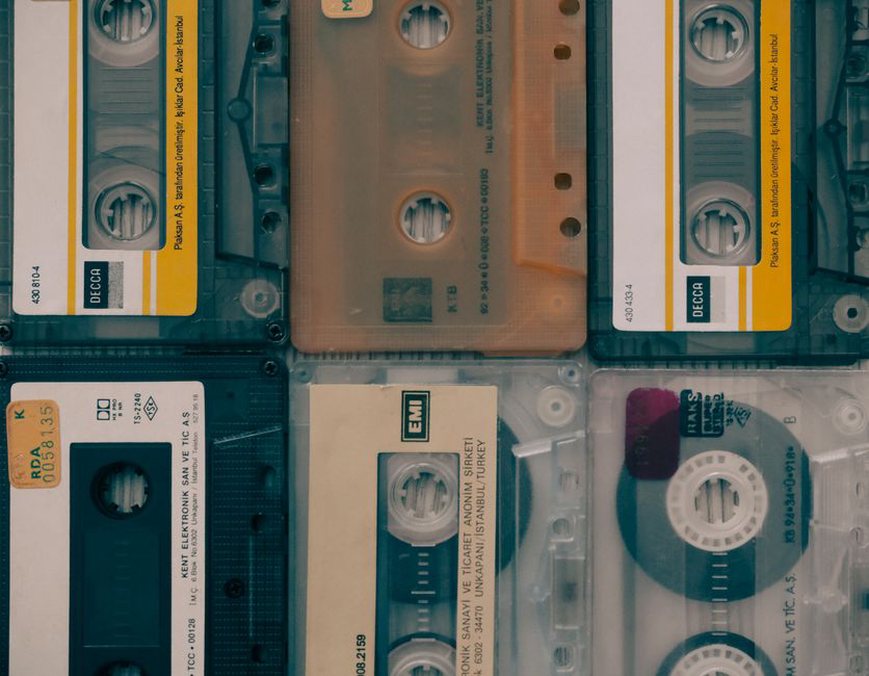
Walk through most histories of Japanese noise and experimental music and you'll find a chain of male names. That chain is real, but it's also a distortion. From the earliest days of the cassette underground, women weren't occasional guests in the scene—they were building it. The late-1970s and early-1980s tape network mattered precisely because it sidestepped the commercial industry's usual gatekeeping. No A&R men, no label executives deciding who belonged. Equipment was shared, duplication happened in living rooms, distribution ran through mail-order lists and small shops. In that kind of environment, collaboration depended on trust and proximity, not on credentials or gender. The result was a space where women could work as peers, not exceptions.
Phew is the figure who makes this clearest. Her path runs straight through the intersection of punk, industrial, and avant-garde electronics, but she never stayed in one lane long enough to be pinned down. She started with the Osaka band Aunt Sally—a brief, ferocious stint that burned out fast. Then came the solo turn that really mattered. Her 1981 self-titled debut, produced by Ryuichi Sakamoto, is a strange, cold record. Brittle drum machines, stark synthesizers, and a voice that shifts from flat speak-sing delivery to something closer to a guttural howl. It wasn't punk in any recognizable form. It was minimalist dread, the kind of sound that would later be called industrial, except she got there early. Collaborations with members of Can, DAF, and Einstürzende Neubauten followed, pulling her into a global network of experimentalists, but the sensibility stayed hers—a refusal to settle. Later work like Light Sleep pushed deeper into electronic abstraction, into the physical texture of sound itself.
The same cassette culture that supported Phew's early recordings also sustained a wider constellation of artists whose visibility was always partial. Vanilla Records, a label that documented the porous edges between post-punk, industrial, and early noise, released the Heavenly Peace compilation in 1985. One track on it comes from Mizutama Shobodan, a short-lived unit featuring vocalist and multi-instrumentalist Reiko. The piece is a collision of fractured rhythms, atonal guitar, and a voice that moves between chant and outright confrontation. The group didn't last. They left a handful of recordings and then disappeared. But their presence on a compilation of that stature says something about the underground's actual makeup—more varied, less uniformly male than the retrospective histories tend to admit.
By the 1990s, Japanese noise had hardened into recognizable subgenres: harsh noise wall, cut-up, the kind of relentless sonic assault that gets described in hyper-masculine language. The presence of Kumi Iwase, who records as Pain Jerk, complicates that picture considerably. Her mid-to-late-1990s work is dense and fast-moving, layers of distorted electronics and manipulated tape loops shifting at a pace that demands close attention. The surface is chaotic, but the construction is precise. Releases on Self Abuse Records and her own P-Tapes label aren't exercises in brute force. They show a meticulous attention to texture and dynamics, a sense of sculpting sound that goes well beyond cranking up the volume. For a long time, listeners often didn't know her gender, or treated it as irrelevant. That fact alone tells you something about how the CD-R and cassette underground could function: a space where the work was judged on its own terms, no biography required.
Then there's Junko. Her voice is not an instrument in any conventional sense. It's a physical event—shrieks, guttural noises, overtone-rich drones that bypass language entirely. She's known for her decades-long collaboration with Mattin in Hijokaidan, a group that has been central to Japanese noise since the late 1970s, and for extensive solo work that pushes the human vocal apparatus to its absolute limits. Her performances can be excruciating, the kind of sound that forces a bodily response. Solo recordings, mostly on tiny-run CD-Rs and cassettes, document an ongoing investigation of the body as a sound source. It's a practice that connects the visceral energy of noise to a global tradition of extended vocal technique, but the results feel specific to her—raw, unmediated, impossible to ignore.
The electroacoustic and field recording traditions tell a parallel story, though one documented more through academic institutions and galleries than through the noise underground. Yumiko Tanaka works extensively with traditional Japanese string instruments, particularly the shamisen, alongside live electronics and computer processing. She doesn't treat the shamisen as a museum piece. It becomes raw sonic material—deconstructed, amplified, transformed. In performances and installations, she explores the instrument's microtonal possibilities, the physical resonance of its body, the hidden acoustic dimensions that electronic processing can reveal. Deep traditional knowledge meets a radical openness to technological intervention. The result is a model of experimental practice that doesn't fit neatly into noise or ambient or any other genre category.
Ambient and drone music in Japan has its own gender dynamics. Hakobune, the project of Takahiro Yorifuji, gets discussed. Female artists working in similar territory get discussed less. The absence of a single prominent female name in the Japanese ambient-drone scene isn't evidence that women weren't there. It reflects the nature of the music itself: fragmented, often private, circulating in tiny editions on small labels and self-produced CD-Rs with minimal biographical information. The sound—processed guitar, field recordings, analog synthesizers—creates an immersive, introspective space that resists the personality cults that dominate other genres. Labels like White Paddy Mountain, run by Chihei Hatakeyama, have provided platforms for a diverse range of artists, but the documentation remains patchy, the historical record incomplete.
Some artifacts resist recovery entirely. A file has circulated in digital archives under the name wasted b00—a fragment of distorted audio with no definitive attribution. It's an orphaned recording, detached from its creator and context, floating through file-sharing networks and private collections. The possibility that it could be the work of a female artist, lost to the informal archiving practices of the noise community, is a reminder of how fragile historical memory can be in underground scenes. Noise music's embrace of anonymity, pseudonyms, and limited editions creates a situation where authorship is often unrecoverable. The contributions of those who didn't seek visibility remain perpetually at risk of erasure.
The cassette label ecosystem that sustained so much of this work was, at its best, a meritocracy of sound. Labels like G.R.O.S.S., MSBR Records, and Xerxes operated on a scale where personal relationships and aesthetic affinity mattered more than market logic. Women ran labels, distributed tapes, organized shows—roles essential to the scene's functioning but less likely to leave traces in the historical record than the names on the releases. The story of female pioneers in Japanese noise isn't a simple arc of exclusion followed by rediscovery. It's a complex map of participation, collaboration, and the quiet accumulation of work that continues to resonate. The sounds themselves remain the most compelling evidence: Junko's unflinching vocal extremes, Pain Jerk's sculpted electronics, Phew's refusal to stay in one place. A presence that was always there, waiting to be heard on its own terms.