
The filename "w1" appears across dozens of Japanese noise archives, usually as a single folder or a lone audio file buried inside a larger, poorly labeled directory. Unlike the numbered Tesco series or the cryptic "t2" folders, w1 carries no obvious label, no catalog number, no artist name. It is a fragment that refuses to declare its origin. For collectors who maintain organized libraries of underground cassettes and CD-Rs, w1 is a persistent anomaly — a file that feels intentional but offers no context. To understand w1, you have to look at how anonymous releases work in Japan's noise underground, and why a single letter and number can carry more significance than a full catalog entry.
What w1 Actually Is
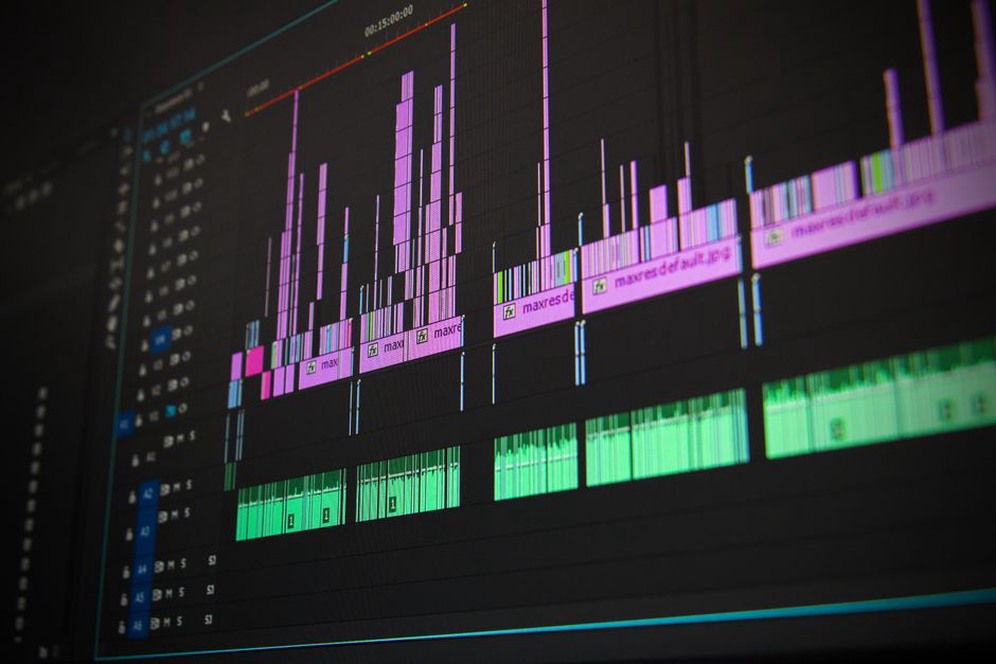
In the raw file structures shared on trackers and private archives, w1 typically appears as a 44.1 kHz 16-bit WAV or FLAC file ranging from 15 to 45 minutes. The audio content varies: some versions contain a single continuous drone built from feedback loops, others present a collage of field recordings layered with short-wave radio static. There is no consistent mastering level, no standard track length, and no accompanying text file. The only constant is the naming convention — lowercase "w", no space, the digit "1". This uniformity across disparate sources suggests a deliberate system rather than random labeling. The "w" could stand for "wave", "white", "workshop", or a label name abbreviated to a single letter. The "1" implies a series, but no public archive has ever produced a confirmed "w2" or "w3" with matching audio characteristics.
The Context of Anonymity in Japanese Noise
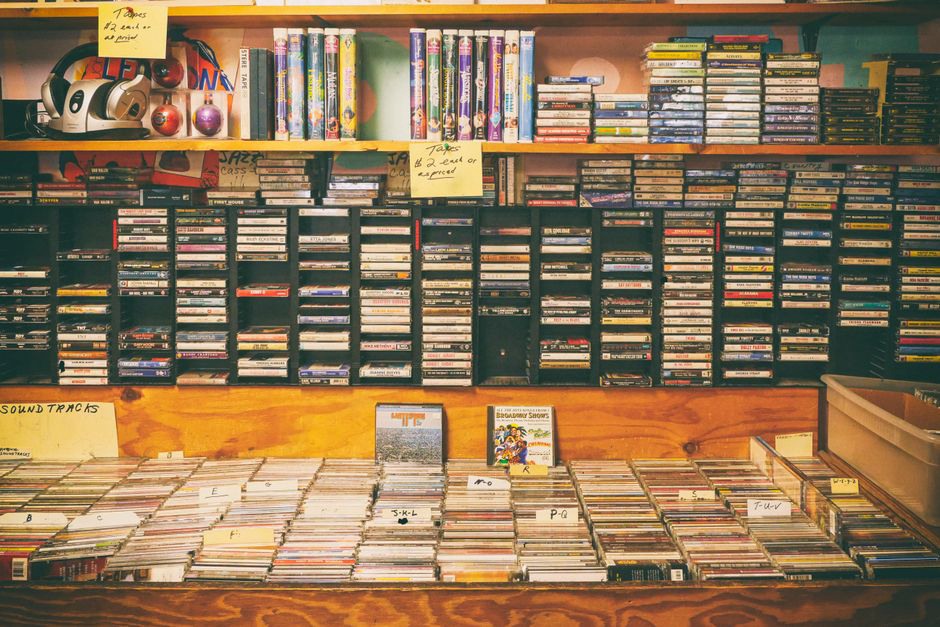
Anonymity in Japan's noise scene is not a promotional tactic. For many artists operating in the late 1990s and early 2000s, releasing work without a name was a practical decision. Cassette dubbing and CD-R burning were cheap, and the distribution network relied on small shops like Disk Union's underground section or mail-order lists photocopied and passed hand-to-hand. A release labeled only "w1" could be a test tape, a one-off live recording, or a collaborative project where participants chose not to be credited. The absence of metadata is itself a statement: the sound matters, the identity does not. This attitude aligns with the broader DIY ethos where the object — the cassette shell, the photocopied J-card, the handwritten label — carries as much meaning as the music. When that physical object is digitized and shared online, the file name becomes the only remaining trace.
Archivists face a difficult choice with files like w1. Assigning a placeholder artist name ("Unknown Artist") or a fabricated title can mislead future researchers. Leaving the file as-is preserves its original ambiguity but risks it being overlooked or deleted as junk. Some archives have chosen to keep w1 in a dedicated "orphan" folder alongside similar anomalies like sludge008.cass and other single-file remnants. This approach acknowledges that the file has value even without provenance.
Possible Origins of w1
Several theories circulate among collectors who specialize in Japanese noise artifacts. One holds that w1 is a fragment of a larger compilation that was split during an early file-sharing era on platforms like Soulseek or WinMX. The letter "w" could refer to a specific label or event series — "W" might stand for "Works", "Wander", or a location name like "Wakayama". Another theory suggests w1 is a raw output from a hardware test session, perhaps from a musician calibrating a custom circuit or testing tape saturation levels. The audio quality of some copies supports this: the signal is clean but unprocessed, with no compression or effects beyond the natural distortion of the recording chain. A third possibility connects w1 to the network of small-run cassette labels that operated in Osaka and Tokyo in the late 1990s. These labels often released editions of 10 to 30 copies, hand-numbered but not always named. A release marked "w1" could be the first in a series that never continued, or the only surviving copy of a label's inaugural tape. One collector claims to have seen a physical cassette labeled "w1" in a Tokyo shop, but the tape was too degraded to play. Without a physical object to examine — the shell color, the insert paper, the handwriting — the digital file remains a ghost.
How to Handle w1 in Your Collection
If you stumble across a file named w1 in a download or trade, don't rename it. The filename is the only identifier you have. Instead, follow a few practical steps:
- Check the file's spectral content using a tool like Spek or Audacity. Noise recordings often have unique frequency signatures that can be matched across different copies.
- Generate a checksum (MD5 or SHA-256) and compare it against known hashes on community databases. A matching hash confirms you have the same transfer as another collector.
- Note the bit depth, sample rate, and duration. These parameters can help distinguish different versions of w1 from unrelated files with the same name.
- Store the file in a dedicated "unidentified" folder with a plain-text log of where you obtained it and when. Even a vague source note ("from a 2012 Soulseek user in Tokyo") is better than nothing.
Documenting these orphan files collectively is the only way to reconstruct the network they came from. A single w1 is a loose thread. A database of fifty w1 files, each with its own hash and source note, becomes a map of how anonymous noise traveled through the underground.
The Relationship to Other Cryptic Files
W1 is not alone. The Japanese noise archive contains dozens of similar orphan files: single letters, numbers, fragments of dates, and partial catalog codes. Some of these have been partially decoded. The sludge007.cm file, for example, appears to be a mastering variant from a known series, while others like the Tesco 4 catalog entry point to a real but undocumented release. W1 differs in that it has no known series to anchor it. It floats outside any established catalog. This makes it both frustrating and valuable: it cannot be dismissed as a mislabeled duplicate, but it also cannot be verified against any external source.
Collectors who focus on Japanese noise have developed a taxonomy for these files. Some are grouped by suspected label ("Tesco" files, "Sludge" files), others by format ("cass" suffix, "cm" suffix). For instance, files ending in ".cass" are assumed to be raw cassette transfers, while ".cm" likely denotes a CD master. W1 belongs to a third category: files that appear to be individual works but lack any label or artist context. These are the hardest to research and the most likely to be deleted during digital housekeeping. Preserving them requires a conscious decision to value the unknown.
Why w1 Matters
In an era where every release is documented on Discogs, Bandcamp, or RateYourMusic, the existence of an unidentifiable file feels like a failure of the system. But for the Japanese noise underground, the system was never about being complete. Releases were ephemeral by design. The cassette tape was a medium for immediate exchange, not archival storage. In 2019, a collector in Osaka spent weeks trying to trace an orphan file similar to w1. He compared spectral fingerprints, contacted old label contacts, and even visited a former record shop. The file remained unidentified. He still keeps it, labeled as "unknown_osaka_1998". W1 may meet the same fate — never fully identified — but that doesn't make it worthless. The experience of listening without a name is something you can't get from a properly cataloged release. Preserving w1 is as much about keeping that experience alive as it is about archival completeness.