
Search for any obscure Japanese noise cassette from the 1990s and you will eventually land on a file named tumblr_n66qja8s3f1r1i0y8o1_500.jpg. The string appears in Google Images, in forum attachments, and on hard drives traded among collectors. It is not a release title, not a catalog number, not a band name. It is a platform artifact—a fingerprint left by Tumblr’s media upload system. Understanding what this filename means, and how it fits into the larger ecosystem of noise archiving, reveals a layer of digital archaeology that most listeners never consider.
The Anatomy of a Tumblr Media File
Every image uploaded to Tumblr is assigned a unique identifier and stored with a predictable naming convention: tumblr_ followed by a random alphanumeric string of variable length, then an underscore, then a size code, and finally the file extension. The random string—n66qja8s3f1r1i0y8o1 in this case—is generated by Tumblr’s servers at the moment of upload. It bears no relationship to the post content, the blog name, or the original file name. The size code 500 indicates the image width in pixels (500 px), the most common default for standard photo posts on the platform. Larger sizes (1280, 2048) exist but are less frequently encountered in noise archives, where scans were often uploaded at the default.
This naming scheme is opaque by design. It resists manual categorization and forces the image to be identified only by its visual content. For a collector sifting through hundreds of such files, the only way to determine what a given image depicts is to open it. There is no semantic hint in the filename.
Tumblr as an Accidental Archive
Between roughly 2009 and 2017, Tumblr became a primary distribution channel for Japanese noise ephemera. Collectors and small distros posted scans of cassette covers, liner notes, flyers, and tracklists. The platform’s reblog system allowed rapid spreading, but the lack of structured metadata meant that the same image could appear on dozens of blogs with no attribution. When blogs were deleted or abandoned, the images often remained on Tumblr’s servers, orphaned from their original context. The filename tumblr_n66qja8s3f1r1i0y8o1_500.jpg might be the only surviving record of a release that never made it to Discogs or any formal database.
The 500-pixel width is a deliberate compromise. It is large enough to read handwritten katakana on a J-card or to identify a label logo, but too small for high-quality reproduction. This aligns with the DIY ethos of the scene: the image is meant to be seen, not exploited. Many scans were taken with early digital cameras or flatbeds, then resized by Tumblr’s uploader, losing further detail. The result is a visual artifact that is both useful and frustrating—a ghost of a physical object.
The Random String as Anti-Catalog
The alphanumeric portion n66qja8s3f1r1i0y8o1 has no inherent meaning. It is not a hash of the file contents (Tumblr does not publish its generation algorithm), nor is it derived from the blog ID or post timestamp. It is pure entropy. For an underground that has historically resisted easy commodification—labels releasing cassettes with no catalog numbers, artists using pseudonyms, distros disappearing overnight—this randomness is oddly fitting. The filename refuses to be a catalog entry. It is an identifier that identifies nothing but itself.
This places it in a family of cryptic noise artifacts that includes folder names like t2, t3, and files named sludge005. Similar cryptic naming conventions appear in noise blog archives, as explored in the article on the sludge008 files, where the filename itself becomes the only stable referent. Unlike those, however, the Tumblr filename carries the platform’s DNA. It tells you not what the image is, but where it came from—a server, a blog, a moment of upload.
Practical Notes for the Collector
When you encounter a file like tumblr_n66qja8s3f1r1i0y8o1_500.jpg, treat it as a primary source. Do not rename it unless you are cross-referencing it with other evidence. The original filename is the only link to the Tumblr ecosystem. If you need to verify its origin, try a reverse image search—but expect many results to lead to dead or private blogs. Download it immediately; Tumblr’s image servers are not permanent.
Some collectors maintain spreadsheets mapping these filenames to known releases. This is painstaking work, but it creates a rudimentary index that the platform itself never provided. A typical entry might look like:
- Filename: tumblr_n66qja8s3f1r1i0y8o1_500.jpg
- Content: Front cover of a cassette, black-and-white photocopy, label name illegible
- Source blog: (deleted, no archive)
- Date found: 2014-03-12
- Notes: Possibly from a Kansai-based noise label active 1993–1995
The absence of concrete data is itself data. It tells you how much has been lost.

The Fragility of Platform Archives
Tumblr’s image hosting is not an archive. It is a content delivery system. Images are served via CDN URLs that can change, and the platform has periodically purged content that violates its terms. Many noise-related images have disappeared because they contained nudity in album art, or because the blog was flagged for spam. The filename tumblr_n66qja8s3f1r1i0y8o1_500.jpg may one day return a 404 error. When that happens, the image survives only in local copies—on hard drives, in forum threads, on image boards that scraped Tumblr in its heyday.
The 500 in the filename also hints at the limits of Tumblr’s free tier. Users could upload images up to a certain resolution, and the platform would downsample anything larger. This means that even if the original scan was 1200 dpi, the surviving version is a compressed 500-pixel-wide JPEG. Details are lost, but the essential information—layout, text, color palette—remains. For a collector, this is often enough to identify a release or to confirm a suspicion about a label’s design style.
One Fragment Among Many
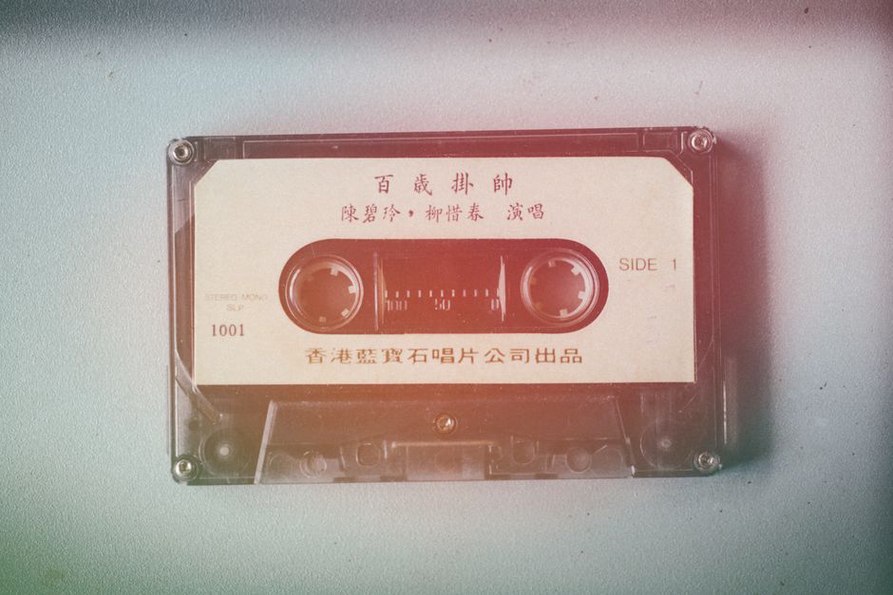
Consider the file tumblr_n66qja8s3f1r1i0y8o1_500.jpg. Open it. What do you see? A cassette shell, possibly white with a hand-stamped logo. A tracklist in blue ballpoint pen. A date that reads “94.7.15”. No label name, no artist name. The image is slightly blurry at the edges. The colors are washed out. This is not a promotional photo—it is a document. It was taken by someone who owned the tape and wanted to share it. They uploaded it to Tumblr, gave it a caption like “found this at a flea market in Osaka,” and then the blog went silent. The filename is all that remains of that act of sharing.
There is no moral to this. The file exists. It will be lost. The collector who saves it, renames it, and adds it to a database is performing an act of preservation that the original uploader never intended. The filename tumblr_n66qja8s3f1r1i0y8o1_500.jpg is not a key to anything—it is a placeholder for a moment that cannot be recovered. That is enough.