
The numbering is deceptively simple: “Tesco 1”. No artist name, no year, no tracklist—just a hand-stamped catalog number on a photocopied J-card. For collectors of Japanese noise, this single digit carries the weight of an entire movement’s origin story. The Tesco Organisation, founded by Toshiji Mikawa in the mid-1980s, began its journey with this release, a compilation that set the visual and sonic template for dozens of subsequent editions. Unlike later entries in the series—some of which have been partially reconstructed through digital fragments—Tesco 1 remains stubbornly opaque, a ghost in the catalogue that refuses to yield a complete discography.
The Object
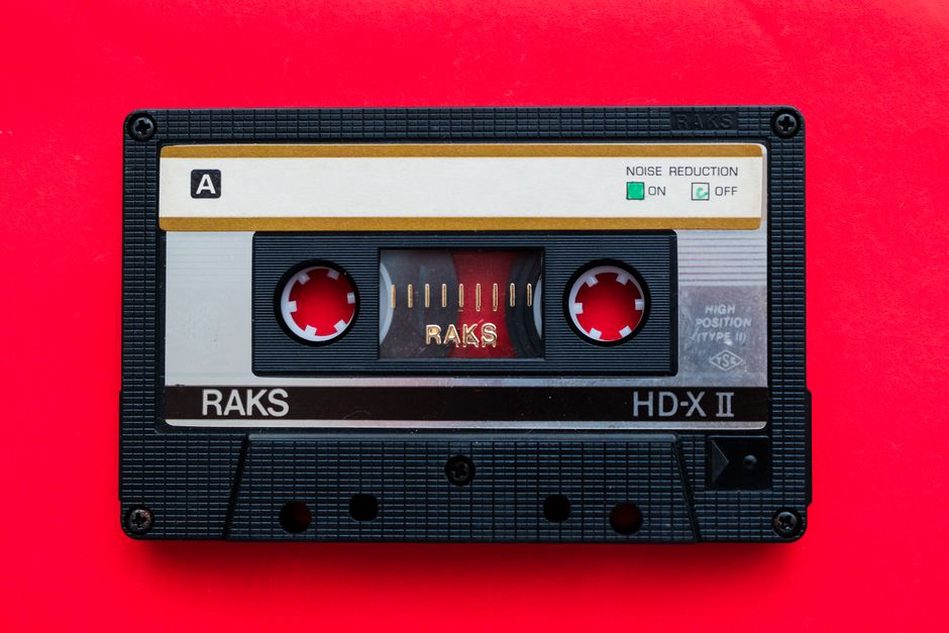
Physically, Tesco 1 is indistinguishable from the label’s early output. A standard C60 cassette, loaded with Type I ferric tape, housed in a thin plastic case. The cover is a black-and-white photocopy—sometimes on cheap bond paper, sometimes on glossy stock that yellows quickly. The only text is the word “TESCO” in a crude stencil font and the number “1” stamped in red or black ink. No track listing, no credits, no contact information. The tape itself often carries a handwritten label, again just “TESCO 1” in ballpoint pen. This deliberate anonymity was not a marketing gimmick; it was a function of the scene’s distrust of commercial presentation. The music was meant to be heard, not sold.
The absence of information forces the listener to rely on the tape’s sonic content alone. And that content is notoriously difficult to pin down. Early Tesco compilations were assembled from submissions sent to Mikawa by artists across Japan’s noise underground—many of whom used pseudonyms or no names at all. The tracks were often untitled, unmastered, and recorded in single takes on four-track cassette machines. The result is a dense, lo-fi collage of feedback, contact microphone scrapes, tape hiss, and blown-out amplifier hum. It is not music for casual listening; it is a document of a process.
The Sound
Describing the sonic character of Tesco 1 without relying on genre clichés, the first word that comes to mind is saturation. The tape is recorded hot, pushing the ferric oxide to its magnetic limit. Distortion is not an accident but a deliberate tool—a way of collapsing dynamics into a single wall of texture. The pieces shift between high-frequency squeals and low-end rumbles, with sudden cuts and silence used as structural devices. There is no narrative arc; each track exists in its own isolated moment. This is the aesthetic of the Japanese noise underground in its purest form: anti-musical, anti-commercial, and fiercely independent.
- Format: C60 cassette, Type I ferric tape
- Packaging: Photocopied J-card, hand-stamped catalog number
- Content: Compilation of anonymous tracks, likely 8–12 pieces
- Label: Tesco Organisation (Japan, est. mid-1980s)
- Rarity: Extremely limited edition, exact number unknown but estimated under 100 copies
The Legacy
Tesco 1’s significance doesn’t come from its musical quality—that varies wildly from track to track—but from its role as the first node in a distribution network that defined the Japanese noise underground. Before Tesco, most noise releases circulated through mail-order lists or small fanzines. Mikawa’s catalogue systematized the chaos, assigning a number to each release and creating a reference system that collectors still use today. Tesco 1 is the zero point of that system. Without it, the subsequent numbered entries—many of which have been analyzed in detail elsewhere—would lack a context. It is the key to the catalogue, yet it remains the most elusive.
Tesco 1’s scarcity isn’t just because it’s old. Many copies were likely lost or destroyed in the decades since their release. The tape itself is fragile; the ferric coating sheds over time, and the photocopied covers fade to illegibility. A surviving copy in playable condition commands high prices in the collector market, but even more valuable is the information it carries. A few dedicated archivists have attempted to transfer the tape to digital formats, but the results are often riddled with dropouts and hiss—faithful reproductions of an already degraded source. To listen to Tesco 1 today is to hear not just the original recordings but the cumulative wear of three decades of storage.
The Collector’s Perspective
For the serious collector, Tesco 1 represents both a grail and a warning. The grail aspect is obvious: it is the first edition of a legendary label, a physical artifact of a scene that produced almost no paper trail. The warning lies in the label’s own inconsistency. Later Tesco releases sometimes changed the numbering system, reused catalog numbers, or issued multiple editions with the same number. Tesco 1, however, appears to be a single, unvarying edition—no reissues, no variants. That simplicity makes it a reliable benchmark for dating the label’s early activity. If you find a copy with a handwritten label in blue ink rather than black, you may be looking at a different generation of the same master tape, but the catalog number remains the same.
To hold a copy of Tesco 1 is to hold the first page of a catalogue that would eventually run into the dozens—each entry a deliberate, anonymous artifact of a scene that valued obscurity over accessibility. The tape does not explain itself. It does not ask to be understood. It simply exists, a magnetic residue of a moment when noise was not a genre but a method of survival.