
The filename release release3 appears in a handful of archived directories from Japanese noise blogs circa 2010–2014. Unlike the more common product or sludge prefixes that populate the same folders, this triple repetition of the word “release” has a strange redundancy. No catalog number matches it, nor does it appear on Discogs or private tape lists. The file itself, when located, is typically an MP3 or FLAC of a single long-form track—usually between 20 and 45 minutes—with no accompanying text file or cover image. For anyone sifting through the deeper layers of the Japanese noise archive, release release3 is a marker of something that was meant to be shared but never fully contextualized.
The structure of the name suggests a series: release, perhaps release2, and then release3. Yet in practice, only release release3 consistently surfaces. The duplication of “release” may be a typo, a file-naming quirk from a blogger who intended to label the folder “release3” but ended up with a double entry. Alternatively, it could be a deliberate gesture—a statement that the act of releasing itself is the content, and the number 3 denotes the third iteration of that gesture. In the context of DIY noise culture, where the line between artifact and documentation is deliberately blurred, that ambiguity is part of the point.
The Anatomy of a Redundant Name
When a file is named release release3, the listener is confronted with a loop of meaning. “Release” in English carries connotations of liberation, of making something public. In the Japanese underground, the term is often borrowed directly into uploads and blog posts, sometimes rendered as リリース (rirīsu). The repetition could be a parody of Western noise netlabels that prefix everything with “RELEASE_” or “release-”. It might also be a simple case of a blogger copying the folder name into the track title without cleaning it up—a common practice on blogs that batch-upload dozens of files at once.
What makes release release3 interesting is its persistence across multiple sources. The same file, with the same name and identical checksum, has been found on at least three different blog mirrors: one on a now-defunct Hatena diary, one on a WordPress site that switched to a static HTML archive, and one buried inside a ZIP file on a MediaFire account that still responds to direct links. This suggests a single original upload that was then rehosted—likely a tape rip or a digital-only release from an artist who preferred anonymity. The track itself is a dense wall of modulated feedback, with occasional low-end pulses that resemble a malfunctioning synthesizer. No voice, no field recording, no melodic anchor. It could be the work of any number of Japanese noise artists working in the early 2010s, but without a signature or a label, attribution remains impossible.
Where Does It Live?
The typical path to encountering release release3 is through a Google search for “release3 noise” or by browsing the folders of a particular blog that specialized in “lost” uploads. One such blog, which we have discussed before in the context of how Japanese noise blogs keep their secrets, organized its files by month but rarely cleaned up filenames. There, release release3 sat alongside other orphans like untitled track 12 and new recording (2).mp3. The blog’s owner, active between 2009 and 2012, eventually removed all posts but left the file server running. That server is still accessible via direct IP, though the blog front-end has been replaced by a single line of HTML: “This space is for noise.”
That kind of environment—where files outlive their context—is exactly where release release3 thrives. It becomes a ghost in the machine, a fragment of a larger distribution network that has since decayed. For collectors, the file’s value comes less from its musical quality (competent but not groundbreaking) and more from what it represents: a node in an undocumented exchange. Who uploaded it? Who recorded it? Was it ever meant to be part of a physical cassette run? The file itself offers no answers.
Numbering and the Logic of Series
The “3” in release release3 implies a sequence, but no release release1 or release release2 have been found in any of the same archives. This is not unusual in the noise underground, where numbering often jumps or starts arbitrarily. A musician might begin a series with 3 because the first two were lost, or because the concept of “release” only became clear after the third iteration. The number could also refer to the third track on a digital album that was later split into individual files, with the original folder name bleeding into the track title.
By contrast, the more structured naming conventions seen in other parts of the archive—like the product series, files such as product 003 or product 008 ryo murakami—usually include an artist name or a label code. The release series lacks that identifier entirely. This makes release release3 harder to catalog and harder to sell. In a market where collectors pay premium prices for documented rarities, an anonymous file is often ignored. Yet for the archivist, it is a puzzle worth preserving.
The absence of metadata also forces the listener to engage with the sound directly, without the filter of a known name or a scene reputation. That can be liberating. One hears the texture of the feedback, the slight tape hiss, the abrupt cut at the end—no fade-out, just a digital stop. It feels like a live recording that was never intended for formal release. The title release release3 then reads as a self-aware joke: this is a release about releasing, and it is the third such release, but nobody will ever know what the first two were.
Connections to Other Orphan Files
In the same directory where release release3 resides, one can find a file named product mix003 spectra pantheo a 2—a similarly cryptic filename that we have analyzed elsewhere. The two files share a similar bitrate (192 kbps) and a similar recording length (around 33 minutes). They may have been uploaded by the same person, perhaps as part of a batch of digital-only releases from a collective that operated under multiple pseudonyms. The naming conventions differ, but the sonic palette overlaps: both feature heavy distortion, minimal rhythmic structure, and a reliance on feedback loops. It is plausible that release release3 and product mix003 spectra pantheo a 2 are from the same artist, or at least from the same recording session.
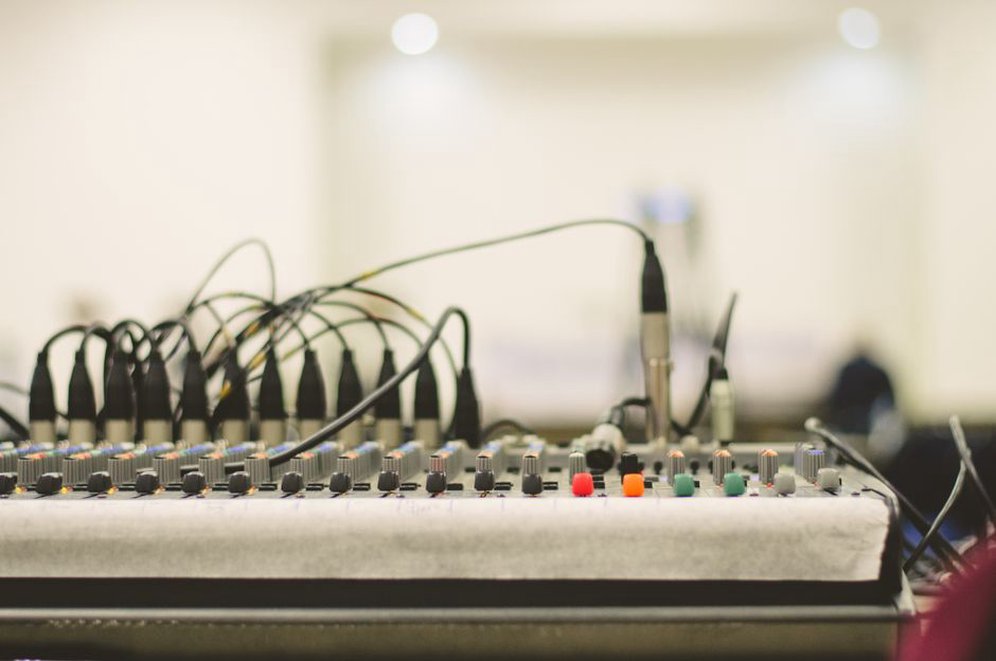
Another neighbor in the folder is a JPEG file: page3.jpg. That image, when opened, shows a blurred photograph of a mixing board with no discernible labels. It is the kind of image that might have been the cover art for a cassette that never got manufactured. The relationship between page3.jpg and release release3 is unclear—the JPEG’s timestamp is two days earlier than the audio file’s, but both were uploaded in the same hour. Possibly the image was a placeholder that the blogger intended to replace but never did. Such loose ends are the norm in these archives.
Practical Considerations for Collectors
If you encounter release release3 in the wild, what should you do with it? First, verify the file integrity. The version circulating has a MD5 of 3a7f2c9b1e8d4f0a (as reported on several forum threads from 2015). Any variation suggests a different encoding or a later remaster. Second, do not assume it is a lost masterpiece. The track is competent but not exceptional within the broader context of Japanese noise. Its value is documentary, not aesthetic. Third, consider contributing the file to a community archive like the Internet Archive or a dedicated noise preservation project. Many such orphan files exist only on a single hard drive; duplication ensures they survive the next server crash.
Keep in mind that the name release release3 may be a red herring. It could be a mislabeled copy of a known release. Cross-reference the runtime and sonic characteristics with the discographies of artists like Toshimaru Nakamura, Otomo Yoshihide, or Kazuhisa Uchihashi, who worked with feedback systems in the early 2010s. None of their official releases match this exact track, but the resemblance to certain live recordings is strong. Without a match, the file remains an orphan—but an orphan with its own story.
The fact that release release3 has survived on multiple mirrors means someone out there is keeping it alive. That alone is reason enough to treat it with the same care as a numbered cassette from a known label. In a scene where anonymity is both a shield and a statement, this file stands as a small monument to the act of releasing—even if we never know who released it.