
Before you shop, set aside dinner for your busiest night: a can of beans, quick-cooking couscous, and frozen spinach. Check that you have enough to feed everyone. A full pantry doesn’t tell you whether you can get dinner on the table in 15 minutes. For that, you need to know what goes together and how long it takes to cook.
Count dinners, not cans
Check the pantry, fridge, and freezer in the same pass. Start with what needs using soon: half a cabbage, an open jar of pasta sauce, the last two eggs. Then see what you can pull off the shelf to make a meal. Half a cabbage can bulk out a skillet of noodles. A little tomato sauce, thinned with water, can give beans something to simmer in.
For each dinner, jot down a base, a protein, a vegetable, and a sauce or seasoning. One ingredient can do two jobs: beans can be both the base and the protein in a soup, and canned tomatoes can be the vegetable and the sauce. Write down quantities, too. If Monday’s bowls and Wednesday’s soup are supposed to share a can of chickpeas, decide how much each dish gets before you shop. Otherwise, it’s easy to count the same unopened can twice.
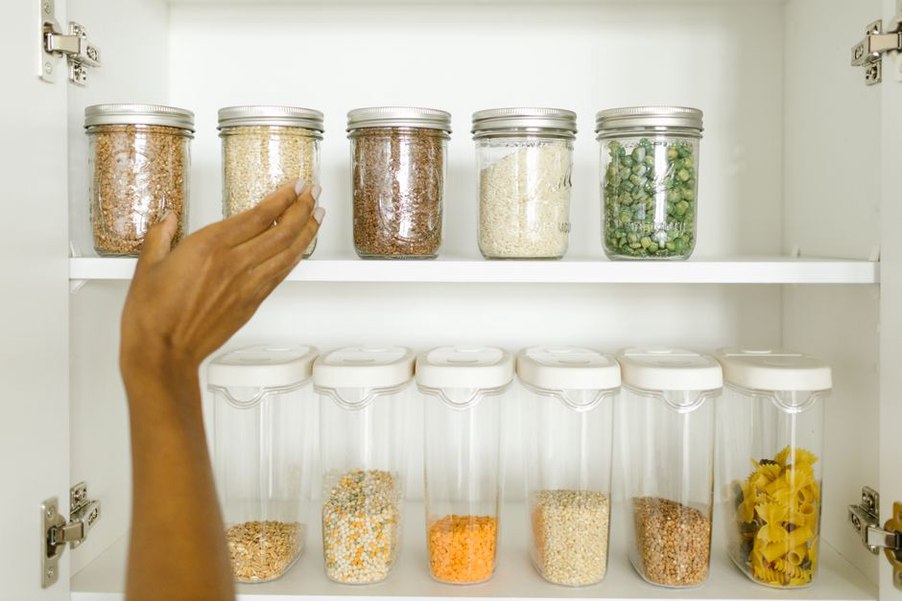
Stock for the time you actually have
Buy staples you like enough to use in more than one dish. Dried beans may cost less per serving, but they won’t do the job of a can of beans when dinner is in 20 minutes and you haven’t cooked them yet. Keep a few staples for quick meals and a few for nights when you have time to cook.
- Ten to fifteen minutes: Couscous, thin noodles, canned beans, and canned fish need little prep. In many hot dishes, frozen peas or spinach can go straight into the pan.
- Twenty to thirty minutes: Pasta, red lentils, and some kinds of white rice can cook while you make a sauce or chop vegetables. Check the package and leave time for the water to boil and the pan to heat.
- A quieter evening: Cook dried beans or slower grains if you like them, then freeze what you’ll use later. Label each container with what’s inside, the date, and roughly how much it holds. That way you can tell without opening it whether it’s one serving or enough for dinner.
Chickpeas simmered with tomatoes and oregano taste quite different from chickpeas dressed with lemon and cumin. A few seasonings can keep repeat ingredients from feeling like repeat dinners. Pick ones you’ll reach for more than once: vinegar can brighten a soup or dress cabbage, and mustard works in a bean salad or a quick pan sauce. If you’re using canned foods, broth, or condiments, taste before adding salt.
Build the week around the calendar
Save the quickest dinner for the night you get home latest, and use the most perishable ingredient early in the week. If your schedule tends to change, plan three dinners, leave a night for leftovers, and keep one complete meal in reserve. Buy fresh ingredients with a job in mind: a lemon for two dressings is a better bet than a bag of salad greens you haven’t planned to use.
A five-night plan for two
- Monday: Chickpea and cabbage bowls. Cook rice and top it with a can of drained chickpeas, shredded cabbage, and a lemon-cumin dressing. Shred only what you need and save the rest of the cabbage for Wednesday.
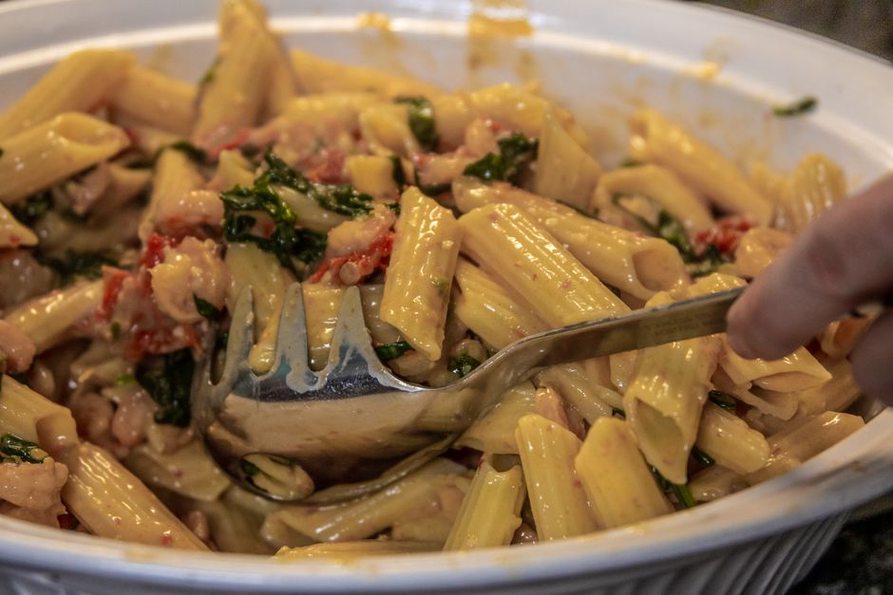
- Tuesday: Tomato and white bean pasta. While the pasta cooks, simmer a can of crushed tomatoes with garlic and a pinch of oregano. Stir in drained white beans and a handful of frozen spinach. Make four portions and set two aside for Thursday.
- Wednesday: Egg and cabbage noodles. Cook quick noodles while you thinly slice the remaining cabbage and soften it in a skillet. Scramble a couple of eggs in the pan, then toss everything with the noodles, soy sauce, and a splash of vinegar.
- Thursday: Leftover pasta. Add a spoonful of water as you reheat it if the sauce has thickened. Taste and add a little vinegar or lemon at the table if it needs some acidity.
- Friday: Black bean and corn skillet. Heat canned black beans and frozen corn with cumin and smoked paprika. Spoon the mixture into tortillas if you have them, or serve it over quick-cooking couscous. Nothing here depends on delicate produce, so you can move this dinner to another night.
Make leftovers part of the plan
Decide what you’re putting away: a finished dinner or something you can use in another dish. Plain cooked rice can go into soup or under a bean skillet. Tomato pasta is already dinner, so give it a night of its own. If you need two portions later in the week, pack them before serving instead of counting on what’s left in the pan.
Refrigerate cooked food in shallow containers within two hours, or within one hour if it’s hotter than 90°F (32°C) where the food is sitting. Keep the fridge at 40°F (4°C) or below and use most refrigerated cooked leftovers within three to four days. Freeze them sooner if you won’t eat them in that time. Cool cooked rice promptly rather than leaving it in the pot, and reheat leftovers to 165°F (74°C). If you already know you won’t be home for dinner Thursday, freeze the extra pasta on Tuesday.
Give the backup dinner a restock rule
Set aside enough for one dinner that doesn’t need anything fresh. For two, that might be quick-cooking couscous, a can of chickpeas, frozen peas, olive oil, and a splash of vinegar. Store the chickpeas next to the couscous and put both on the shopping list as soon as you use them. If everyone dips into the same bag of frozen peas, set aside a meal’s worth in a labeled bag. Don’t count on what’s left at the bottom of the open packet.