
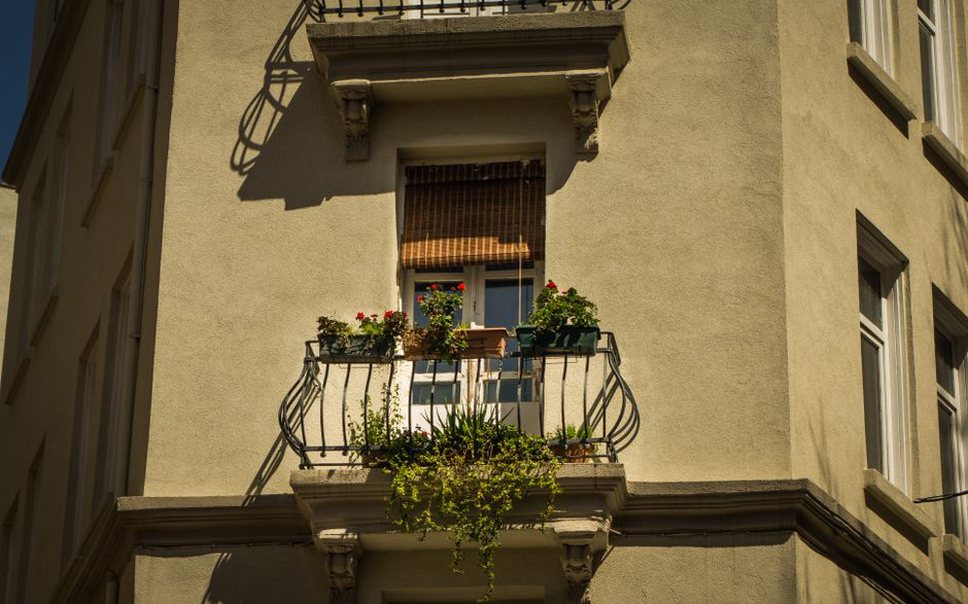
A balcony can look bright all day and still give a tomato less than six hours of direct sun. Before buying plants, watch the spot where the leaves will actually sit. Even on a south-facing balcony, a railing, roof overhang, or neighboring building can shade the pots while the rest of the space looks bright. And heat is no substitute for light: a small pot can dry out by evening in a spot that gets too little direct sun for a good tomato crop.
Read the site before choosing plants
On a clear day, note when direct sun reaches the planting spot and when it leaves. Check at floor level and at the height of any shelf you plan to use; the difference can change what you can grow. If you’re checking in early spring, remember that the sun’s angle will change and deciduous trees may leaf out. One day’s notes are a starting point, not a year-round reading.
- Six or more hours of direct sun: A reasonable starting point for tomatoes and peppers, though the variety and growing conditions still determine how much you’ll harvest.
- About three to five hours: Try leaf lettuce, parsley, or chives before committing to fruiting crops. Cool-season greens usually fare better with morning sun than with the same number of hours against a hot west-facing wall.
- Bright shade with little direct sun: Look for shade-tolerant ornamentals suited to your climate. Vegetables may survive, but they can grow so slowly that the harvest isn’t worth the space.
Check wind and rain separately. Wind dries foliage and can tip a top-heavy plant; a balcony under a roof may get almost no useful rain. If you also use the space for quiet listening or to test a field recorder, listen during a gust. A saucer rattling against a pot or a loose stake is easy to fix without rethinking the planting. Keep pots clear of walkways and out of the path of doors.
Check the structure and the route water will take
Before placing large planters on a balcony or rooftop, check the building rules and get reliable guidance on how much weight the structure can support. Count the pot, wet growing mix, plant, and any water held in a reservoir. A stand groups the weight of several pots in a small area, wheels or no wheels. Don’t assume a railing can hold a planter, especially one hung on the outside. If you can’t verify what the structure or fittings can support, don’t put that load on them.
Decide where runoff will go before you give the pots their first thorough watering. On a paved patio, runoff can leave soil or mineral marks. A few floors up, it can land on someone else’s furniture. Use saucers to catch routine drainage, but empty them after watering so ordinary pots don’t sit in water. A waterproof tray can protect the floor under a group of pots if you have a way to remove the runoff. Leave building drains visible and clear of pots and mats.
Choose a pot for the mature plant
A seedling looks small in its nursery pot. Shop for the plant it will become: check the mature size and spacing of the variety, not just the crop name. A compact patio tomato needs less root room and different support than a tall, vining tomato. Roughly five US gallons (19 liters) is a useful starting point for one compact tomato if the variety’s growing instructions agree; more vigorous plants generally need more room. A broad trough gives leaf lettuce more usable space than a tall, narrow pot of the same volume. For carrots, compare the mature root length with the depth of the mix, not the height of the pot.
Consider material, not just dimensions
Unglazed terracotta loses moisture through its walls, so you may need to water more often in hot or windy weather. Plastic and glazed pots lose less water this way. Plastic is easier to move, though a light pot may need a steadier spot on an exposed balcony. Dark containers can heat up around the roots in direct afternoon sun. Try a lighter pot or shade the container without shading the foliage. If you’re reusing a container for food crops, make sure you know what it held. Avoid anything that stored chemicals or has an unknown coating.
Give excess water a way out
Check that the drainage holes are open before filling the pot. A decorative pot without holes can hold a removable nursery pot, but take the inner pot out to water it or empty the outer pot once it has drained. Gravel at the bottom won’t replace a drainage hole or help water move through the mix. It takes up root space and can leave the wettest part of the mix higher in the pot. If the floor blocks the holes, raise the pot on stable feet.
Plan for growing mix and nutrients
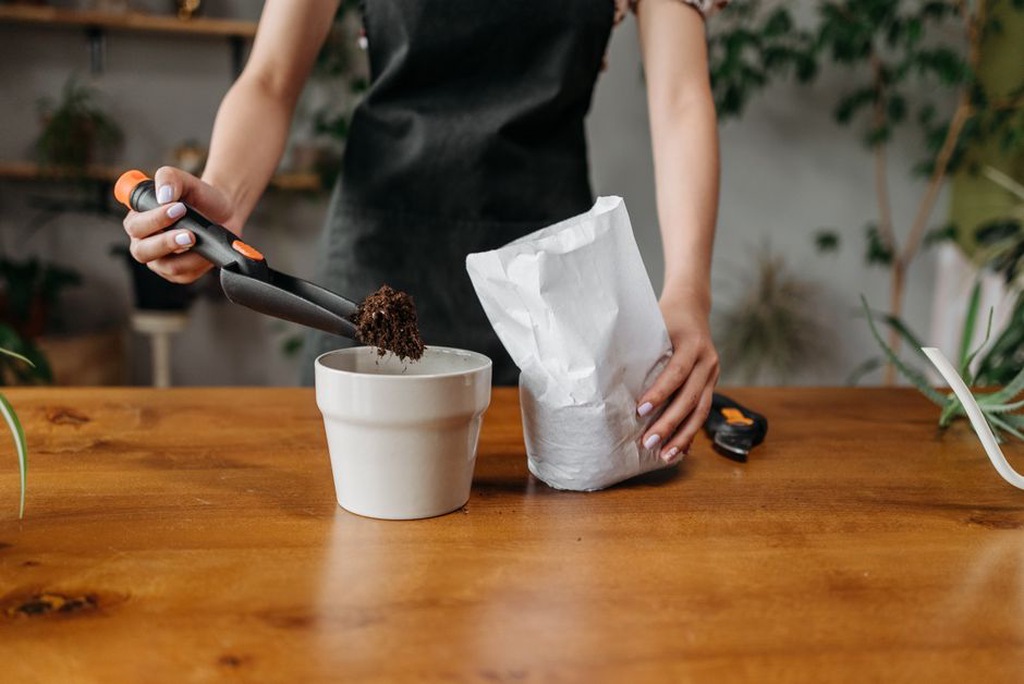
Use a mix sold for containers rather than soil dug from a garden bed. In a pot, dense garden soil can compact after watering and leave roots short of air. Container mix holds moisture while leaving room for air and excess water to move through. Pick a mix for what you’re growing: one meant for drought-adapted succulents isn’t the obvious choice for basil or lettuce. Read the bag before buying fertilizer. Some mixes already contain starter fertilizer or a slow-release feed; others don’t.
If the mix is very dry, dampen it in a separate tub before filling the pots. It should feel evenly moist, not drip. Set transplants at the depth recommended for the plant, leaving a gap below the rim so water has time to soak in without washing mix over the edge. If you feed the plants, follow the label rate and account for any fertilizer in the mix. Pale leaves don’t automatically mean a plant needs feeding: roots that stay wet and plants that get too little light can also grow poorly, and fertilizer won’t fix either problem.
Decide how the garden will get watered
Carry a full watering can to the site before deciding how many pots to buy. Stairs, a narrow door, or a route past audio equipment can make a long row of pots more work than it first appears.
For ordinary pots, feel the mix below the surface with a finger. If the pot is small enough to lift safely, get used to its weight just after watering and again as it dries. The surface can look dry while the mix underneath is still damp. And if water runs straight out, it may have slipped down a gap between the pot wall and a shrunken root ball without wetting the roots.
Water a free-draining pot slowly across the surface until some water comes out below. If the dry mix repels water, make several passes a few minutes apart. Small pots may need a daily check in hot, windy weather and much less attention when it’s cool. Let the plant and the mix tell you when to water, rather than sticking to a calendar. Seeds germinating near the surface need steadier moisture than an established rosemary plant does around its roots.
A self-watering planter can buy you time between refills, but it needs a mix that draws water up as intended and an overflow that stays clear. Follow the planter’s instructions for new transplants: their roots may not be able to draw enough water from the reservoir at first. If gigs or recording sessions regularly take you away, test the planter through a warm spell while you’re still home. Knowing how long it actually lasts between refills tells you more than the capacity printed on the planter.
Match plants by season and care needs
Grow what you’ll use, in the season it’s suited to. Leaf lettuce is a good first crop in cool weather, but heat can turn it bitter or send up a flower stalk. Basil and peppers need warmth and won’t do well with a cold start outdoors. Check local frost guidance and nighttime temperatures rather than trusting one warm afternoon. Give seedlings raised indoors or under cover several days to get used to outdoor sun and wind before leaving them out full-time.
Put plants with similar light and moisture needs in the same container. Rosemary won’t make a good long-term neighbor for basil if you’re watering often enough to keep the basil growing through summer. Give mint its own pot so it doesn’t spread and crowd the other plants. Follow the spacing on the packet or plant label, and thin seedlings that come up too close together. A pot that looks pleasantly full on planting day can be crowded before the first harvest.
Put supports in while taller plants are small. Pressing a cage into a full pot later can damage roots, and a trellis catches wind, so the pot needs to stay steady under that extra strain. Leave room to reach behind the pots, turn them if needed, and look under the leaves. A small cluster of aphids is easier to deal with early. Identify the problem before treating it: curled leaves alone won’t tell you if you’re looking at insects, heat stress, or uneven watering.
Budget for upkeep and the end of the season
Price the mix, saucers, supports, and watering equipment along with the plants. A large pot can cost more to fill than to buy, and it’s easier to position while empty. Set the pots out first and make sure you can reach each one with a watering can without leaning over a railing or running a hose across an exit. If a pot will need to come indoors later, measure it against the doorway and work out how you’ll move it when the mix is wet.
The roots of a potted perennial can get colder than those of the same plant in the ground. Check that both plant and pot can spend the winter outdoors where you live. Some porous pots crack if saturated mix freezes inside them. With annuals, pull the spent plants, clean pots that held diseased plants, and check the mix before reusing it. If it still drains well and has no known disease, you can often refresh it for another planting. Replace it if it’s badly compacted or has harbored a persistent soilborne problem.
Say your balcony gets four hours of morning sun. In cool weather, start with a trough of leaf lettuce and a separate pot of chives. Put both where you can water them without moving them and check their moisture at the same time for the first week. If the trough dries faster, water it more often rather than soaking both. Write the sowing date on the lettuce label. If the first batch is growing well and the weather looks likely to stay cool, sow a short second row a couple of weeks later instead of filling the trough all at once.