
Dry a cast iron skillet soon after washing it. Water caught around the handle or rim can start rust even when the cooking surface is well seasoned. A towel takes care of most moisture; a minute or two over low heat evaporates what it misses. Once the pan is dry, a very thin film of oil can protect exposed iron.
Cast iron care comes down to three separate jobs: removing food, keeping the iron dry, and maintaining the seasoning. Seasoning is not old grease. It is oil heated until it forms a hard coating bonded to the metal. A pan can have uneven color, especially when new, and still be in good working order.
Know what kind of cast iron you have
This advice mainly concerns bare, seasoned cast iron: skillets, Dutch ovens, griddles, and similar pieces with a dark cooking surface. Enameled cast iron has a glasslike coating and does not need seasoning. Follow the maker’s guidance for cleaning and heat limits. If the interior is smooth and colored, do not treat it as bare iron or try to season over the enamel.
New bare cast iron often comes pre-seasoned and is ready to cook after a wash and thorough drying. The factory coating is a starting point, though, not a promise that a dry-cooked egg will slide right out. Foods cooked with some fat are more forgiving at first. With a secondhand pan, inspect the surface: age alone tells you little about its seasoning, rust, or carbon buildup.
Cook in a way that protects the surface
Cast iron holds heat well but takes time to heat evenly. Start over low or medium heat and give the skillet several minutes to warm up. Turn the burner too high and the area directly above the flame or element may get much hotter than the edges. Moderate heat is enough for most stovetop cooking once the pan is hot, and some foods will still need a little cooking fat.
For searing, preheat the pan, add oil, then add the food. Do not leave an empty, oiled skillet heating until it smokes. If meat resists lifting, give it more time to brown; pulling at it early can leave more stuck bits behind.
Metal utensils are generally fine on sturdy bare cast iron, and a spatula can lift residue without harming sound seasoning. Just avoid repeatedly striking the pan or gouging it with a sharp point. Let a very hot pan cool somewhat before washing it, too: cold water on a hot vessel can stress the metal.
Brief contact with tomatoes, vinegar, or wine is usually manageable in a well-seasoned pan. A long simmer can dull young seasoning and sometimes leave a metallic taste in the food. For a lengthy tomato sauce or braise, use enameled cast iron or another nonreactive pot. If an acidic meal leaves the surface pale or dry, clean and dry the pan, then give it a thin coat of oil.
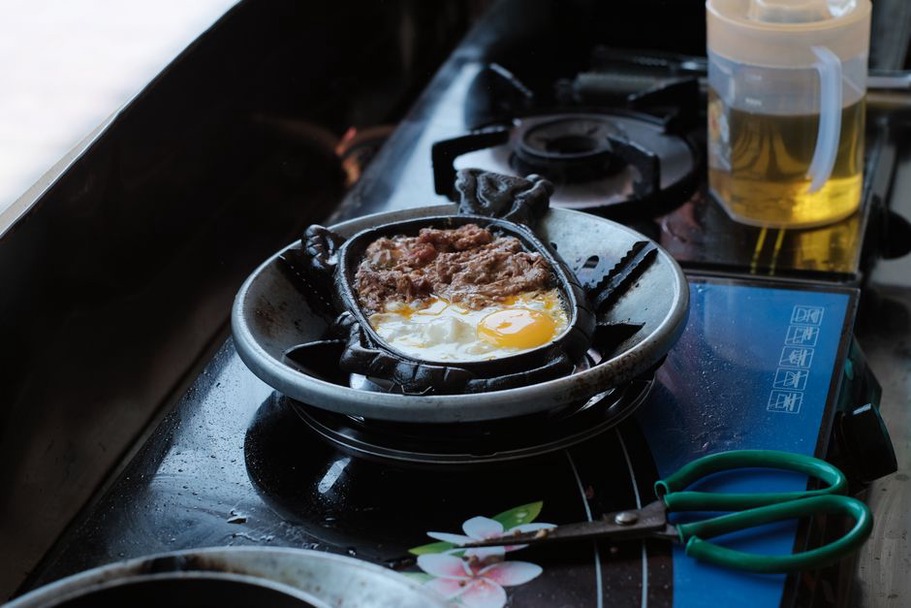
Clean the pan after each use
Wash bare cast iron once it is cool enough to handle safely, preferably before residue hardens. Warm water, a sponge or brush, and a little ordinary dish soap are fine for routine cleaning. Normal handwashing with modern dish soap will not remove properly bonded seasoning. It may wash away loose surface oil, but that oil is not the durable coating you are trying to keep.
- Scrape out remaining food and pour off excess cooking fat. Do not pour a large amount of grease down the sink.
- Wash with warm water and a sponge, brush, or nonabrasive scrubber. Add a little dish soap if the pan is greasy or smells of the previous meal.
- For stubborn bits, gently simmer a little water in the pan to loosen them. You can also scrub with coarse salt and a small amount of water. Avoid prolonged soaking.
- Rinse and dry immediately with a towel. Warm the pan briefly over low heat if needed to evaporate hidden moisture.
- If the surface looks dry or exposed, rub on a few drops of cooking oil. Wipe with a clean cloth or paper towel until the pan looks nearly dry.
Do not leave a slippery pool of oil behind. Too much can turn tacky in storage, collect dust, or form uneven spots the next time you heat the pan. If the dry surface has a smooth, intact coating, there is no need to oil it heavily after every wash.
Keep bare cast iron out of the dishwasher. Its long, wet cycle and strong detergent can damage seasoning and encourage rust; leaving the pan submerged overnight poses a similar moisture problem. Do not store leftovers in bare iron, either. Moisture and acids in the food can affect the coating and the flavor.
What if food stays stuck?
Sticking does not necessarily mean the seasoning has failed. Was the pan preheated? Did the food have enough fat, or was it moved before it browned? Loosen the residue by simmering a little water, dry the pan, and use it again. One stubborn meal is no reason to strip the whole surface.
Understand when seasoning needs attention
Working seasoning may look satin rather than glossy. It can be mottled brown, gray, or black, particularly on a newer pan. What matters more is that the surface is clean, dry, and free of rust or tacky buildup. Cooking with oil can gradually improve the coating, but it does not replace cleaning and thorough drying.
If food keeps sticking despite sensible heat and enough fat, or scrubbing has exposed a sizable patch of bare iron, oven seasoning may help. It is also useful after rust removal. Check the maker’s instructions first, especially if the piece has handles, lids, or fittings made from materials other than iron.
How to season bare cast iron in the oven
- Wash away food residue and loose rust, then dry the pan completely. Gentle heat can help evaporate water around the handle and rim.
- Rub a small amount of neutral cooking oil over the cooking surface, exterior, handle, and any other bare iron. Ordinary vegetable oil is enough; you do not need a specialty oil.
- Wipe the whole pan with a clean cloth until it looks almost dry. Too much oil makes sticky patches instead of an even coating.
- Place the pan upside down in a well-ventilated oven, with a tray below to catch drips. Heat it at roughly 450°F (230°C) for about an hour, provided the oil and the maker’s instructions allow that temperature.
- Turn off the oven and let the pan cool before handling it. Repeat only if the coating still needs building; thin, fully heated coats work better than several thick ones.
Oven seasoning may produce smoke, so ventilate the room. Use an oven mitt even after the pan has had a long time to cool; cast iron holds heat. If the finished surface is sticky, excess oil is the likely cause. Wash away what you can, dry the pan, and use less oil next time. More heat will not reliably fix a thick, gummy layer.
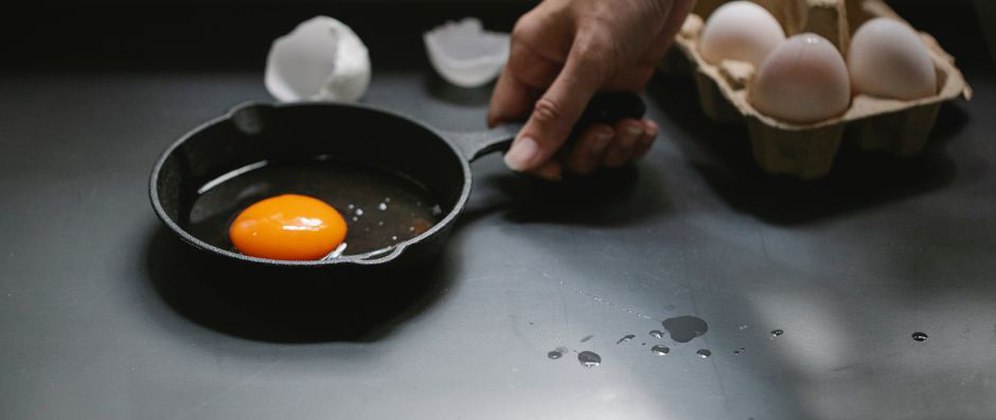
Deal with rust, flakes, and uneven buildup
A small rust spot is usually repairable. Scrub it with a stiff brush, scrub pad, or fine steel wool until you reach clean metal. Wash away the particles, dry the pan thoroughly, then season the exposed area or the whole piece. Do not cook on rust and hope oil will seal it in. Inspect a deeply pitted, cracked, or otherwise questionable pan carefully before cooking with it; seasoning cannot repair structural damage.
Black flakes in food may be loose carbonized residue or old seasoning that is peeling. Scrub away anything that lifts easily, wash and dry the pan, then take another look. A thick, raised black crust is not needed for good cooking. If broad areas keep peeling, remove the unstable buildup and reseason rather than oiling over it.
Brown marks on a drying towel do not automatically mean trouble. They may be traces of oil or loosened residue. Orange powder or visible orange patches, on the other hand, signal rust that needs scrubbing. Judge by what you can see and feel on the pan, not just the color of the cloth.
Store it dry, with room to breathe
Keep a clean skillet in a dry cupboard or on a rack away from repeated splashes. If you stack it with other pans, put a towel or pan protector between them to reduce scratching and keep them separated. Store a Dutch oven with its lid slightly ajar to avoid trapped moisture and stale odors. Before putting any piece away, check the underside, handle, and lid rim—easy places to miss while drying.
If a faint orange spot appears in storage, scrub it off, wash and dry the piece, and oil the exposed iron. Then run a dry fingertip around the rim and where the handle meets the pan. Neither spot should feel cool and damp when the pan goes back on the shelf.