
“Fragrance-free” and “unscented” are not necessarily the same thing. The first suggests no fragrance has been added. The second may mean a product has little detectable smell, even if an ingredient was used to mask another odor. Neither tells you whether your skin will tolerate the formula. It’s a good reason to look past the largest words on the package.
When you pick up a skincare product, ask three questions: What is it meant to do? What can the ingredient list tell you? And what do the directions or warnings change about how you’ll use it? A front-panel claim, an ingredient name, and an instruction to “apply every evening” are different kinds of information. None can stand in for the others.
Start with the product’s job, not its mood
Words such as “glow,” “renewal,” and “skin perfecting” suggest a result without defining what the product does. Start with its category and any specific claim. A cleanser removes material from skin; a moisturizer helps reduce dryness; a sunscreen states an SPF and gives directions for use. “Serum” describes a format, not a level of strength or effectiveness. Two serums may have little else in common.
Claims to treat a condition need a closer look. In some jurisdictions, products that claim to treat acne or protect against sun exposure are regulated differently from ordinary cosmetics. Rules and required wording vary by country, so a claim may carry different regulatory meaning in different markets. If you’re buying something for a medical condition, check its stated indication and directions rather than relying on a broad phrase such as “blemish control.”
Check whether the product stays on your skin or gets rinsed off. A cleansing acid in a wash-off formula is used differently from an acid in an overnight treatment. The directions tell you as much about the product as the front label does.
What the ingredient list can—and cannot—tell you
Ingredient lists commonly use standardized cosmetic names, often called INCI names. Some differ from the names you know: tocopherol, for instance, is a form of vitamin E. An unfamiliar name isn’t automatically a concern. Preservatives, emulsifiers, and pH adjusters can be necessary to keep a formula stable and usable.
In many markets, ingredients above a low-concentration threshold appear in descending order by weight. Below that threshold, the order may differ, and colorants can have separate rules. Requirements vary by jurisdiction. The first few ingredients can give you a rough sense of the formula’s base, but not a precise recipe; a water-first lotion may still contain an effective amount of an ingredient used at a low percentage.
A long list doesn’t prove a product is harsh, just as a short one doesn’t prove it’s gentle. The list generally won’t reveal ingredient quality, final pH, manufacturing process, packaging stability, or how readily an ingredient is available to skin. It can’t tell you how the finished product will feel in your climate or alongside the rest of your routine, either.
Spot the ingredients that matter to your decision
Instead of judging every unfamiliar word, look for ingredients connected to what you want the product to do—or to something you already know irritates your skin:
- Moisture support: Glycerin and hyaluronic acid attract water; petrolatum and dimethicone help limit water loss. A formula may use both approaches.
- Exfoliation: Salicylic acid, glycolic acid, and lactic acid can appear in products meant to remove surface buildup or address clogged pores. Concentration and pH matter, as do contact time and frequency of use.
- Barrier care: Ceramides and other lipids may be part of a barrier-focused moisturizer, but seeing them on the list doesn’t establish how well the finished product works.
- Personal triggers: Fragrance ingredients, certain botanical extracts, or a preservative may matter if you know you react to them. Your past reactions are more useful than an online list of supposedly bad ingredients.
Names also need context. “Alcohol” doesn’t refer to a single skincare ingredient: ethanol behaves differently in a formula from fatty alcohols such as cetyl alcohol. Treating every mention of alcohol as the same warning misses that distinction.
Read percentages with their missing context
A label that says “10%” looks exact. But 10% of what—one ingredient, a blend, or a branded complex? If the wording doesn’t say, the number tells you less than it seems to. Even a clearly stated ingredient percentage won’t tell you the finished formula’s pH, how the ingredient is delivered, or whether daily use suits your skin.
That context matters with acids and retinoids. Products with the same headline ingredient can differ in form, strength, and directions. A higher number isn’t necessarily a better buy, particularly if irritation makes you stop using it. Already using an exfoliant? Check whether a new toner, cleanser, or mask would add another exfoliating step before you combine them.
Read the full ingredient name, too. A product may contain a derivative rather than the form discussed in a review. Similar-looking names on the front don’t make two formulas equivalent; compare the ingredient list and usage instructions.
Decode the claims with the least built-in definition
“Dermatologist-tested” and “clinically tested”
These phrases suggest that testing took place or a dermatologist was involved. On their own, they say nothing about study size, what was measured, or the result. “Clinically proven” needs the same scrutiny. If the package gives an outcome and timeframe, read them: “skin feels more hydrated after use” is a narrower claim than a promise to repair every sign of damage.
“Hypoallergenic” and “for sensitive skin”
These labels signal an intention to reduce the chance of a reaction, not a guarantee that everyone will tolerate the product. Definitions and oversight differ across markets. If you have a diagnosed allergy, check the ingredient list and follow your clinician’s advice rather than trusting the front-panel claim.
“Non-comedogenic” and “oil-free”
“Non-comedogenic” suggests the product is designed to be less likely to clog pores; it can’t predict your individual response. “Oil-free” doesn’t mean there are no emollients, or that the formula will feel light. Both claims can narrow your options, but texture and your own experience still count.
“Natural,” “clean,” and “chemical-free”
“Natural” and “clean” have no single technical meaning across all skincare labels. Plant-derived ingredients can irritate skin, and synthetic ones can be well tolerated. “Chemical-free” is especially misleading: water is a chemical, as is every other ingredient. If a brand defines what it excludes, read that as the brand’s policy—not evidence that the excluded substances are universally unsafe.
Give sunscreen labels their own reading
SPF measures protection against UVB-related sunburn under specified testing conditions, not every aspect of ultraviolet protection. Look for a broad-spectrum or UVA protection statement appropriate to your market, then read the application and reapplication directions. An SPF number is not a count of protected hours. Sweat, water, wear, and applying too little all affect the protection you get.
“Water-resistant” doesn’t mean “waterproof.” Depending on the jurisdiction, a sunscreen may give a tested water-resistance duration, commonly 40 or 80 minutes. Follow its directions for reapplication after swimming or sweating, along with the stated interval for continued exposure. A moisturizer with SPF still has to be applied in the amount needed for its advertised protection; a thin cosmetic layer may not match the result on the package.
Check which body area the product is labeled for. A face sunscreen isn’t necessarily more protective than a body sunscreen with the same tested claims; texture or packaging may be the main difference. Lip products, sprays, and sticks are convenient, but their directions matter. A skimpy or uneven layer leaves gaps.
Find the quiet practical details on the back
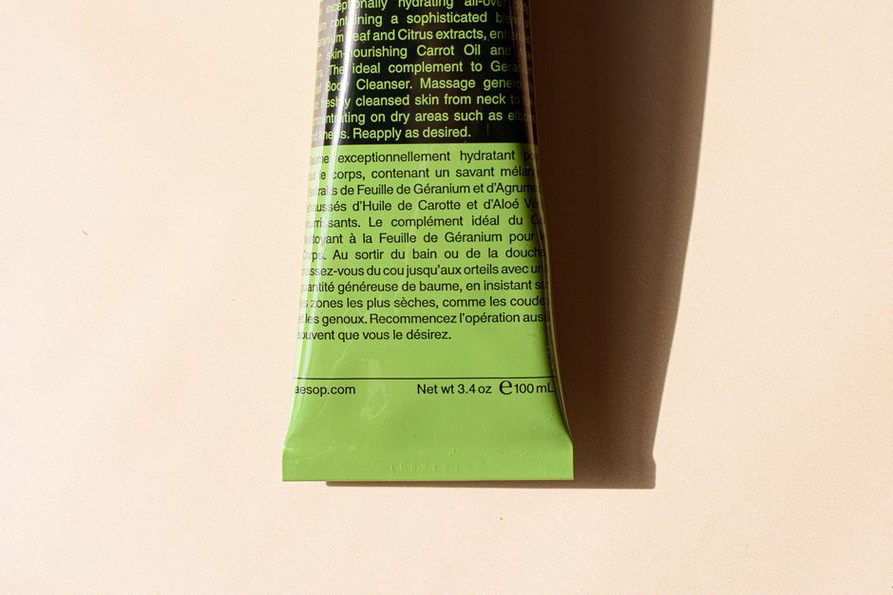
Container size can be deceptive. A large jar and a small tube may take up similar shelf space yet hold very different amounts. Check the quantity, and compare like units where you can: net volume in milliliters or fluid ounces isn’t always interchangeable with net weight in grams or ounces.
Look for an expiration date, batch code, or period-after-opening symbol where applicable. An open-jar symbol marked “12M,” for example, indicates a recommended 12 months after opening. It doesn’t promise the product will withstand any storage conditions, and it doesn’t override a printed expiration date. Pay particular attention to expiration and storage instructions for sunscreen and products with active treatment claims. Heat, direct sunlight, and repeated contamination can compromise a product sooner.
Packaging affects daily use as well. A pump or tube may limit repeated contact with the contents; a jar calls for clean hands or an applicator. Neither format automatically makes a product good or bad. And if the label says to keep the container tightly closed or avoid the eye area, follow that instruction even when the marketing describes the formula as gentle.
Build a small comparison instead of decoding everything
When two products look similar, compare what matters for your intended use. For a basic moisturizer, that might be its moisturizing ingredients, fragrance status, texture description, quantity, and directions. For an exfoliant, check the named acid, any stated concentration, recommended frequency, and warnings. The better fit may have the longer ingredient list if you can use it comfortably and consistently.
- Identify the stated function and whether the product stays on your skin.
- Check the specific ingredient or tested claim relevant to why you’re choosing it.
- Read the directions, warnings, expiration information, and quantity.
- Look for ingredients you personally need to avoid; don’t assume a broad claim rules them out.
With a new leave-on product, follow the directions and consider trying it on a small area before applying it more widely. Stop if you develop a significant reaction, and seek medical advice for persistent or severe symptoms. Introducing one unfamiliar active product at a time also makes it easier to work out what changed if irritation appears.
Say you’re comparing two moisturizers, both labeled “for sensitive skin.” One lists fragrance; the other says “fragrance-free.” Both recommend twice-daily use. If fragrance has irritated your skin before, the second label gives you a concrete reason to prefer it. But check its full ingredient list: if your known trigger is there, “fragrance-free” won’t make that warning disappear.