
With no audience in the room, a noise performer has no crowd response to follow. A quiet passage can last without anyone visibly losing interest. Yet someone else may still be in mind: the person who will hear the recording later. In Japanese experimental music, working in isolation can affect the sound, the decision to call a piece finished and the route it takes to a listener.
Isolation takes different forms. A musician may choose to work alone, live far from regular venues, lack access to collaborators or be unable to meet them for a time. The COVID-19 pandemic made the loss of shared space unusually widespread, but solitary recording and exchange at a distance were already part of experimental practice. Privacy can offer time to test an idea; being cut off from a scene can make it hard to keep working. Those experiences should not be confused.
When the room becomes the collaborator
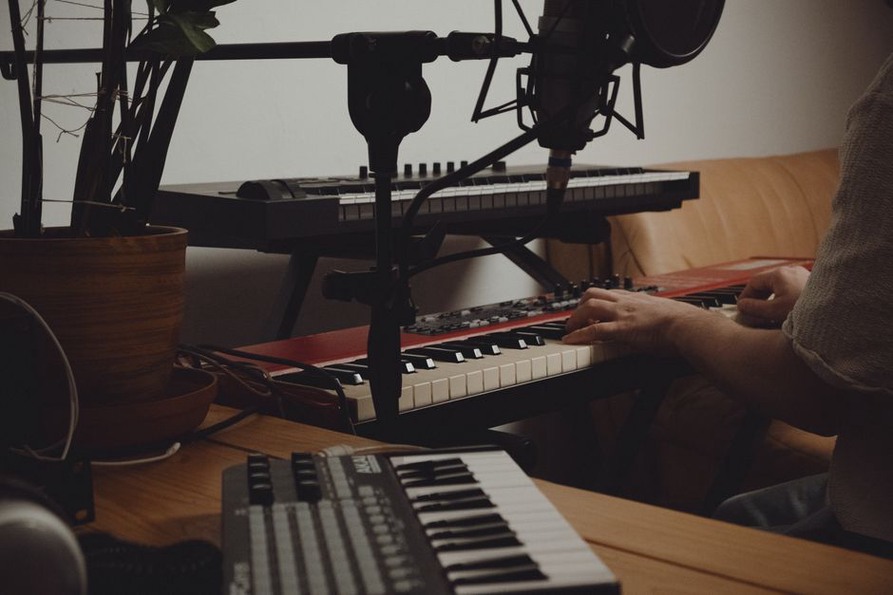
In group improvisation, another player may interrupt a gesture or force a change of pace. Working alone, a musician has to find that resistance elsewhere: in a recording’s duration, a device’s limits or the acoustics of a room. Moving a microphone, changing playback level or waiting for a sound to decay can become consequential decisions—ones that might be harder to hear amid other performers.
Those conditions matter especially to quiet electroacoustic work, drone and field recording. A small room can leave audible reflections; an apartment may limit volume and recording hours. Neither condition dictates a genre, but each affects what material is available. Near-silence can bring electrical hum into focus, while a sustained tone may expose fluctuations in an amplifier or speaker. A spare recording may have taken repeated takes and close attention to its surroundings.
Solitary work need not be restrained. Recording alone may let a noise musician pursue long experiments with feedback or dense processing that would be difficult to coordinate in an ensemble. It poses another problem, too: without a second player to interrupt, intensity can be too easy to sustain. An abrupt stop, a change of input or an edit can supply the contrast that another performer might have brought.
Distance changes collaboration, not just location
Collaborators can make a piece together without meeting. One musician can send a recording for another to process, answer or place beside new material. Such exchanges can cross cities and countries, though they change how improvisation works. A response made days later cannot catch an unrepeatable gesture as a player in the room might. It can examine that gesture closely, isolate a brief event and build around it.
The file becomes part of the negotiation. Partners have to decide whether to exchange separate tracks or a completed mix, how much alteration is allowed and whose version is final. One musician might leave long gaps for overdubs; another might send a crowded recording that resists additions. If these choices go undiscussed, the result can feel less like a conversation than a series of unrelated treatments.
Listeners should also distinguish an exchange of prepared files from a live remote performance. Both involve distance, but only the latter asks musicians to respond during the same event, often over a connection that introduces delay. Whether that delay matters depends on the music: are the players trying to synchronize tightly, or leaving space for late responses?
What a recording can conceal
A release rarely tells the whole story of the contact behind it. A solo credit may leave out friends who lent equipment, supplied source recordings or gave feedback. A project bearing several names, meanwhile, may have been assembled without its participants ever hearing the final arrangement together. Credits and recording notes can help; the sound alone cannot establish how socially isolated its maker was.
Isolation within a connected underground
Japanese experimental music has long relied on small venues, informal exchanges and independent releases alongside individual practice. Someone recording at home can remain part of that network through correspondence, shared bills, listening and distribution. For a closer look at those connections on the internet, [Tracing Japan’s Experimental Music Networks Online] examines online noise and sound communities. A solitary recording method tells us little, by itself, about a musician’s place in a scene.
Physical releases make the distinction tangible. A self-recorded cassette can pass through a label or a network of trades and reach listeners far beyond the room where it was made. That circulation can be precarious: a release may be difficult to obtain or poorly documented. Scarcity is not proof that the artist wanted secrecy. Limited time, money, storage or distribution contacts may be enough to explain it.
Access to space can impose isolation, too. High-volume noise may be difficult to rehearse at home; quiet music may struggle in a venue where conversation or outside sound overwhelms it. Someone without reliable access to either setting may concentrate on recordings because that is the available way to work, not because recordings are inherently private. The difference between an aesthetic choice and a practical constraint is rarely audible.
Listening without turning solitude into a myth
“Lonely” and “withdrawn” may describe a listener’s response, but they say little about a musician’s life. A sparse drone may have emerged through intensive collaboration; one person at home may have assembled a densely layered noise track. A field recording of an empty-looking place does not prove nobody else was there. Reading biography from texture can obscure the work and social exchange behind a release.
Listen for what the recording offers, then check what its documentation actually says. Do sounds seem to answer one another in real time? Does an edit preserve room tone between sections? Do the credits name exchanged source material? None of these details reveals every working condition. But if a cassette insert lists two recording locations, that is a firmer starting point for thinking about distance than the music’s mood alone.