
A quiet sine tone can seem steady until you move your head. Its apparent loudness shifts with your position; the room changes its color. Add a second tone and you may hear beating. None of this happens solely in the recording, or solely in the listener’s imagination. Japanese experimental musicians have often worked in this uncertain territory, arranging conditions that make hearing itself noticeable.
“Philosophy of sound” does not mean each piece illustrates a written theory. Sustaining a note, placing a microphone or leaving background noise exposed can each raise a question about perception. The artists discussed here take different approaches. Their work is more useful as a set of propositions to test than as evidence of one Japanese way of listening.
When the listener completes the event
In Sachiko M’s performances and recordings, sustained sine waves strip away many of the cues that help listeners follow a melody or identify an instrument. With little change in pitch or timbre, you begin to notice small fluctuations, sounds nearby and your own position. A tone may seem to waver even when the player is not shaping every apparent movement. Playback equipment, room acoustics and hearing all have a part in it.
This is no universal hearing test. What you perceive depends on the level, the speakers or headphones, background noise and your hearing; high tones are especially unevenly accessible. Calling a passage “empty” can miss both its physical intensity and the differences between listeners’ experiences. Reducing musical information makes the conditions of listening harder to ignore.
Akio Suzuki turns attention outward. His sound walks and installations treat ordinary surroundings as something to encounter, rather than a backdrop to overcome. His Oto-date project marks places to pause and listen. A mark promises no particular sound: traffic, voices, weather and local activity decide what is there. It gives attention a place and a little time, without controlling what anyone hears.

Does the microphone reveal or construct a place?
Move a microphone a short distance and a nearby mechanical hum may overtake a distant bird call. Headphones can bring out details that were hard to notice on site; editing can put together moments that never coincided. A field recording is evidence of an encounter with a place, not transparent access to the place itself.
Hiroshi Yoshimura’s Surround and Green are not field-recording documents, but his environmental music poses a related question. You can listen without treating every sound as an event that demands the foreground. Its quiet patterns meet whatever is already audible in the room. That relationship is easy to romanticize: a title cannot make music unobtrusive, and the same recording may feel gentle in one room and intrusive in another. What matters is the shifting boundary between composed sound and the listener’s surroundings.
With actual location recordings, musicians face another choice: whether to identify the source and place. That information helps establish what a recording documents, though it cannot recreate the conditions in which it was made. Withholding a location may bring the sound forward while erasing useful context. The choice matters when a recording is presented as an encounter with an environment rather than simply as material to work with. For a closer look at that distinction, Listening for the Unseen in Japanese Field Recordings considers what a location recording can suggest beyond its identifiable sources.
Duration changes what counts as a sound
A short click sounds like an event. Repeat it for several minutes and you may hear a pulse, a pattern or the space between clicks. Sustained music works the other way: an apparently stable mass slowly gives up tiny alterations. Duration changes what listeners count as a sound, not just how long they hear it.
Eliane Radigue’s long-form work offers an important international comparison, but Japanese musician Keiji Haino shows why duration resists a single account. In his solo work and performances with Fushitsusha, extended passages can move between recognizable gestures and overwhelming continuity. A change in vocal pressure or guitar density matters partly because of what has persisted around it. The experience need not be contemplative. Long passages can bring fatigue or disorientation as readily as concentration.
Ryoji Ikeda often makes perceptual thresholds conspicuous through exacting electronic pulses, frequency extremes and sharp contrasts in level. When do rapid events fuse into texture? When does a small difference become unmistakable? The playback system matters: domestic equipment may not reproduce some frequencies or dynamic contrasts. It is worth separating what the composition sets up from what a particular system lets you hear.
Three changes to notice during a long passage
- Adaptation: a constant sound may recede from attention even though its level has not changed.
- Grouping: repeated details may begin to sound like a rhythm or phrase.
- Attention: room noise, bodily movement or recording artifacts may become more apparent while the main sound holds steady.
None is guaranteed. Fatigue, differences in hearing and a noisy setting can change the experience considerably.
The instrument is also a proposition
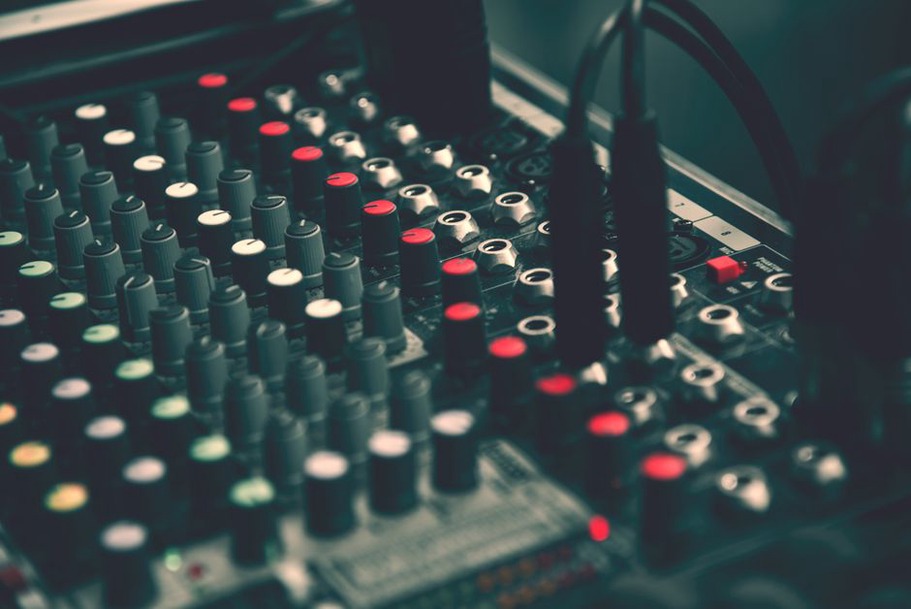
Toshimaru Nakamura’s “no-input mixing board” is a mixer with no external sound source fed into its channels. Connections within the board generate feedback, which he shapes using its controls. “Electronic music” describes the result, but misses the reversal: a device built to manage other sounds becomes the sound source. Its responses are sensitive and not entirely predictable. Listening means following a musician’s decisions within that system.
Otomo Yoshihide’s work with feedback and turntables also unsettles the idea of an instrument as a neutral carrier of intention. A turntable can play a recording, but it can make the contact between stylus, surface and mechanism audible too. What might once have been dismissed as interference becomes part of the event. Neither approach proves that every sound is equally interesting. Both show how technique and attention can shift the boundary between intended signal and unwanted by-product.
The medium carries that question beyond performance. Cassette hiss and wear can become prominent; noise reduction on a digital transfer may take quiet details away along with the noise. Neither version is automatically more truthful. In a comparison, “warmth” and “clarity” tell you less than a specific observation: a quiet passage obscured, a transient softened, an extra layer of hiss. The recording’s physical form affects what we hear without telling us exactly how the original performance sounded.
Perception is situated, not culturally uniform
It is tempting to explain every sparse Japanese work through Zen, ma or an assumed national comfort with silence. Those ideas may matter when an artist invokes them or a specific historical connection can be established. Used as a blanket explanation, they blur the differences between a sine-wave performance, a sound walk, feedback improvisation and environmental music. They replace decisions we can hear and discuss with a claim about cultural character.
Ask instead what a particular work asks of you. Is the source hard to identify? Does the room alter the result? Does the means of reproduction become audible? Perception is neither an impression beyond discussion nor a fixed property handed over intact by the artist. The listening conditions give you something concrete to check.
Try a quiet sustained passage twice at the same safe level. Listen through speakers while seated in one spot, then play it again from another position in the room. Note changes in the tone’s apparent color separately from sounds you notice around it. The comparison cannot tell you what the musician intended, but it can reveal a part of the event that the recording alone does not specify.