
A handwritten title on a cassette insert can identify a tape without telling you when or where it was recorded. The sleeve might name an artist or label; the tape itself might offer nothing more. In Japanese experimental music, such gaps are sometimes folded into a release’s mystique. Often they reflect the more ordinary conditions of small-scale production, informal exchange and paperwork nobody expected a future researcher to need.
Obscurity takes several forms. A recording might be hard to find, poorly documented, deliberately anonymous or simply unheard beyond a small circle. Limited access determines who can listen. Missing information limits what they can know. Anonymity changes how they might interpret the sound. Keeping those differences in view makes the culture easier to understand without treating every blank space as a secret.
Scarcity is not the same as secrecy
A small cassette edition might disappear quickly because its maker could afford only a modest run, copies went out by mail or at performances, or nobody maintained a catalogue. None of this proves the recording was meant to be hidden. An artist, meanwhile, might use an alias or withhold a name even when the music is widely available. Scarcity concerns access to copies; secrecy concerns control over information. They can overlap, but they are not interchangeable.
For experimental artists and labels in Japan, cassettes offered a way to release music independently without the commitments of a larger pressing. A tape could hold a rehearsal, an improvisation, a field recording or an electroacoustic study without forcing it into an album-length statement. That freedom also helps explain uneven documentation. Someone circulating sound among peers might include just enough information to tell one tape from another, rather than a session history for a collector decades later.
It is tempting to call this a distinctly Japanese reserve or fondness for mystery. That swaps material circumstances for a cultural stereotype. Hard-to-trace cassettes also emerged from international mail-art, industrial, noise and DIY networks. The useful questions are more specific: Who released this tape? Who collaborated on it? Where was it performed or distributed, and what documentation survives? There is no single national attitude toward visibility among people making tapes.
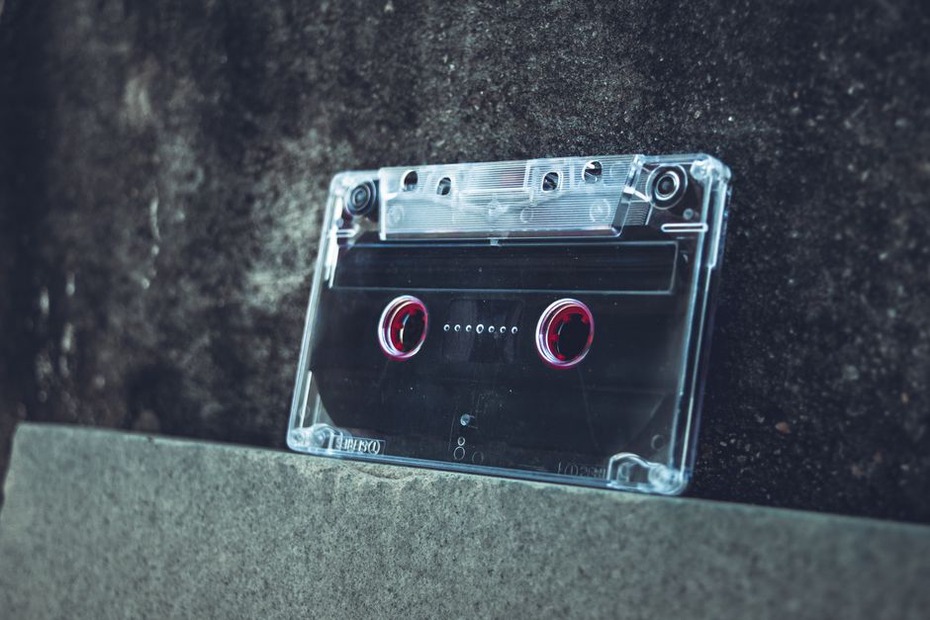
How a tape becomes hard to trace
Documentation made for immediate use
Cassette inserts were often working objects, not archival records. A photocopied card might give a project name and two side titles but no personnel, sound sources or location. A reused shell may bear markings from an earlier recording. Handwriting can resist deciphering, and romanized names can change between releases. Even an insert that looks complete may document the edition rather than the session it contains.
A cassette is a physical copy, not a guarantee of a fixed work. Duplications may differ in level or length; a later copy might have a replacement sleeve. A tape described as live may contain only an excerpt. None of this makes it fraudulent. It limits what the object can tell us.
Distribution through relationships
Copies traded at shows, mailed between musicians or passed among friends may leave little public trace. A tape could be familiar within its immediate network and nearly invisible outside it. Once a contact address or mail-order list disappears, that local familiarity can look, in retrospect, like deliberate concealment. For collectors, present-day rarity says little on its own about how a release circulated when it was new.
Collaboration makes identification harder, too. A project name on the cover may not identify everyone on a particular recording, and guest contributions may have been acknowledged elsewhere. Attributing every sound to the best-known person associated with a project risks erasing less documented participants.
What obscurity does to listening
A sparse sleeve removes some of the cues that usually direct attention. Without a title naming its source, a sustained tone may register first as wavering pitch and texture rather than a processed instrument. An unidentified field recording can draw the ear toward distance, movement and room tone before the listener attaches it to a place. That openness has value. It can also invite invented origins that the recording cannot support.
Noise raises a similar problem. Saturation, hiss or an uneven frequency response could come from the original recording, duplication, a playback deck or deterioration over time. To call every rough edge an artistic decision assumes more control than the evidence allows; to call it all damage ignores the medium’s audible part in the music. Another copy, if one exists, may help sort this out. Otherwise, uncertainty is the more accurate description.
Thin documentation can also affect a tape’s reputation. An inaccessible cassette may acquire an importance that listening alone would not give it. Yet a common release can be formally adventurous, while an elusive one may be slight, casual or most interesting as a record of a relationship. Copy count is not an aesthetic measure.
Chosen anonymity and accidental gaps
Artists may have good reasons to leave identities, methods or sources unspecified. An alias can keep projects separate, avoid expectations tied to a known name or let a recording circulate without a biography attached. Missing credits may be part of the presentation, not a puzzle set for listeners.
Other gaps emerge later. Sleeves become separated from tapes; private correspondence disappears; a distributor’s catalogue is lost. A digital file can preserve audio while shedding information once held in the packaging. Cases such as [a Japanese noise underground orphan file with an uncertain identity](/wasted_f520-2/) show how a surviving fragment can invite investigation without yielding a firm provenance. An orphaned file and an anonymously issued cassette are different kinds of evidence, even if both leave the listener short of context.
There is an ethical line here. Research can establish a release’s history without exposing personal information that was never made public. An uncredited contributor may not want recognition under a legal name. When sources disagree, record the disagreement rather than turning a guess into a credit that later catalogues will repeat.

Reading a poorly documented cassette
A useful response to obscurity is careful description, neither awe nor forced certainty. If you collect, archive or study tapes, a modest record of what you can actually observe may preserve details that would otherwise disappear.
- Separate the object from claims about it. Transcribe what the insert says, including spellings you cannot confirm, before adding information from sellers or online listings.
- Describe the copy. Note shell markings, handwritten labels, packaging and apparent side lengths. These may distinguish editions without establishing recording dates.
- Keep provenance attached. If a copy came through a trade, collection or performer, record that history only as precisely as the evidence and privacy considerations allow.
- Mark uncertainty visibly. Write “attributed to,” “possibly” or “date unknown” rather than quietly filling an empty catalogue field.
- Listen across copies when possible. Differences in speed, channels or endings may point to duplication or playback problems, not alternate artistic versions.
This approach does not take the interest out of an obscure tape. It keeps unlike questions from being confused. An unknown sound source calls for close listening; an unreadable name is a documentation problem; an undisclosed identity may be a choice.
Visibility changes the meaning of rarity
Digital circulation can make a once-obscure tape easy to hear while leaving its origins uncertain. A transfer might travel well beyond the original exchange network, but it cannot recover a lost insert or verify a guessed title. The reverse is possible, too: a cassette may be well documented but hard to hear because its owners have not shared the audio. Access to sound and access to information need separate accounting.
Online catalogues can make uncertain information look settled. A tentative date or personnel credit, copied from one listing to another, gains the appearance of corroboration through repetition. Better to find the earliest traceable source and keep a sleeve transcription distinct from a later claim. That matters especially when artists’ names have multiple spellings or projects overlap.
Musicians releasing cassettes now can choose how much to leave open. Minimal packaging can still credit collaborators. A release need not explain its sound sources to say who can be contacted about the recording. Those choices set the terms of ambiguity before lost metadata sets them by accident.
For an unidentified tape, begin with one restrained entry: copy the exact words on its insert, note which recording is on each side, and leave the date blank unless a source on or with that copy supports one. A blank field is more useful than a confident year borrowed from an unverified listing.