
Move a microphone a few centimetres and a feedback tone may disappear. On a recording, that same tone can be played back decades later. Japanese noise often works with sounds that are unstable in the room but familiar once fixed on tape or in a file. The performance and the document that survives it invite different kinds of listening.
What actually disappears?
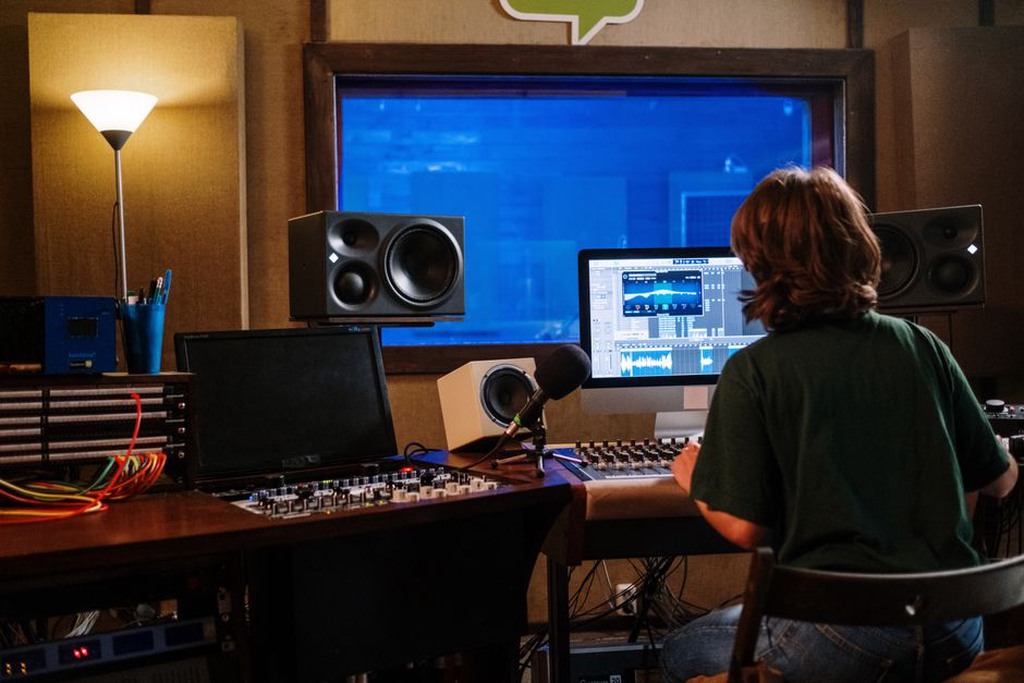
Small physical changes can redirect a live set. A microphone’s position relative to a speaker alters feedback; pressure on a contact microphone changes what it picks up. A loose cable or overdriven input may behave differently the next night. Even with a familiar setup, the room, amplification and audience affect what reaches the ear. A recording keeps a sequence of sounds, not the bodily sensation of standing near loudspeakers or hearing reflections from a particular wall.
That does not make live noise more authentic. Artists also compose on tape or computer, edit heavily, or make albums with no live equivalent. The useful distinction is between an event’s duration and an object’s durability. A sound may last two seconds; a recording, score, cassette shell or recollection can carry evidence of it much longer. Each keeps something different.
Irreversibility inside a performance
Noise can make change audible without offering a stable motif to follow. A dense passage thins into electrical hum; a scraping texture breaks off when its source stops moving. What follows cannot erase the earlier sound, but it can alter the memory of it. After sustained distortion, a quiet interval may feel exposed even if the room itself has not grown quieter.
Some performers make deliberate breaks; others respond to a signal that seems close to getting away from them. Neither approach is necessarily spontaneous. Feedback can be rehearsed, and an edited recording can retain accidents. What cannot be repeated exactly is the encounter among equipment, performer, room and listeners. The same devices may yield a recognizable approach on another night, but not the same event.
Records give unstable sound a repeatable form
Merzbow’s extensive catalog makes highly variable sound available for repeated listening. Given the different approaches and materials associated with the name, an individual release tells us more than a claim about one “Merzbow sound.” A listener can learn the transitions in a particular passage, even when it sounds close to disintegration. On replay, an interruption that once startled becomes something anticipated.
Familiarity shifts attention. The first time through, a sudden cut may register simply as an ending. The second time, the seconds leading up to it may take on more weight. The sequence stays fixed, but its shape changes for the listener. It can be heard again at another volume, in another room, or with knowledge of what comes next.
Cassettes complicate even that fixed sequence. Tape speed, playback heads and a cassette’s condition can affect the sound. Wear may soften high frequencies or cause dropouts, though those changes should not automatically be attributed to the artist. A digital copy avoids some physical degradation but may differ because of transfer, compression or altered track boundaries. “The recording” can mean several materially distinct versions.
Why the release object matters
A handmade sleeve, duplicated cassette or small-run CD-R can be stored and passed between people. Its packaging may supply a date, location, collaborator or method that the audio cannot. An unlabeled disc might preserve the sound while losing the information needed to place it. The object matters, but it cannot tell the whole story.
DIY circulation makes this especially plain. An edition can go out of print while copies remain on private shelves, in secondhand shops or in informal archives. A file may travel widely after losing its artwork or other context. A fragile copy kept by one listener may preserve a recording even as reliable details about its production become harder to find.
Duration is a compositional choice, not just a running time
Japanese noise includes abrupt miniature forms alongside extended performances. Hanatarash, associated with Yamantaka Eye, is often discussed for the volatility of its live history. That reputation should not replace attention to particular documents. Incapacitants, the long-running duo of Toshiji Mikawa and Fumio Kosakai, offer another way into duration: sustained, shifting density can make time hard to measure by phrases or beats.
In an extended piece, a narrow frequency might hold long enough to become a point of reference as other sounds change around it. When it vanishes, its absence is audible. Expectation does not require exact repetition; a recurring level of pressure, rhythmic flutter or abrupt silence can establish it. The listener measures change against what has lasted a few moments, rather than against a melody.
Short forms put a different pressure on listening. An immediate cut can deny the gradual development expected of a drone or improvisation, leaving a sound unresolved instead of bringing it to a conventional close. Replay fixes the ending, but it does not necessarily soften the interruption: there is no later passage within the work to settle it.
Where preservation changes the evidence
Archives can keep master tapes, released media, photographs, flyers, set lists and files. They cannot as readily keep the listening level, an audience’s movement or the frequencies masked by a particular room. A live recording can establish that an event occurred and reveal much of its audible course. Yet microphone placement might bring one instrument forward and leave another barely audible. It is a document of the performance, not the performance itself.
Dates and titles can drift as copies circulate. A filename may accurately describe its source, or it may preserve a later collector’s guess. A cassette label may be incomplete; a digitized copy may divide the sides differently from the physical edition. When identifying an unfamiliar recording, it helps to separate what is printed on the object, what can be heard and what has been inferred. A catalog entry may put all three in one place, but they are not the same kind of evidence.
There are ethical limits, too. Availability does not necessarily mean a recording is authorized for redistribution. A surviving live tape may include performers or audience members who did not expect it to circulate permanently. Documenting a copy’s existence is different from publishing it. For collectors and archivists, accuracy means marking those limits rather than filling gaps with confident stories.
A practical way to compare versions
When two copies seem to contain the same piece, a few checks can help distinguish artistic differences from playback or transfer differences:
- Compare beginnings and endings. Missing lead-in sound or an abrupt file boundary may point to a partial transfer rather than an alternate performance.
- Check duration with caution. A small difference may come from tape-speed variation or added silence; a large one may indicate different edits.
- Listen for shared events. A distinctive interruption or change in texture tells you more than a similar overall sound.
- Record the carrier details. Note whether each source is a cassette, CD-R, download or live tape, and mark uncertain credits as uncertain.
None of these checks establishes an authoritative version by itself. They describe what each copy contains without assuming that the cleaner transfer is closer to the artist’s intended sound. Hiss, clipping and discontinuity may be part of the work, or they may have arrived through damage. Comparison and context help keep those possibilities open.
The work that remains after the sound stops
For a performer, switching off a device, cutting a signal or letting a resonance decay may be as decisive as anything that came before. At home, the ending meets the playback medium: silence, the next track, or the mechanical click of a cassette deck. The medium can extend the gesture, sometimes unintentionally.
A listening note can make that boundary clearer. Instead of writing only “the piece ends abruptly,” say what stops: the high tone cuts out while a low hum continues for several seconds, or the recorded sound stops while the cassette keeps running. That small distinction helps a later listener tell the event, its recording and the playback apart.