
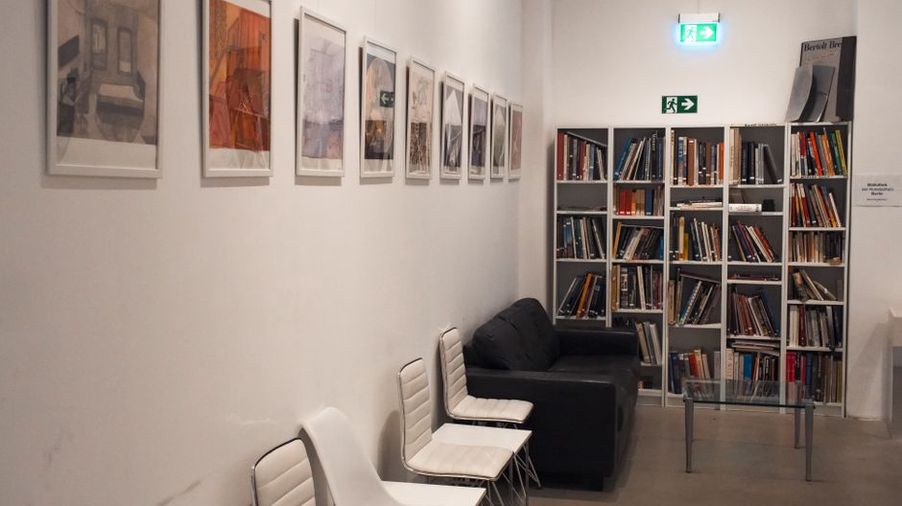
Hiroshi Yoshimura conceived Music for Nine Post Cards (1982) for the Hara Museum of Contemporary Art in Tokyo. Its short synthesizer pieces leave room around each phrase. They can be heard alongside the activity of a space without claiming everyone’s attention. The record’s later international audience encountered it as an album, but its original setting poses a different question: what happens to music when it shares a room with everyday life? That relationship between composition and setting became an important part of Japan’s contribution to ambient music.
Japan did not invent ambient, nor did its musicians belong to a single movement. Brian Eno’s records, minimalist composition, electronic music and sound art each had histories of their own before Japanese environmental music reached a wider international audience. Ideas crossed between those histories through records and artistic networks, then through reissues and digital circulation. What travelled was more than a taste for gentle synthesizers: it was a set of questions about placement, duration, acoustics and how freely a listener can divide their attention.
Music designed for a place
The term kankyō ongaku, usually translated as “environmental music,” covers work connected to particular architectural or social settings, as well as recordings intended for domestic listening. Composer Satoshi Ashikawa argued for music that could coexist with its surroundings. His Still Way (1982) makes the idea audible: piano and vibraphone sounds unfold slowly enough for their decay to become part of the composition. You hear the struck note, then the interval in which it fades.
Yoshimura’s practice also extended beyond the conventional album. On Green (1986), repeating electronic tones and measured shifts in texture make an environment of their own. The title might suggest a natural scene, but the record relies less on imitation than on small changes in the relationship between sounds. At low volume, one tone can seem to recede as another comes forward. Turn it up, and the same pattern becomes more insistent. Playback level changes how the work operates.
“Background music” need not mean music made without careful decisions. A piece meant to coexist with conversation, movement or room noise calls for attention to frequency, repetition and pace. A bright attack can interrupt a space even at low volume; a slow change can register without demanding attention. Ambient producers worldwide use similar strategies today, though resemblance alone tells us nothing certain about which Japanese records they heard.
Records that crossed borders later
Release date and international discovery date are rarely the same thing. Some Japanese recordings made in the 1980s reached foreign listeners through import shops and collectors; others became far easier to find decades later through reissues, online archives, streaming and critical writing. Light in the Attic’s 2019 compilation Kankyō Ongaku: Japanese Ambient, Environmental & New Age Music 1980–1990 gave listeners a widely available reference point. It also placed works made for different purposes under one useful, if broad, heading.
That later circulation changed the records’ meanings. Music once tied to an exhibition, an interior or a particular release format might now turn up as a single track on a global ambient playlist, stripped of much of its context. Easier access lets listeners and musicians study work they might otherwise never hear. But it can also suggest, misleadingly, that an entire period of Japanese music had one uniformly serene sound. Compilation sequencing can reveal connections while smoothing over differences between composers, commissions and listening situations.
How to trace an influence without guessing
- Separate release date from discovery date. A producer hearing a 1982 record through a recent reissue is part of a different story from an exchange that took place in the 1980s.
- Look for a stated connection. An interview, credit, collaboration or documented DJ set supports a stronger claim than two tracks sharing a soft synthesizer tone.
- Keep the original setting visible. An album made for attentive home listening and music designed for an installation can sound alike while serving different purposes.
- Notice what changes in circulation. A track on a playlist loses the sequence, packaging and intended duration of the release that held it.
A wider vocabulary than softness
Midori Takada’s Through the Looking Glass (1983) resists any equation of ambient with static calm. Its percussion, marimba and layered rhythms give the music a persistent sense of motion. Reissues brought the album to many later listeners, but its patterns also connect it to minimalist and experimental practices. “Ambient” may describe how people listen to it now; the word cannot account for everything the performance is doing.
Susumu Yokota’s Sakura (1999) belongs to a later, differently connected history. Yokota worked across electronic dance music and more contemplative releases. On Sakura, samples, traces of rhythm and melodic fragments come together without a steady beat becoming obligatory. Its international reception was not simply the rediscovery of obscure environmental music: it circulated when electronic listeners were already moving between club records, downtempo music and ambient. “Japanese ambient” is a useful point of entry, but a poor name for a single style with fixed instruments.
Nor does the connection end with quiet music. Japanese electroacoustic work, drone and noise test the boundary between a sound and its surroundings in other ways. A sustained tone can expose the hum of a playback system; a recording of a place can make an apparently empty interval feel crowded. Such work meets ambient through the act of listening, even when the sound itself is abrasive. For a closer look at one neighboring practice, Listening for Movement in Japan’s Experimental Drone considers how slowly changing sounds hold attention.
What global listeners received—and what can get lost
Japanese environmental music helped widen the idea of where an ambient work begins. It might start with the dimensions of a room, the time someone spends there or the sounds already present, rather than a synthesizer patch. Musicians outside Japan have taken up related concerns in installations, small-scale electronic releases and compositions for domestic spaces. An influence claim is strongest when an artist acknowledges a source or shared practice. Applied to all modern ambient, it is much harder to substantiate.
International enthusiasm can also turn “Japan” into a mood label. Record sleeves, architectural photographs and words such as “zen” are sometimes made to imply a national aptitude for tranquillity. That obscures the work of composition and the variety of music grouped under the label. It can also hide the part played by labels, archivists and translators in bringing older releases to new audiences. Silence between notes is an artistic choice, not evidence of a universal Japanese sensibility.
A better comparison begins with two records. Play Yoshimura’s Music for Nine Post Cards quietly enough to hear ordinary room noise, then play Ashikawa’s Still Way at the same level. Yoshimura’s compact electronic phrases and Ashikawa’s lingering acoustic attacks make different demands on the space around them. Listen to what happens after each note: neither gap is empty, and they are shaped in different ways.