
Play a field recording through a speaker, put a microphone in the room, and feed the new signal into a mixer. After a few passes, the original place may be hard to recognize. Calling the result ambient, noise, or electroacoustic music says little about what happened to the sound—or which part of that process matters most. Much of the interest in Japan’s experimental music lies in listening through that uncertainty.
“Eclectic” can sound like a sampler of styles. The more revealing question is how sounds with different origins coexist. A sustained electronic tone might bring out the rhythm in a train recording; a burst of feedback might cut through a quiet improvisation without defining the whole performance as noise. Follow the sound as it passes between source, device, room, and recording, and genre boundaries become less important than the choices made along the way.
Where the crossings come from
Japan’s experimental scenes have no single starting point or uniform sound. Postwar tape composition and electronic music developed alongside free improvisation. Later musicians used inexpensive recorders, effects pedals, computers, and self-built instruments. A performance in a venue asks something different of its maker and listeners than a recording intended for private playback. These histories meet, but a cassette made at home is not simply a concert-hall composition on a smaller scale.
Two well-known approaches make the distinction clear. In the 1960s, Group Ongaku used improvisation and unconventional sound sources to unsettle the boundary between music and everyday noise. Decades later, Merzbow became widely associated with dense, forceful noise recordings. Neither is a template for Japanese experimental music. One points toward sound as a shared event shaped in the moment; the other, toward a sustained encounter with recorded intensity.
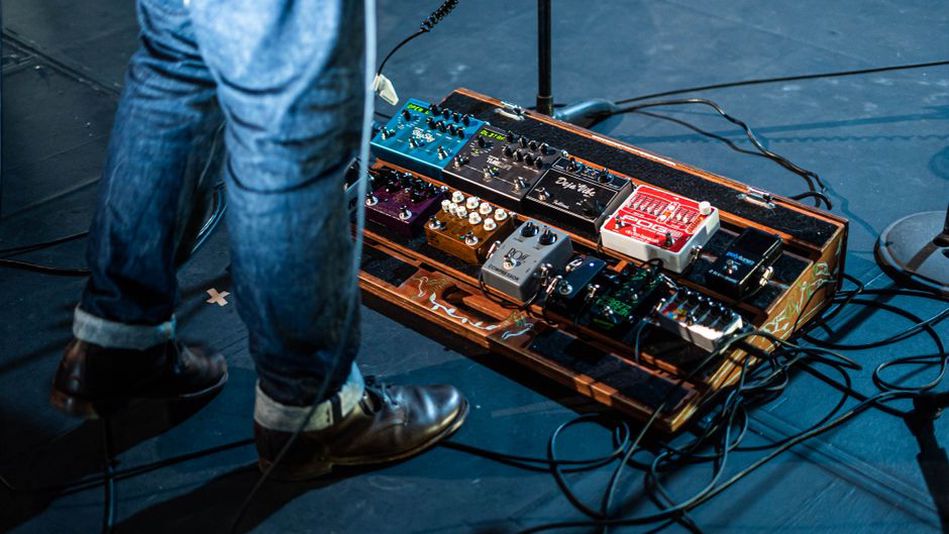
Listen to relationships, not a genre checklist
When a sound changes its role
Noise, drone, and ambient describe tendencies rather than fixed sets of ingredients. In a noise piece, a low hum can give the ear a steady reference, making bursts of distortion easier to hear in detail. In an ambient piece, that same hum might gradually change the apparent size of the room. A drone could come from an acoustic tone, an electronic oscillator, or a loop of environmental sound. What matters is whether the hum anchors other sounds, masks them, or slowly changes how they are heard.
With an unfamiliar recording, try noting three things before naming a genre:
- Source: Can you still recognize what produced the sound, or has processing made its origin uncertain?
- Distance: Does it seem close and dry, or does reverberation place it in a larger space?
- Control: Do changes seem timed by a performer, driven by a machine, or left open to accidents in the signal chain?
These questions still work when a musician changes methods halfway through a piece. They also keep volume from standing in for analysis: quiet sound can be abrasive, while a loud recording may have delicate movement inside it.
Electroacoustic sound is a process
“Electroacoustic” is more useful when it draws attention to what electricity does to an acoustic source. A contact microphone can pick up vibrations from an object that are barely audible on their own. Filters may emphasize a narrow band of the signal; speakers and the room add resonances of their own. Feedback, in this context, is not just an error. It arises from the relationship between input, amplification, output, and physical placement, and a performer may control it more or less closely.
That focus on process helps when credits are sparse. A metallic tone is no proof of a bell. A processed voice may resemble a synthesizer, while a synthesizer can suggest wind or machinery. Unless the release documents its sources, describe what you hear rather than guessing at an equipment list.
The recording medium is part of the composition
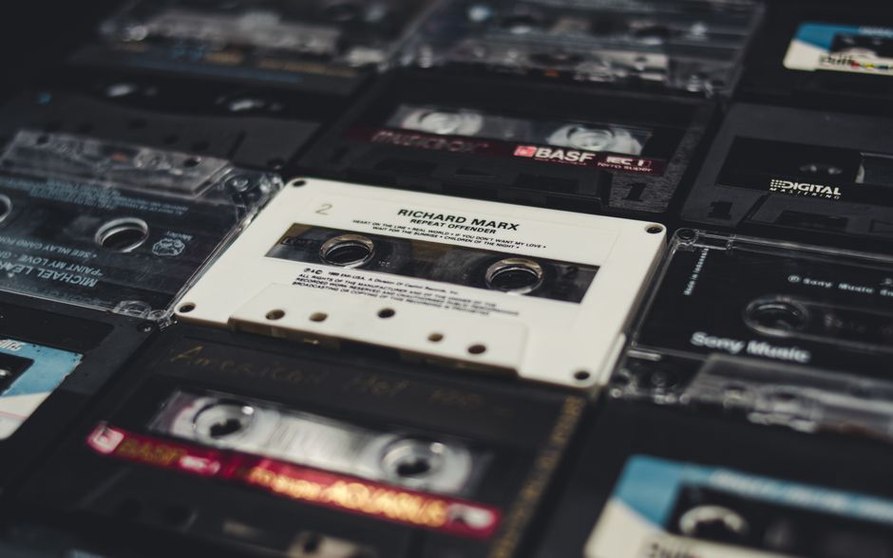
Cassette tape can soften transients, add hiss, and introduce small shifts in pitch, though none of these qualities is guaranteed or automatically desirable. The tape’s type and condition, the recorder, and any later transfers all affect the sound. For DIY musicians and small labels, cassettes have also been practical objects: relatively accessible to duplicate, package, exchange, and sell in modest quantities. Their social use matters as much as their texture.
A performance may feel different as a digital file and as a tape transfer. If a high, thin layer disappears in one version, the music may seem more spacious. If hiss fills a pause, that pause may no longer feel empty. Without information about the artist’s intended release, there is no reason to call either version definitive. Collectors comparing editions can check credits and track lengths first, then listen for differences without assuming that every variation is an artistic revision.
Place without a shortcut to atmosphere
A field recording might contain traffic, insects, ventilation, voices, or sounds whose sources remain unclear. It is never transparent access to a place: microphone position, time of day, editing, and playback volume shape what reaches the listener. Nor does a sound represent Japan simply because it was recorded there. A station announcement can be highly specific; room tone may reveal almost nothing about its origin without accompanying notes.
There is an ethical question when identifiable people enter a recording. Being audible in public is not the same as consenting to appear on a release, particularly when speech, private activity, or a precise location could expose someone. For a closer look at those choices, [field recording in Japanese experimental music and its ethics](/field-recording-as-art-japanese-perspective/) treats place as more than an atmospheric ingredient.
Place can be made after the original recording, too. An impulse response might make a dry sound seem to occupy another room. Speakers positioned around an audience can bring different layers forward as people move. So-called environmental music need not contain untouched environmental sound: the space you hear may be the source, an effect, or both.
Names, labels, and limits
Japanese experimental music circulates through independent labels, concerts, festivals, mail exchanges, and online releases. These routes overlap without amounting to a single underground. A label may bring artists together because they share a production method or an interest in a format—or simply because they know and work with one another. Appearing on the same compilation is not, by itself, evidence of a shared style.
Genre names still help listeners find records and venues describe events. They are less helpful when they blur differences between recordings or assign a national character to an ordinary technique. For a particular release, credits, instrumentation, and the artist’s account of the recording process may tell you more than a string of tags.
On a first listen, mark the moment one sound changes how you hear another: room noise starts to register as a drone, perhaps, or a repeated tone makes a passing vehicle seem rhythmic. Return to that timestamp. It gives you something precise to listen for, even if no genre name quite fits.