
A cassette bears a performer’s name and a month, but no year. Even if it plays, the label leaves a question: does the month mark the recording, the duplication, or a planned release? An archivist can preserve the label, transfer the full tape without trimming its beginning or end, and mark the date as uncertain. A plausible story would make the cassette easier to catalogue, but harder to trust.
That problem recurs across Japan’s experimental underground. Noise performances, electroacoustic works, field recordings, ambient pieces, and drone sets have circulated on handmade tapes, recordable discs, files, and small-run editions. Performers documented some of them; others survive because a listener kept the carrier, a venue saved a recording, or a label retained a master. Sound collecting is not simply acquiring rare audio. It means keeping the recording, its context, and the limits of what can be known about it together.
What exactly is being collected?
The obvious answer—recordings—leaves out much of the evidence. A cassette has a shell, inlay, handwriting, leader tape, and perhaps a note tucked into its case. A digital folder may contain an audio file and a text document identifying its source. A live recording might be connected to a flyer, set list, venue calendar, or musician’s recollection. None of these automatically proves who made the sounds, but together they can support a more reliable account than the audio alone.
There is no single archival problem peculiar to Japanese experimental music. A commercial record with a stable catalogue number is different from a tape copied for friends, an unreleased rehearsal, or an audience recording. The first may be documented in several places; for the others, a handwritten label may be the only surviving written evidence. Scarcity is not the same as importance, though. A widely distributed edition may reveal more about a musical network than an anonymous one-off tape.
A useful collection preserves four related things:
- The carrier: the tape, disc, drive, or other object on which sound was stored.
- The signal: an accessible copy of the audio, with enough technical information to interpret it.
- The documentation: packaging, correspondence, notes, and later testimony, each identified by source.
- The relationship among copies: which file came from which carrier, and whether another version is a master, duplicate, edit, or unknown.
Preserving these layers does not mean publishing them all. A private letter may help establish a date without belonging in a public catalogue. The archive needs to account for its evidence while respecting the people whose material it holds.
Why “unheard” does not always mean lost
Some sounds remain unheard because no playable copy can be found. Others exist but are inaccessible for less dramatic reasons: an unidentified tape cannot be filed with confidence; a digital file opens only in outdated software; a recording was made for a private exchange; or a rights holder has not agreed to public access. Each calls for a different response. An undigitized tape is not necessarily lost, and a digitized one is not necessarily available to share.
Underground circulation also complicates the idea of a finished release. An artist might distribute an excerpt on cassette while keeping a longer performance recording private. A recipient might copy that excerpt and change its label. A file recovered years later could bear a title supplied by someone other than its maker. Calling every version a definitive work would flatten those histories. A catalogue can instead describe an unidentified variant or a copy of uncertain generation.
Even the sound can mislead. Hiss may come from the performance, a tape recorder, an earlier copy, or the present transfer. An abrupt ending might be deliberate, or the tape may simply have run out. Close listening matters, but it cannot always settle provenance. Check the carrier and surviving documentation before describing an apparent flaw as part of the work.
From private collection to usable archive
Independent collectors often start with a basic inventory: what they own and where it is. This can prevent a common failure in small collections—a tape gets digitized, but no one can later match the file to its shell. The inventory need not be an elaborate database. It does need consistent identifiers linking each object to its photographs, transfer, and notes.
Assign an identifier before transferring an item, and keep it independent of any presumed title. A code such as SC-0042 remains useful if research later changes the performer attribution. Transcribe wording as it appears on the item, including uncertain handwriting; put interpretations in a separate field. Silently correcting a name makes the claim harder for the next researcher to check.
A minimum record for a difficult tape
- Unique object identifier and current storage location
- Carrier type, visible condition, and any playback concerns
- Exact wording on shell, inlay, and case, with photographs
- Stated performer, title, place, and date, marked as stated rather than verified
- How and when the collector acquired it, where that information may be disclosed
- Transfer date, playback equipment, settings, operator, and resulting file names
- Access restrictions and the person or source responsible for them
Write “unknown” when a detail is unknown; a blank field could mean no one checked. If a date comes from a flyer, cite the flyer as the basis for the inference. A performance date and an edition’s release date are not interchangeable.
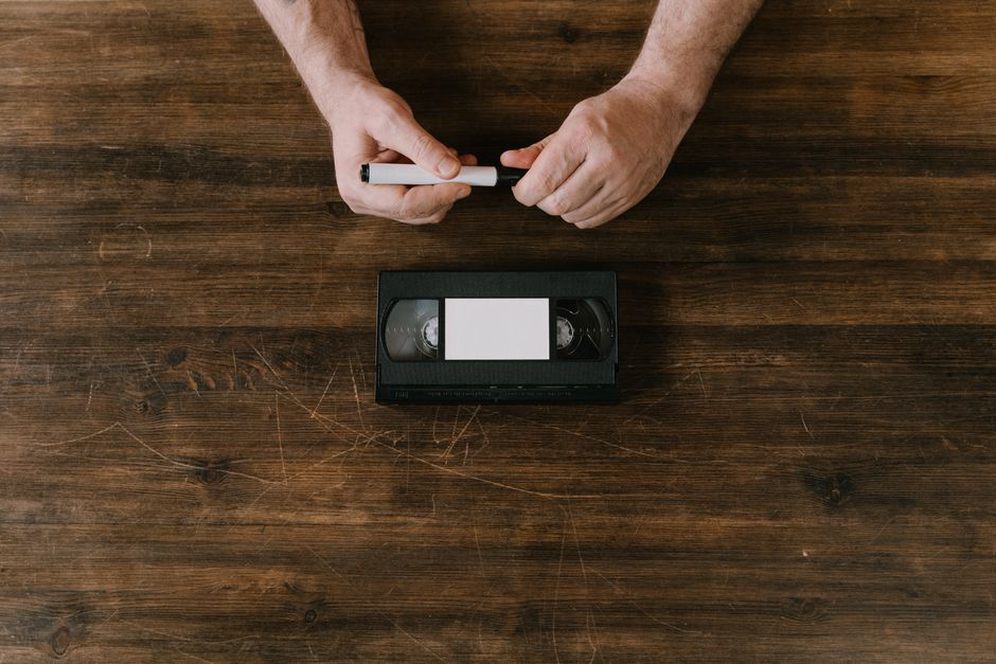
Transfers preserve evidence, not just listenability
Analogue carriers wear, and playback can damage a fragile tape. Inspect a cassette or reel for obvious physical problems before transfer, and avoid repeated test plays just to identify it by ear. If its condition or the available equipment is uncertain, consult a specialist rather than attempt an improvised repair. A transfer should not cost the archive the original.
Capture an unprocessed preservation copy where possible. Make separate listening copies if access calls for noise reduction, level changes, or track divisions, and document each alteration. Noise reduction can strip low-level detail from an electroacoustic piece; a sharp fade can erase an audience response or the last seconds of a room recording. Keeping the unprocessed copy lets someone reassess those choices later. It also makes it possible to compare a better transfer with the first instead of quietly replacing it.
Digital files need their own care. Keep a received file unchanged, even if everyday listening requires a converted copy. Record its original name, format, size, and source, and generate a checksum to detect unintended changes in future copies. Store copies in more than one location and check that they still open. A tidy catalogue filename is fine if the original survives in the record; deleting the source file after conversion is not.
File maintenance is only part of the job. The companion discussion of archiving digital files in Japanese experimental music addresses digital artifacts specifically. A sound collection must also retain the link between a file and the person, carrier, or exchange it came from.
Field recordings and the limits of description
A field recording can sound as though it identifies its own location: voices, traffic, insects, ventilation, announcements. None replaces a recording log. Sound carries across boundaries, microphones alter its balance, and an edit can join separate places. “Tokyo, night” tells a listener little unless the record says who supplied that description and whether it refers to the recording or its later publication.
Precise location is not always appropriate for a public catalogue. A domestic recording may reveal someone’s home; speech caught in public may still identify a person; an environmentally sensitive site may be better described more broadly. Archival accuracy does not require publishing coordinates. Where there is a reason to limit disclosure, a private record can retain more detail than the public one.
For sound art made with field material, distinguish where the source was recorded from where the work was composed and played back. An installation may filter or spatially arrange a short outdoor recording until its source is barely recognizable. Filing the work only under that source location obscures what the artist did; treating it solely as an abstract composition conceals how it was made. Both descriptions have a place if their roles are clear.
Consent, ownership, and the temptation to publish
Owning a copy does not grant permission to put it online. This applies to privately circulated tapes, live recordings, correspondence, and recovered files as well as formal releases. The recordist may not be the performer, and a venue that allowed documentation may not have agreed to unrestricted distribution. After a tape passes through several hands, both rights and expectations can be difficult to establish.
Before making audio public, an archive should identify relevant creators and known restrictions, seek permission where feasible, and record what that permission covers. Full streaming, short excerpts, on-site listening, and descriptive catalogue entries are different kinds of access. If permission remains unresolved, preservation and a restricted record can still keep the material from disappearing. A catalogue entry without playable audio does not necessarily signal neglect.
Collectors also need a way to handle disputed attributions or requests to restrict sensitive material. When correcting a record, retain what it said before, what evidence prompted the change, and when the change was made. Erasing the old wording can hide how an error spread. A public note may be brief; the internal account should preserve the basis for the decision.
How a listener can use an archive critically
A catalogue guides readers through evidence; it cannot guarantee certainty. When examining an unfamiliar Japanese noise or ambient recording, distinguish a title printed on the original item from one supplied by a later collector. Check whether the audio comes from a first-generation source, a copy of a copy, or an unidentified transfer. Listen to the beginning and end before assuming the file contains the entire work. These distinctions matter when interpreting or citing it.
A burst of distortion might sound like a deliberate transition until a matching dropout on the source tape suggests otherwise. A long stretch of near-silence, meanwhile, may be central to a piece rather than missing audio. Polishing every transfer will not resolve either case. Labels such as “unprocessed transfer” and “edited listening copy” tell the listener which object they are hearing.
For musicians and researchers, careful citation makes small archives more useful. Cite the object identifier and the version heard, not just a performer and title. Carry an uncertain attribution into the citation rather than turning it into a fact through repetition. “Credited on cassette to” is less tidy than a firm attribution, but it leaves room for new evidence.
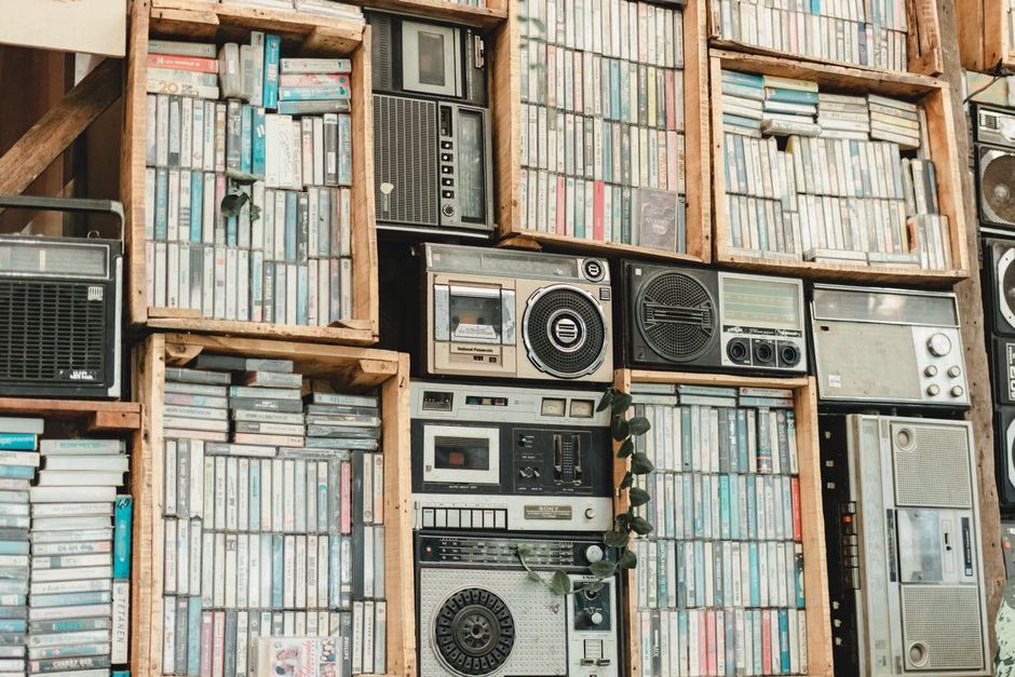
What a collection cannot recover
No archive can reconstruct every unrecorded performance or exchange whose participants left no account. What survives depends in part on who owned equipment, had space to store tapes, copied whose work, and decided which recordings to keep. A collection of physical releases may underrepresent live improvisation; a venue archive may overrepresent artists who played in that room. Those are limits of the evidence, not measures of a scene’s artistic value.
Careful wording makes those limits visible. Instead of calling a tape “the earliest” example of a practice, a catalogue can make the narrower claim it supports: the earliest dated example in that collection. A missing recording does not prove a performance never happened; a flyer or programme can document the event while the audio remains unlocated. An archival gap need not become a false history.
For a newly found cassette, a first entry could read: “SC-0042; cassette; title as written on inlay; recording date unknown; received from named donor with permission to record provenance; side A unprocessed transfer made on recorded date; public audio access pending review.” It gives the next person a route back to the object without forcing the handwriting, the donor’s memory, and the sound into agreement.