
The previous set is still in your ears when the next one begins. Twenty minutes after amplified feedback fills a room, a quiet electroacoustic piece may ask you to listen for much smaller sounds. That change is partly the music, partly the timetable. Set order, room size, sound levels and the time needed to reset equipment all affect what an audience can hear.
Experimental music festivals in Japan take several forms: multi-day international programs, artist-organized improvisation gatherings, noise-focused events and small bills put together by a venue or collective. Some do not call themselves festivals. The name tells you little about scale or approach; the better question is what the program allows that an ordinary concert might not. That could be longer attention, an encounter between unfamiliar methods, or musicians working together instead of presenting fixed sets.
What counts as a festival here?
Consider two documented approaches. The International Festival of Electroacoustic Music in Tokyo, commonly known as FUTURA, has presented concerts centered on electroacoustic work. Festival Beyond Innocence, associated with guitarist and improviser Otomo Yoshihide, has treated the festival as a meeting point for experimental performance across artistic boundaries. Neither is a template for every event in Japan. They show how much can sit under the term “experimental festival”: it describes a programming question, not a genre.
A noise-heavy night may draw its shape from contrasts in density, duration and amplification. An electroacoustic program might ask listeners to distinguish live sound from prerecorded material, or to follow sound through a speaker array. At an improvisation event, pairings with no prior recordings may define the evening. The same musician can work differently in each setting. For background on one strand of this history, the overview of Japanoise supplies names and context, though it should not be mistaken for a guide to everything heard at Japanese festivals.
Smallness does not disqualify an event. A carefully sequenced weekend in one room can offer more sustained contact with unfamiliar work than a sprawling schedule of overlapping stages. A large program, meanwhile, can put performances, talks and installations into conversation. Rather than rank events by size, check whether sets overlap, whether collaborations are planned, and whether listeners can move between seated concerts and open-ended installations.
Read the program as a set of decisions
Genre tags help, but only so far. “Ambient” could describe a nearly static electronic piece, a live mix of recordings, or music whose quiet passages need careful amplification. “Noise” could mean a short, sharply structured performance rather than an uninterrupted wall of sound. Descriptions become more useful when they name instruments, playback formats and collaborators, and say whether a work is composed or improvised.
Listen across sets, not just within them
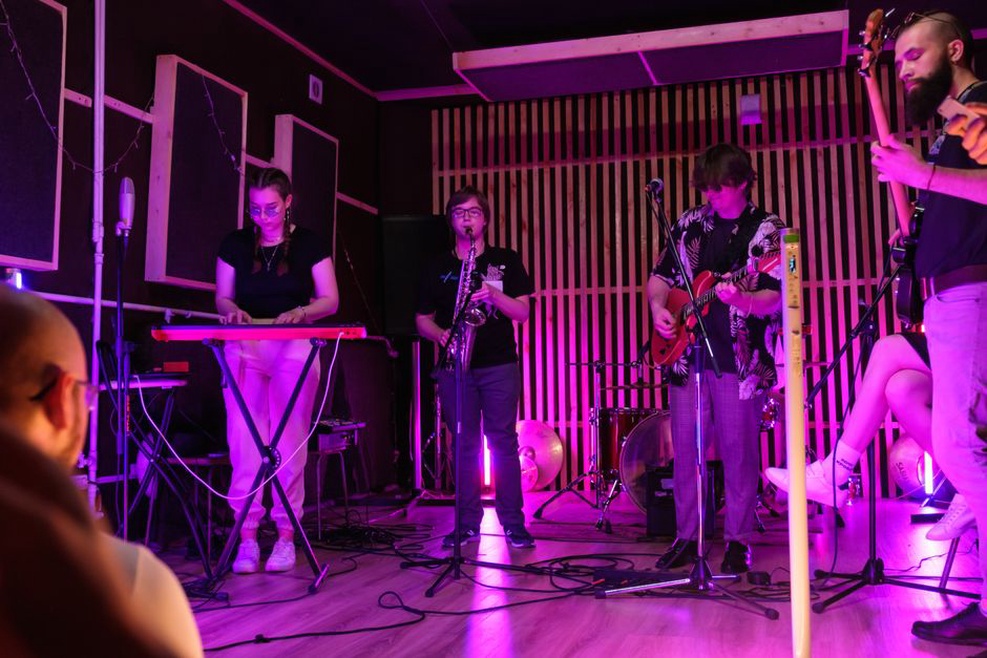
The comparison between adjacent performances can be more revealing than either set on its own. Contact microphones make tiny vibrations public; a following drone set may make continuous sound the central event. What does the change bring forward? Can you hear the ventilation when the stage falls quiet? Does the next artist use the room’s reverberation or work against it? Listening across the gap tells you something a lineup cannot.
Shared bills also make different attitudes toward control audible. One performer might build a repeatable system and let its irregularities unfold. Another reacts to an audience, a collaborator or a malfunctioning device in real time. A field-recording piece can keep the recorded place in focus, while live processing draws attention to what happens to the recording. Heard close together, those differences are harder to miss.
Pay attention to the room and its limits
There is no neutral space for this music. Low frequencies gather differently across a room, and a speaker arrangement can make an electroacoustic work feel precise or diffuse. Someone standing at the back may hear a quiet set differently from a listener seated near the front. At a multi-venue event, changing rooms—from concert hall to gallery to small club—can matter as much as changing artists.
Installations run on another timetable. Instead of beginning with a performer and ending with applause, a work may run continuously or change over a cycle. Ask staff whether there is a recommended listening duration before deciding you have heard all of it. A hard-to-locate sound source may be part of the work rather than a presentation fault. Knowing which pieces are installations also helps when you have little time between venues.
A festival’s less visible labor
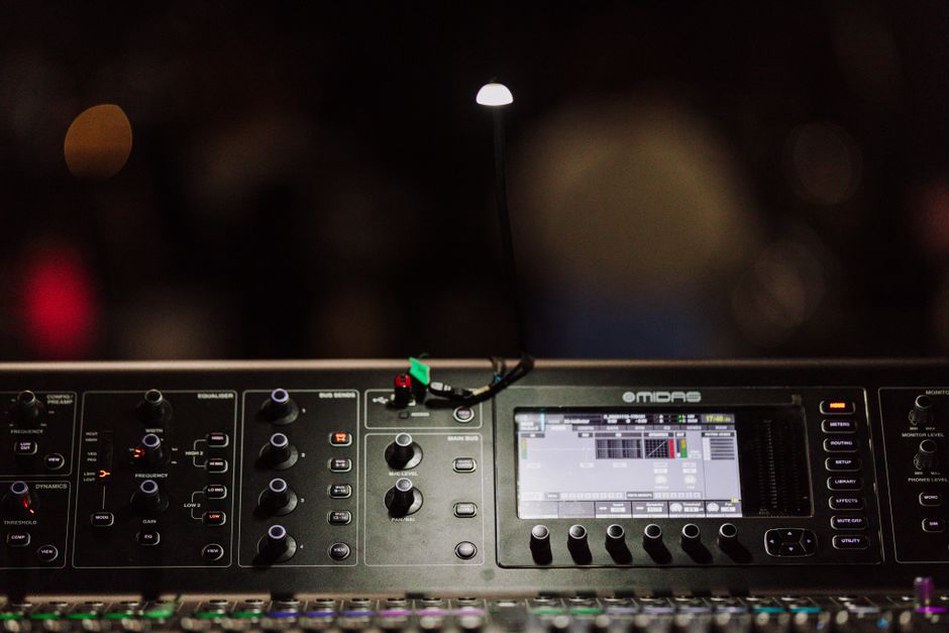
Listings rarely show the work behind a program. Someone must arrange stable power, sound-check unusual instruments, manage changeovers and explain performers’ requirements to venues that may usually host other kinds of music. A setup built around delicate signals cannot simply inherit the levels of the previous amplified set. Improvisation, too, can demand considerable planning even when the music is not predetermined.
In a DIY setting, artists, volunteers and small venues may share that work. Practical limits do not disappear: limited rehearsal access, tight schedules and unsuitable playback equipment can shape what happens onstage. Clear set lengths, venue information and sound-level guidance help the audience as well as the performers. They tell listeners when to arrive, where they might sit and whether to bring hearing protection.
The goods table deserves the same close attention. A cassette bought directly from an artist is not necessarily a document of the set you just heard. If you want a record of a particular performance, check the title, date and recording credit. Studio work is a separate encounter. A simple note of who played, where, and what was sold can keep a festival memory from becoming an inaccurate release history.
Plan a visit without treating the lineup as a checklist
Start with the current edition’s details. A festival name can recur while its organizers, venues and schedule change; an old program documents a past event, not your travel plans. Check the latest organizer announcement for dates, addresses, door times, admission arrangements and any age or re-entry rules. If accessibility information is missing, ask the venue rather than guessing from photographs.
- Allow for changeovers. A published start time may not tell you when a particular artist begins, especially on a bill with complex equipment.
- Check the format. Seated concerts, standing shows, workshops and installations may have different entry procedures and expectations.
- Bring suitable ear protection. Noise performances can reach uncomfortable levels, though volume varies by artist, room and position.
- Keep the venue name and address offline. Similar-sounding spaces and multiple rooms can make a tightly timed transfer harder than it looks.
- Leave room for one unfamiliar set. A short description cannot reliably predict which performance will hold your attention.
Try not to schedule every minute around names you know. If sets overlap, ask what each offers that a recording cannot recover: a one-off collaboration, a spatially arranged work, or an artist demonstrating a system live. You may be able to return to an installation after a concert. Leave a single improvisation set halfway through, though, and you might miss the moment the players find a shared language.
Document with care. Festival footage can preserve a gesture or an unusual instrument, but phone audio rarely captures room acoustics, spatial sound or extreme shifts in volume. Follow the recording policy and avoid blocking anyone’s view. If you take notes, separate observable details—performers, instruments, sequence, approximate duration—from your impressions. That distinction helps when a fleeting sound later reminds you of a release.
What the festival format changes
Recordings let you replay a passage and adjust the volume. At a festival, you have much less control. A very quiet work may depend on the room staying quiet; a loud one makes physical distance part of listening. Conversations by an entrance, movement through an installation and applause between closely connected pieces can alter something that cannot simply be restarted.
A strong program need not make every artist fit a single “Japanese sound.” It can expose disagreements about texture, pacing, electronics and what counts as performance. An international guest, a local first-time pairing and an artist working across concerts and installations may share a bill without speaking for the same tradition. Their differences are part of what makes the program worth hearing.
After a set, write down one concrete detail before reading the artist’s biography: where the sound seemed to come from, whether it changed gradually or abruptly, or what the room contributed. Compare it with the next set. Even two performances can reveal a programming decision—especially when the second makes you notice a sound you had stopped hearing in the first.