
Some catalog numbers in Japanese underground music are dead ends. They lead nowhere — no label website, no Discogs entry, no surviving artist contact. cav520 is one of those numbers. It appears on a handful of cassette releases from the late 1990s and early 2000s, all linked by a single visual motif: a plain white J-card with black Helvetica text, no artwork, no label logo, no barcode. The only identifier is the string cav520, printed in the lower right corner of the J-card spine. No address. No email. No year. Just the number.
Collectors who have encountered these cassettes describe them as “the white ghosts” — releases that seem to exist outside any known distribution network. They do not appear in the standard Japanese noise zines of the period (G-Modern, Eleking, or the old Noise Magazine). They were never sold at Disk Union or Tower Records. If they were traded, it was by mail, through small ads in photocopied fanzines that themselves have vanished. The music on the tapes is uniformly lo-fi: monophonic synth drones, heavily distorted field recordings, and long stretches of silence punctuated by sudden bursts of clipped noise. Production quality varies wildly between copies of the same release, suggesting that each tape was dubbed individually, possibly on demand.
A Catalog Number Without a Catalog
The prefix cav is unusual in Japanese DIY numbering. Most labels use Romanized Japanese words (yoh, shi, mu) or initials of the founder. cav does not correspond to any known Japanese word or common abbreviation. It might be an acronym — perhaps Collective Audio Vault or Cassette Audio Void — but no source confirms this. The number 520 is equally opaque. It does not fit the date format common on other Japanese DIY releases (which often encode release dates as YYMMDD or MMDD). 520 could be a sequential release number, but if so, releases cav519 and cav521 have not surfaced. No collector has reported finding a contiguous range.
The numbering system itself invites comparison to other Japanese underground catalog schemes. As discussed in the article 152012: Why Japanese Underground Cassettes Use Numbers, Not Names, many Japanese DIY labels deliberately obscure their identities behind numeric codes. cav520 takes this principle further: it obscures not only the artist and title but also the label. The number becomes the only stable reference point. The music is secondary to the catalog code.
The Known Releases
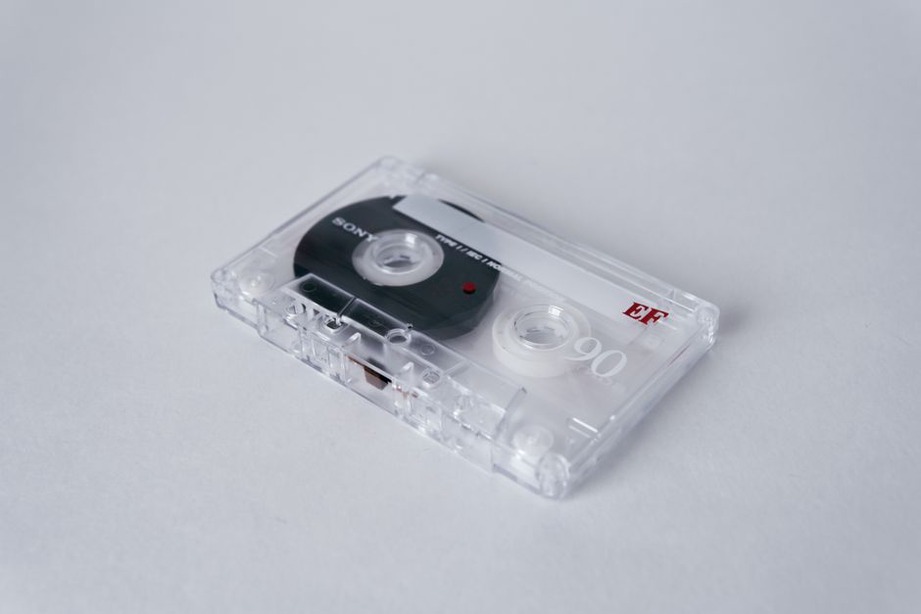
Based on surviving copies in private collections, the cav520 series appears to include at least four distinct tapes. None have artist names on the shell or J-card. The only way to distinguish them is by the text printed on the cassette shell itself — usually a single kanji character handwritten in silver marker on the clear plastic. The known characters are:
- 空 (sora / kū) — “sky” or “emptiness.” The tape contains approximately 40 minutes of a single sine wave tone that slowly detunes over the duration, with occasional clicks from what sounds like a damaged patch cable.
- 水 (mizu) — “water.” A field recording of a river in heavy rain, overlaid with shortwave radio static. The recording seems to have been made with a contact microphone pressed against a metal bridge railing.
- 土 (tsuchi) — “earth” or “soil.” The most aggressive of the four: 30 minutes of heavily clipped contact microphone recordings of gravel being crushed, with no additional processing. The distortion is entirely from overloading the microphone preamp.
- 音 (oto) — “sound.” A single track of a broken cassette player being manipulated by hand while recording to a second machine. The tape loops and stutters for 25 minutes before the mechanism jams and the recording ends abruptly.
These descriptions come from a collector in Osaka who owns copies of 空 and 水. He obtained them in 2003 from a used-book store in Kōenji that specialized in underground zines. The store owner told him the tapes had been left on consignment by someone who never returned. The owner did not know the person’s name.
Production Methods
The physical construction of cav520 tapes reveals a consistent methodology. The shells are standard white C-60s, probably sourced from a bulk supplier in Akihabara. The J-cards are printed on 80gsm copy paper, cut with scissors — the edges are not perfectly straight. The text is typed on a mechanical typewriter; the ink impression is uneven, with some letters struck harder than others. The cav520 number itself appears to have been stamped with a rubber stamp, not printed. On some copies, the stamp is smudged, as if the ink pad was dry.
This production style places cav520 squarely in the tradition of ultra-limited, anonymous DIY publishing. The lack of any identifying information is not an oversight; it is a deliberate choice. The creator wanted the music to circulate without the baggage of personality or brand. The catalog number is the only trace, and even that may be a pseudorandom string chosen precisely because it resists interpretation.
Why cav520 Matters
In an era where every cassette release is documented on Bandcamp, Instagram, and Discogs within hours of its creation, cav520 represents a different ethos. It is music that exists almost entirely outside the archival impulse. The tapes were not made to be preserved; they were made to be used, traded, and eventually lost. That a few copies survive is accidental. The collector in Osaka estimates that perhaps ten copies of each tape were made, but he cannot be sure. The creator may have made more, or fewer.
This anonymity is not the same as the pseudonymous aliases common in Japanese noise (e.g., Masonna, Hijokaidan, or the many figures who operate under multiple names). Those are still identities — they carry history, reputation, and a body of work. cav520 has none of that. It is a pure catalog number, a signifier that points only to itself. In this, it resembles the catalog-number-as-title phenomenon seen in other Japanese DIY circles, where the release is its catalog number, and the music is a secondary attribute.
How to Identify a cav520 Tape
If you are digging through a box of cassettes at a flea market in Tokyo or Osaka, and you find a white J-card with no artwork and a number in the corner, look closely. The cav520 tapes share specific characteristics:
- No label name. There is no company name, no address, no website. Just the number.
- No artist name. Not on the J-card, not on the shell, not on the insert (if one exists).
- No track listing. The only text is the catalog number and, sometimes, a single kanji on the shell.
- Hand-stamped number. The cav520 text is rubber-stamped, not printed. The ink may be faded or smudged.
- Typewritten J-card. The body text on the J-card is typed on a mechanical typewriter, with uneven letter spacing and occasional ink splatters.
If you find one, do not expect to identify the artist. You will not find them. The value of the tape is not in its provenance but in its existence as a physical object that has survived against the odds. The music itself is secondary — a byproduct of the act of releasing.
The Future of cav520
No new cav520 releases have been reported since approximately 2005. The creator may have stopped, or may have changed to a different numbering scheme. A collector in Tokyo believes he saw a cav521 listed in a 2006 mail-order catalog from a now-defunct noise distro, but he cannot confirm it. The tape was never in stock when he tried to order.
For now, cav520 remains a ghost. The four known tapes circulate among a small group of collectors who do not share the recordings online. No digital transfers exist. The music is only audible if you hold the physical tape in your hands. That, perhaps, is the final statement of the series: some sounds are not meant to be archived. They are meant to be heard once, by one person, on one worn-out cassette deck, and then forgotten.