
A burst of amplifier feedback can be a malfunction or the central event of a performance. The sound alone cannot tell you which. Listen to how the musician starts it, how long they let it run, and whether its pitch, pressure or texture shifts. Japanese noise experiments make it hard to dismiss distortion as a cover for musical decisions. Often, it is where those decisions can be heard.
Calling noise “art” does not make every loud sound compelling. It means listening critically to material music often excludes: feedback, electrical interference, scraping, clipping. “Japanese noise,” meanwhile, is no single philosophy. Artists associated with the term work in free improvisation, electronics, performance art and recording, sometimes toward very different ends.
Noise is a category, not a property
In everyday speech, noise is unwanted sound. In audio engineering, it can be an unwanted signal that obscures another. Art makes those definitions less secure. Hiss that an engineer would remove might be the part of a piece you listen to most closely. The waveform need not change; the expectation around it does. A sustained squeal might send one concertgoer toward the exit, while another follows its small fluctuations for minutes.
That shift changes what counts as skill. Melody draws attention to notes, phrasing and harmony. Dense noise may ask you to distinguish frequency bands, irregular pulses, abrupt cuts or layers that are difficult to separate. Its organization need not resemble a song’s. Rather than ask whether you can recognize notes, ask what differences the piece lets you hear.
Noise is still open to criticism. A wall of sound might change subtly, remain stubbornly static or flatten into an undifferentiated mass. Listeners can disagree about whether any of that is deliberate, successful or interesting. Calling it noise begins the argument; it does not settle it.
The artist does not fully control the sound
Feedback shows the limits of control in practical terms. A microphone picks up sound from a speaker, which amplifies it and sends it back to the microphone. The performer can move equipment, adjust levels or filter frequencies, but the room and the system also shape the result. The sound develops through that exchange, rather than arriving fully imagined.
Japanese experimental musicians have explored related possibilities with electronics, amplified objects and improvisation. That does not amount to a national approach to technology. The more useful question is what happens when a performer sets conditions for sound without dictating every detail. A crackling contact, unstable oscillator or overloaded input may resist exact repetition. The response to that resistance becomes part of the performance.
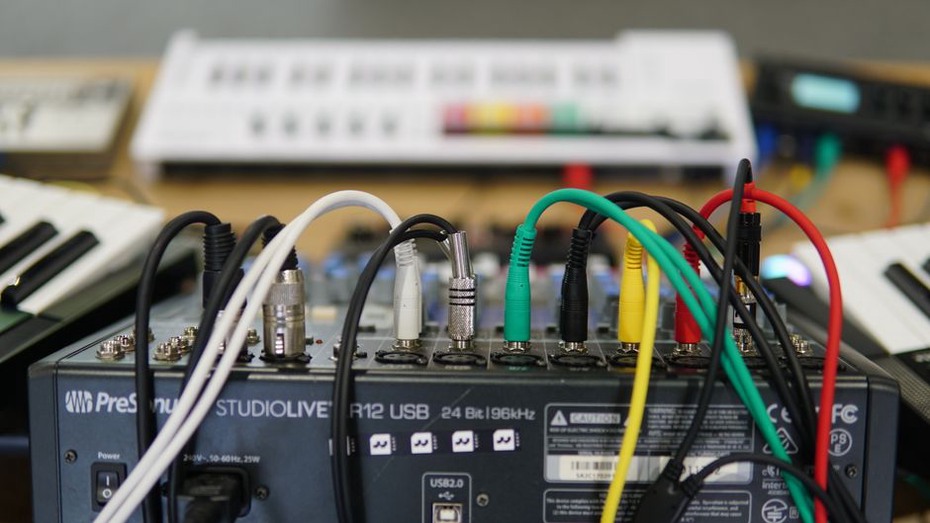
Accepting accidents is not the same as leaving everything to chance. The choice of equipment, the gain setting and the decision to stop all set boundaries. Even a passage that sounds uncontrolled has them, which is why “anything goes” tells us so little about it.
Improvisation is not the absence of form
A free improviser may decide on the spot whether to answer another player, interrupt or leave a sound alone. Those decisions create form as the music unfolds. Guitarist Keiji Haino and saxophonist Kaoru Abe are often discussed alongside noise, though the label cannot account for either musician’s work in full. Their playing makes the boundary between an instrument’s familiar sound and so-called nonmusical sound less stable: a guitar can give way to scrape or amplified wash; a saxophone can move between clear tone and breath noise.
Why volume changes the argument
Merzbow, Masami Akita’s long-running project, is a useful reference for dense noise, not a model for every Japanese artist. In a forceful recording, the usual foreground and background can be hard to keep apart. Hiss comes forward, distortion obscures the source, and the ear searches a crowded field for events. “What instrument is playing?” becomes less helpful than “Where can I hear a change?”
Volume adds a physical dimension in performance. Loud sound can register as pressure as well as pattern. That may matter artistically, but it does not justify careless listening conditions. A recording played quietly and a high-volume live set offer different experiences; neither gives the whole picture. Hearing protection and control over playback level make it possible to pay attention without treating discomfort as proof of seriousness.
Density is not one fixed effect, either. Harsh noise can turn on repeated gestures or abrupt silences. Quieter work may use faint signals or sustained drones so that tiny shifts become conspicuous. Loudness is one way to redirect attention, not a measure of ambition.
Silence, refusal and the ethics of attention
Onkyo is associated with a Tokyo-centered improvisational scene around the turn of the twenty-first century, often described in terms of restraint and close attention to sound. It differs markedly from maximalist noise. Still, both challenge the expectation that performers should supply an unbroken flow of expressive notes. With little else competing for attention, a small click can carry weight.
The contrast is not simply loud versus quiet. Dense sound can make a source difficult to isolate; sparse playing can bring the room, a performer’s movement or your own expectations into focus. Neither guarantees deeper listening. Each gives different details room to matter.
It is tempting to explain restraint through a notion of timeless Japanese silence, or harsh noise through a story about Japan as a technological extreme. Both turn varied artists into stereotypes. Better evidence lies in choices you can hear or trace: the length of a pause, microphone placement, amplification, or the decision to leave an opening unfilled. For a closer account of subtle shifts, [Listening for Small Changes in Japanese Experimental Music](/japans-understated-sound-experiments-minimalism/) stays with that quieter scale of attention.
The recording is not a transparent container
A noise work can change substantially when it leaves the performance space. Compression, tape saturation, microphone placement and playback equipment all affect texture. Played through small speakers, an abrasive passage might lose its low-frequency force while a brittle upper layer becomes easier to hear. That is not a neutral copy of the event, but it need not be a failed one: the medium changes what you can examine.
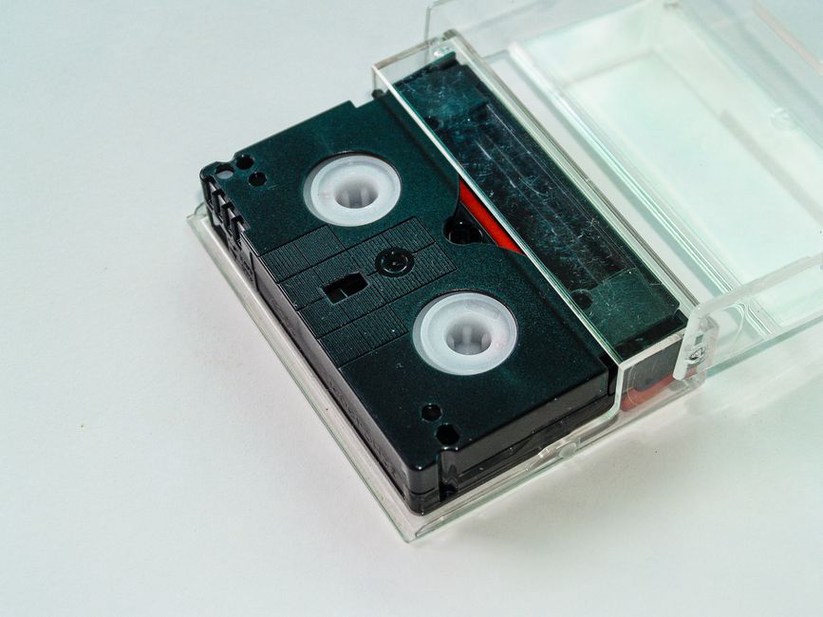
Physical releases make the problem tangible. Cassette hiss can sit alongside the recorded signal, and a worn copy may carry sounds absent from someone else’s. There is no reason to assume those artifacts were intended by the artist. They do, however, make the version and format worth naming when you describe a work. The same holds for digital audio: a poor transfer tells you about that transfer, not necessarily the original recording.
A way to listen without forcing a verdict
- Identify the main material. Is it feedback, distortion, acoustic friction, recorded ambience or several sources at once?
- Mark changes rather than counting notes. Listen for cuts, changes in density, recurring pulses and one frequency range overtaking another.
- Separate source from result. A familiar instrument can make an unfamiliar sound; an unidentifiable sound can still have a clear pattern.
- Record the listening conditions. Playback level, headphones or speakers, and format can affect your judgment.
None of this requires you to like the piece. It helps you say what happened. Instead of calling a passage chaotic, you might notice that its crackling layer stays constant while a high tone appears and disappears. If it still feels inert, you have a reason you can test. On a second listen, begin where that high tone vanishes. What remains may be the detail that changes how you hear the passage.