
Hiroshi Yoshimura’s Music for Nine Post Cards (1982) changes when it moves from a room to headphones. Its spare keyboard phrases can sit at the edge of attention, but close listening brings out small shifts in timing and decay. The title refers to visual art, not a sequence of songs about places. That distance between a work’s setting, its intended use, and a listener’s experience runs through the history of Japanese ambient music.
The name most often attached to that history is kankyō ongaku, usually translated as “environmental music.” It’s a useful term, though it cannot cover every quiet electronic record made in Japan. It points to music conceived in relation to an environment: an interior, a public space, or the conditions of everyday listening. Ambient became a broader international category, with different expectations. Treating the terms as interchangeable blurs how these recordings were made and heard.
What made it a movement?
Japanese environmental music had no single manifesto or signature sound. In the late 1970s and 1980s, composers and sound artists worked across records, installations, architecture, and commissions. Listeners encountered their work in galleries, designed interiors, and record shops. Some pieces circulated as albums; others were made for particular places or situations. What linked them was a question of function rather than instrumentation: how might music change the way someone perceives a space without demanding constant attention?
There are precedents elsewhere. Erik Satie’s idea of furniture music and Brian Eno’s ambient recordings make useful comparisons, but neither tells the whole story of the Japanese work. That work grew through particular ties among artists, designers, institutions, and recording technology, alongside other experimental practices. The broader account of kankyō ongaku’s artists and releases offers a starting map; the individual works still need to be heard on their own terms.
Three records, three kinds of attention
- Hiroshi Yoshimura, Music for Nine Post Cards (1982): Keyboard tones and restrained repetition leave space around each phrase. The pieces hold their shape without building toward a dramatic peak.
- Haruomi Hosono, Watering a Flower (1984): Originally made for a retail environment, it shows that music intended for everyday use need not be merely decorative. Its electronic patterns have a distinct, sometimes odd character.
- Yoshio Ojima, Une Collection des Chaînons (1988): Ojima makes the relationship between sound and spatial design especially clear. Quiet electronic events and pauses draw attention to how a recording parcels out attention.
These are entry points, not a definitive canon. They also show why “gentle” falls short as a description. Repetition can be irregular; a soft tone can feel exposed rather than soothing. Environmental music promises no particular state of mind, even when a room or a listener puts it to relaxing use.
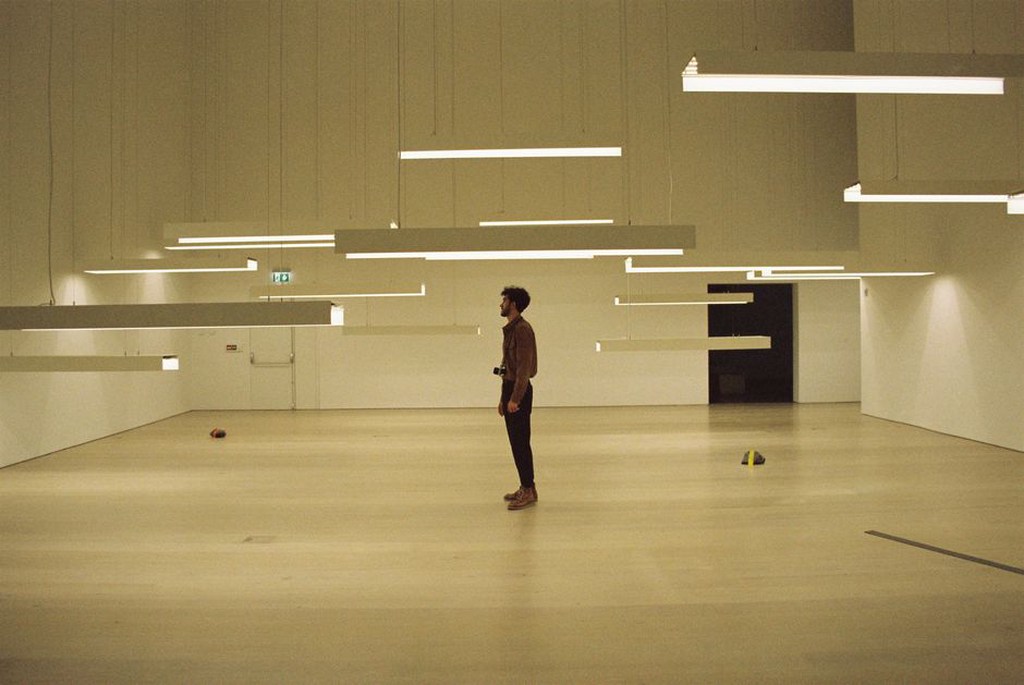
The room is part of the arrangement
An album offers a sequence that can be replayed in many places. Site-responsive sound complicates that apparent stability. The length of a tone may matter because of how it hangs in a room; a quiet passage may leave room for footsteps, ventilation, or nearby voices. The listener does not hear the composition alone. The surroundings add events the recording cannot specify.
Recorded environmental music keeps some of that openness without belonging to one building. On Music for Nine Post Cards, the gaps between phrases leave room for other sounds. In a silent room, the gaps themselves come forward. At a moderate level on an ordinary afternoon, sounds in the room can interrupt the apparent pattern. Neither is the one correct way to hear it; each brings out something different.
That is a better way to discuss the “silence” often associated with Japanese ambient music. A pause on a recording is rarely empty. It may hold tape or electronic noise, the previous note’s decay, and whatever is happening near the speakers. Silence here is not a national aesthetic trait. Its effect depends on volume, equipment, and location.
How the records found listeners
Composers are only part of this history. A commission begins with a different audience from an album bought for home listening. Someone hearing music in a shop may not know the artist’s name or intend to listen closely. A gallery visitor can move toward a sound or away from it. Such circumstances shape a work’s apparent purpose as surely as its synthesizer tones do.
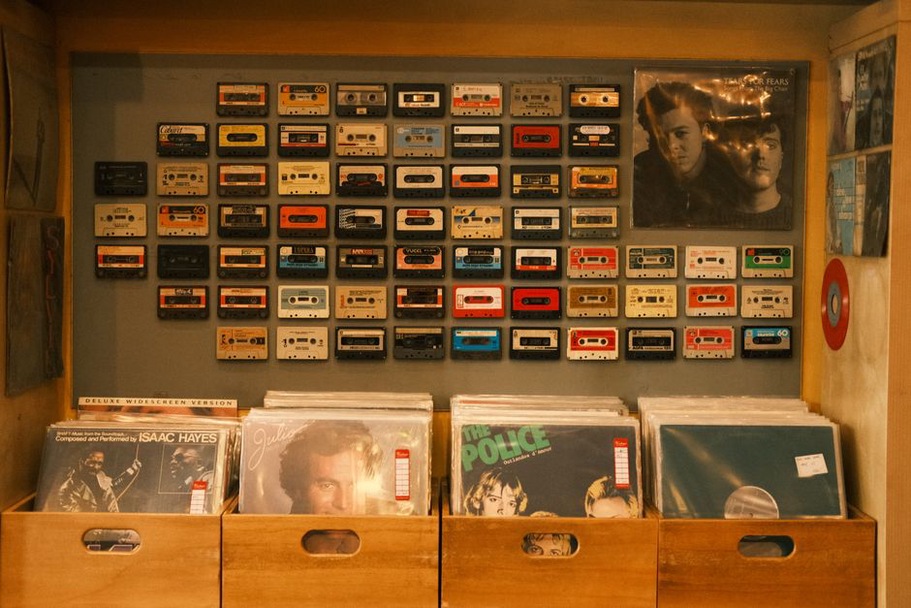
Formats shaped its later life as well. An LP gives the listener a sequence and an object to keep. A cassette allows small-scale exchange and personal duplication. A reissue can bring once-obscure work to people listening with very different expectations. No format automatically makes music underground. The more telling distinction is between a piece’s first context and the habits later listeners bring to it.
Growing international interest has made more Japanese environmental recordings accessible, but it has also encouraged a broad “Japanese ambient” label. Anthologies and reissues help listeners find artists whose work might otherwise be hard to hear. They can also place pieces with unlike purposes under one continuous mood. A retail commission, a self-contained album, and an installation soundtrack may sit easily together on a playlist; their histories do not merge because their tempos are slow.
What gets lost in the mood label
Words like “serene” and “Zen-like” tell us little about a recording’s structure. They also risk turning musicians with distinct methods into stand-ins for a supposedly timeless culture. Japan’s ambient music belongs to modern histories of electronics, design, recording, and urban life. Its artists made decisions about duration, playback, and audience; they did not simply express an inherited national taste for quiet.
Noise music helps show the limits of a mood label. The two fields need not sound alike to share an interest in what counts as music and how listening conditions alter perception. A loud work might expose a room through vibration and overload; a quiet one might do so by leaving audible gaps. That is a comparison of methods, not a claim that every ambient artist worked in a noise scene. For that adjacent history, the blog’s account of Japan’s influence on noise music follows a different set of sonic priorities.
Nor does the category cover all Japanese electronic experimentation. A long synthesizer note is not automatically ambient; a field recording is not environmental music simply because it documents a place. Ask what a piece does with attention. Does it establish a repeating background, make sounds in the room newly noticeable, or draw the ear to one carefully placed event? Those answers tell you more than an instrument list.
A practical way to listen across contexts
- Start with the release, not the playlist. Note the artist, title, original date, and any stated purpose. A later compilation may present a track far from its first context.
- Try two playback levels. At a comfortable, clearly audible level, follow the relationships between sounds. Then lower the volume enough for ordinary room noise to remain present. Notice which elements disappear and which persist.
- Keep the setting specific. If a piece was made for a space or commission, find out what that was. Don’t substitute an imagined traditional setting for the one the work actually had.
This is not a test of authenticity. It helps separate what you can hear in a recording from associations acquired after its release. Low-volume listening is useful only when it stays comfortable and safe; reducing a work to near-silence can hide the textures you are trying to hear.
Try the opening of Music for Nine Post Cards once without interruption. On a second pass, note when each keyboard sound stops rather than when it starts. The decays bring the intervals between phrases into focus, along with the room around the recording.