
A cassette label can start with a master recording, blank tapes, a printer and someone willing to answer mail. Soon the musician faces questions beyond the recording itself: who will duplicate it, write about it, send it out and remember who asked for the next one? In Japan’s experimental underground, labels have often operated at this scale. Their value has less to do with nostalgia than with the ability to handle a release, from recording to distribution, without waiting for a larger company.
That independence has limits. Tape costs money, duplication takes time, and a release bought by a few dozen listeners may not pay for itself. Still, a small label can issue work that would be hard to justify through conventional manufacturing and promotion. A long drone, a set of field recordings or a severe noise performance need not be reshaped for a broad market first.
How a label becomes a network
Japanese cassette culture did not begin with the recent renewed interest in physical formats. Self-produced tapes have long served musicians outside established record-industry channels. The means of finding collaborators and listeners have shifted: specialist shops, live events, postal exchange, personal websites, online storefronts and social platforms all play a part. Older routes have not simply given way to newer ones.
Calling this a “rise” needs care. There is no single founding moment or unified Japanese cassette-label movement. One label might consist of a musician issuing their own work; another might bring together recordings by people in different cities or countries. Some have a recognizable visual identity and a regular schedule. Others put out a few tapes, pause for years or disappear. What they share is the possibility of keeping publication close to the music, using whatever means are available.
For a musician, a label can offer more than a logo on a J-card. Someone must listen to a proposed recording, decide whether it fits the available tape, prepare it for duplication and check the copies. Credits need to be accurate; an announcement needs to help people find the release without suggesting it will reach an audience the label cannot reach. At the smallest scale, the musician may do all of this alone.
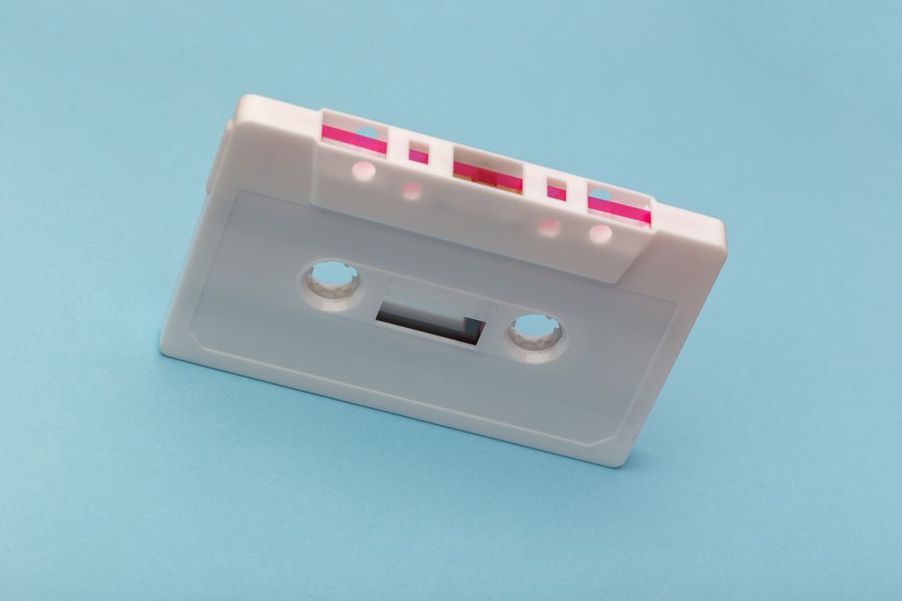
The practical choices inside a cassette release
Duplication is part of the work
A cassette is not just a digital file put into an older container. Running time determines tape length and may force a piece to be split across sides. Decks, recording levels and tape stock can affect playback, while worn equipment can introduce faults the artist never intended. A DIY label might duplicate in real time on home equipment, hire a duplicating service or use both as resources allow. The method alone tells you little about the intended sound.
Noise can tolerate saturation and uneven texture, or make deliberate use of them. In a quiet electroacoustic work, hiss and playback conditions may be much harder to ignore. Either way, a rough sound is different from a faulty copy. Listening to a test tape on more than one machine, checking both channels and matching the side lengths to the printed information are ordinary acts of editorial care.
Packaging carries essential information
The folded insert, or J-card, has little space, but it can record artist and track names, recording and mastering credits, the label’s identity and a release date where known. Handwritten, photocopied and professionally printed covers can all serve that purpose. Elaborate packaging does not prove the music is better; a plain cover is not necessarily a statement of principle. Clear credits become especially valuable when a tape later turns up in a secondhand sale, a private rip or an archival database, separated from its original announcement.
A small edition brings its own accounting problem. Once blanks, cases, printing, postage and replacement copies are paid for, a low sale price may leave little for the artist or the next release. “DIY” describes who does the work; it does not make that work free. An ambitious catalog can conceal many hours spent assembling tapes and mailing orders.
Why experimental music fits this scale
Cassette labels can make room for work that sits awkwardly in a conventional album format. A field-recording piece may ask for patient attention to small environmental changes. A drone may unfold slowly enough for a side break to feel like a real interruption. Harsh noise, improvisation and electroacoustic collage may be presented as live documents rather than polished studio sequences. These sounds need not add up to a single genre. Each recording needs a presentation that makes sense for it.
The format does impose a sequence. A listener has to turn the tape over, and skipping between pieces takes more effort than tapping a screen. That friction can help hold a long recording together, but it cannot guarantee attention. Some releases treat the two sides as distinct sections; for others, the division is simply a manufacturing necessity. The track listing and audio are better guides than an assumption that every cassette was composed for tape.
A small catalog can also bring neighboring practices into contact without anyone declaring a new scene. Someone making restrained environmental recordings might share a label with a musician working in abrasive electronics because both trust its approach to sound and documentation. A tape traded after a performance might begin a correspondence, perhaps leading to a split release or an invitation to play. Such exchanges make collaboration possible, not inevitable.
Distribution shapes what becomes visible
How far a label reaches depends on more than how many tapes it makes. Shop consignment, tables at performances, mail orders and trades with other labels each reach different listeners. Postage can turn a cheap tape into an expensive purchase overseas. Language and platform choices affect who hears about it at all. A digital edition may widen access while leaving the physical copy’s distribution problem unchanged.
These conditions make underground histories difficult to piece together. Sold-out pages, missing inserts and incomplete online credits can leave a small release hard to identify years later. An easily searched catalog, meanwhile, is not proof that it mattered more than work circulated mainly by hand. For an archivist or collector, the object and its context both count: a catalog number, a dated flyer or a list of participants may show connections the audio cannot.
The word “limited” needs scrutiny too. A short run might reflect scarce funds, uncertain demand or the capacity of a home duplication setup; it does not automatically signal a plan to create scarcity. Nor does a digital reissue erase a tape’s original distribution history. The two versions may have reached different audiences under different conditions.
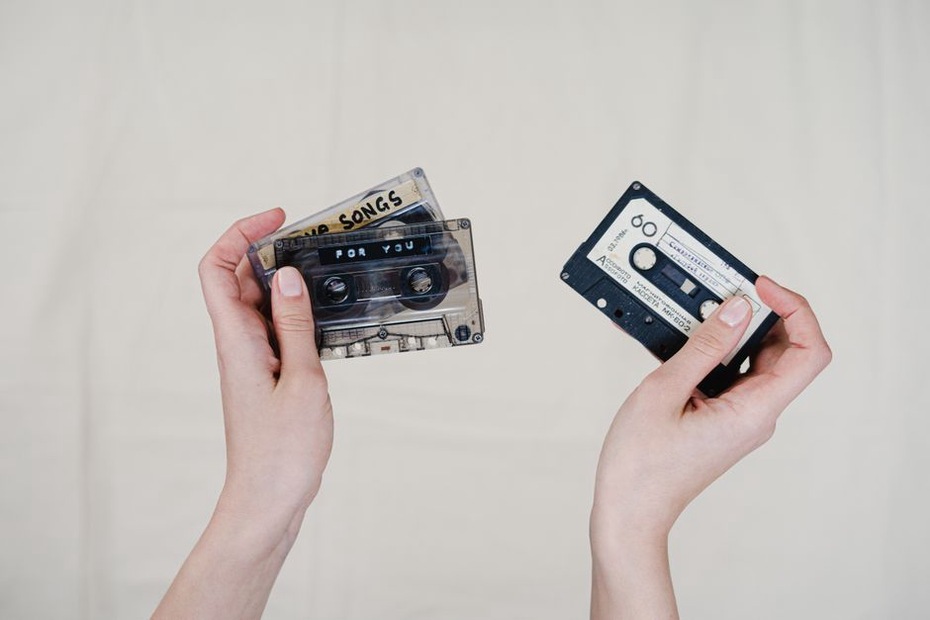
Reading a cassette label without romanticizing it
A few checks can reveal what a label does beyond putting objects into circulation:
- Compare credits across releases. Recurring names can show who records, masters, designs or collaborates. They do not tell you that everyone lives in the same place.
- Check format details. Side lengths, edition information when supplied, and digital availability show how the music was prepared and offered.
- Look across the catalog. A label may favor a particular sound, or its consistency may lie in presentation and relationships rather than genre.
- Separate evidence from mythology. Handmade covers and tape hiss tell you something about production, not necessarily why the artist chose cassette.
DIY can become too flattering a shorthand for any small release. The work is more concrete than that: making recordings available, crediting contributors clearly, maintaining correspondence and leaving enough information for a release to be identified later. So are the pressures—equipment maintenance, materials costs, postage and the unpaid hours between finishing a master and sending the last package.
When an unfamiliar tape turns up, start with the insert, not its rarity. Check the printed track order against both sides, record every production credit and keep the catalog number beside the artist and title. Those details may be enough to reconnect a stray copy to the people who made and circulated it.