
A low vibration in a field recording might come from a ventilation unit outside the microphone’s frame, not the room it seems to fill. Through headphones it may feel close; on a small speaker it may almost vanish. That uncertainty belongs to the recording. It does not give us license to name a source. Some of the most absorbing field recordings in Japanese experimental music hold your attention without telling you exactly what made each sound.
What does “unseen” mean in a recording?
A microphone never captures a place whole. Where it sits, which way it points and what it picks up determine what comes forward. A stereo pair near a wall may catch a reflection more clearly than the activity behind it. A contact microphone fixed to a railing carries vibrations while picking up less of the surrounding air. Even a recorder in a bag leaves a trace: handling noise, fabric brushing the capsules.
So the unseen need not be mysterious. It could be a source outside the microphone’s range, an event too quiet to notice on site, or a sound whose cause the recording cannot establish. Those are different kinds of uncertainty. A metallic pulse might be machinery, footsteps travelling through a structure, or the recorder being moved. Timbre alone will not decide.
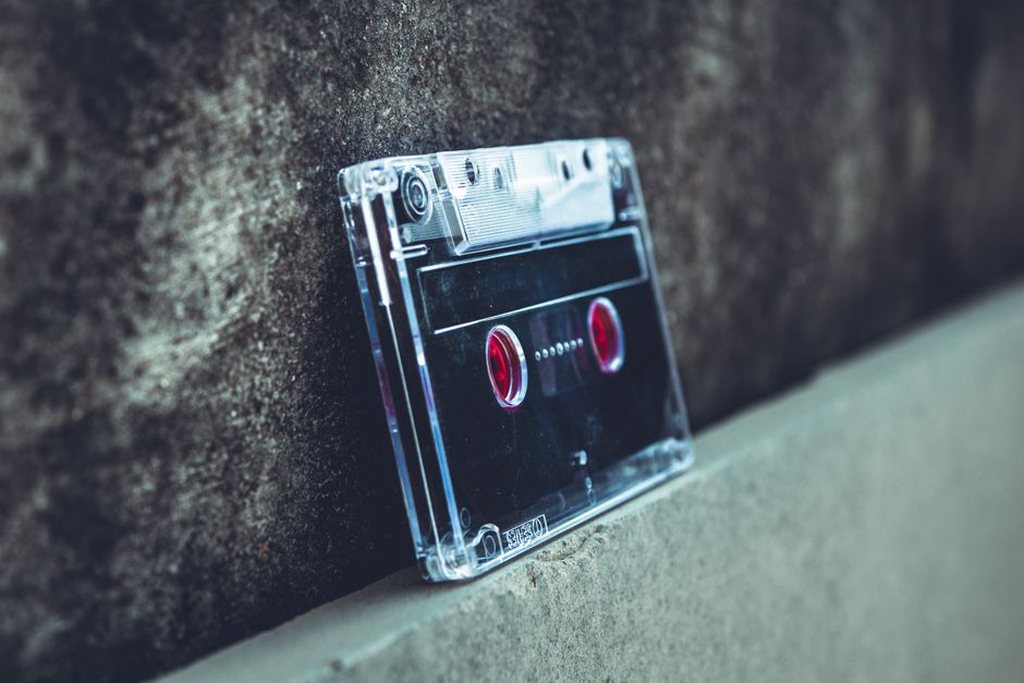
The boundary between document and composition
Field recording names a way of gathering sound, not a promise that the result is unedited. The maker might leave a take intact, choose a short passage, remove wind buffeting, layer recordings, or play captured sound through speakers in another space. Each choice changes what a listener can infer. An uninterrupted passage gives a better sense of an event’s duration. An edit can bring a faint pattern into focus while hiding the intervals around it.
That distinction matters across Japanese ambient, drone and electroacoustic work. An electrical hum may tell us something about the environment where it was recorded; it may also become a sustained tone whose location is left open. Rather than asking whether a piece is “pure” field recording, ask what still tells you about the recorded event and what now works as compositional material. The blog’s account of Japanese electroacoustic music beyond genre offers a broader context for hearing those shifts without fixing technique to one category.
Clues that a recording has been shaped
- Repeated events: identical transients at regular intervals might signal a loop, though a machine can repeat naturally too.
- Sudden spatial changes: a different noise floor or stereo position may expose an edit between takes.
- Unusual proximity: vibration louder than nearby voices may point to a contact microphone or close placement.
- Persistent tonal emphasis: filtering or equalization can bring one frequency band forward without adding a sound.
No single clue proves how a recording was made. Listen again at a moderate volume; pushing a quiet passage too high can leave you attending mainly to hiss, with tired ears.
Why location names can mislead
A track named for a station, shoreline or building gives you a starting point, not a microphone position or an account of everything beyond its range. Weather, time of day, maintenance and human activity change the sound of a place. Nor does “Japan” describe one acoustic signature. A service corridor, residential street and wooded path have sounds shaped by their particular conditions, not by a national essence.
If release notes are available, pay attention to how much they actually claim. “Recorded near a station” tells you less than a note specifying microphone position and recording time. Neither kind of note is automatically better for the music. Detail helps when a work asks to be heard as a record of a site; sparse notes may suit a composition that leaves sources unresolved. Avoid filling the gaps with certainty the release never offered.
How to listen without flattening the sound
Start with duration, not identification. A distant motor may hold steady, swell as something else passes, then seem to recede when the microphone turns. You can hear those changes without knowing what the motor belongs to. On a second listen, move your attention between the foreground, the continuous background and brief sounds that seem to connect them.
- Map the layers: note continuous tones, intermittent events and movement across the stereo field.
- Check the recording frame: wind, handling noise, compression and room reflections can alter apparent distance.
- Separate hearing from inference: write “three short metallic impacts” before proposing a source.
- Compare playback: try headphones and a modest speaker level; bass and quiet details may change dramatically.
The same habit helps when a field recording enters a drone piece. If traffic rumble blends into an electronic tone, listen for the point where irregular fluctuations settle into a steadier pitch. There may be no clear boundary. That ambiguity can be part of the piece’s structure rather than a puzzle to solve.
What the recorder cannot capture
Microphones preserve changes in air pressure, not all the circumstances of recording. They cannot tell us who had access to a space, whether speech was overheard incidentally, or how people outside the frame were using the site. Editing may protect privacy, but it can also remove context. A release note need not identify individuals or disclose sensitive locations to distinguish public ambience from a recording made with access to a restricted space.
For collectors, that makes accompanying notes more than packaging. Compare the stated location and method with what you hear, while allowing for gaps where disclosure would be inappropriate. If you make work from your own recordings, keep an unprocessed copy and note the basic capture details. Should a faint rhythm become the center of a piece later, the original take gives you something to check: was it already there, or did it emerge through processing?