
The file lands in your inbox or surfaces on a dusty distro page with nothing but a name: release release8. No artist credit. No year. No label catalog number. In the Japanese noise underground, this is not a bug — it is a deliberate signal. The repetition of the word 'release' functions as both a verb and a noun, a self-referential loop that tells you nothing about the music and everything about the archival system that produced it.
To understand release release8, you have to stop thinking about the music and start looking at the metadata ecology of DIY noise. Western indie scenes rely on Bandcamp tags and Discogs entries to create discoverability. Japanese underground noise — especially the cassette-based micro-label network — often treats metadata as noise to be filtered out. The name release release8 is not an oversight. It is a choice rooted in a specific logic: the logic of the product category.
<>
The Product Category as Genre
In many Japanese noise blogs and distro sites, releases are filed under a 'product' category. This is not a generic e-commerce taxonomy — it is a philosophical stance. By calling every tape, CD-R, or digital file a 'product,' the distro owner or label operator strips away the romanticism of 'art' and 'expression.' A noise release becomes an object, a unit of exchange, a thing that exists in a system of scarcity. release release8 takes this logic one step further: the category name becomes the release name. The word 'release' appears twice because the system is its own content.
This mirrors the approach seen in other orphaned files that populate the noise underground. Consider how the recovery of a lost password from an old Japanese noise forum often reveals more about the community's trust protocols than any interview ever could. The metadata is the message.
Why Eight?
The number eight in release release8 is not arbitrary, but it is also not descriptive. In Japanese noise numbering, digits often serve as internal inventory markers rather than sequential catalog numbers. A label might issue 'product 001' through 'product 100' but skip dozens of numbers that correspond to failed experiments, lost masters, or releases that were announced but never manufactured. The '8' in this name could mean it is the eighth release in a series that began with release release1 — or it could be a random digit chosen because the creator liked the symmetry of the numeral 8 when typed in a monospace font.
The ambiguity is intentional. Noise musicians working in the DIY cassette tradition often treat catalog numbers as aesthetic elements rather than functional identifiers. A number like 8 is clean, balanced, and easy to write on a J-card with a ballpoint pen. It carries no weight. It is not 'lucky' or 'significant.' It is simply there.
The Visual Language of the Anonymous Release
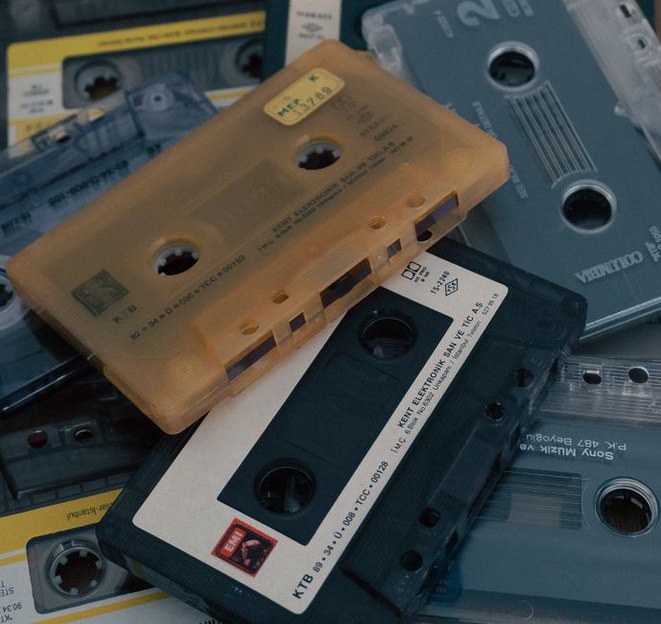
If release release8 exists as a physical object — and it likely does, given the cassette-centric nature of the scene — its packaging would follow the same minimalist logic. A plain white or black shell. A label printed on a thermal transfer printer or handwritten with a Sharpie. No track listing. No credits. The J-card, if one exists, might be a single sheet of A4 paper folded twice, with the text 'release release8' repeated in a small plain font.
This aesthetic is not poverty or lack of effort. It is a rejection of the commercial music industry's obsession with packaging as a sales tool. In the Japanese noise underground, the object is a vessel for sound, not a collectible to be fetishized. Yet collectors do fetishize these objects — and that tension is part of the scene's character. A plain white tape with no information becomes more desirable than a glossy digipak precisely because it refuses to explain itself.
< >
>
Listening Without Context
To listen to release release8 is to confront the absence of context. There is no Bandcamp page with a biography. No Instagram feed showing the artist at a soldering iron. No review on a blog telling you what to hear. The sound — whether it is a 40-minute drone piece, a burst of harsh noise, or a field recording of a Tokyo pachinko parlor — exists on its own terms. The listener must engage directly with the audio, without the crutch of narrative.
This is the opposite of how most contemporary music is consumed. Streaming platforms feed you algorithmically generated context: 'Fans also like,' 'Recommended for you,' 'From the same artist.' release release8 offers none of that. It is a closed system. You either accept the sound as it is, or you move on.
The experience is closer to finding a tape in a secondhand shop in a neighborhood you do not know. You buy it because the cover is strange or the price is low. You play it at home without expectations. The music becomes part of your life not because it was marketed to you, but because it found you.
Archival Implications
For collectors and archivists, release release8 presents a practical challenge. How do you catalog a release that refuses to identify itself? The standard approach — artist name, album title, year, label — collapses when one or more of these fields are blank. Some collectors assign placeholder names. Others file the tape under 'Various Artists' or 'Unknown.' A few maintain separate collections of 'anonymous objects' that exist outside the normal taxonomy.
This is not a problem to be solved. It is a feature of the underground. The same logic that produces release release8 also produces the fragmented archives that collectors spend years piecing together. The act of organizing these tapes — of deciding what metadata to assign and what to leave blank — is itself a creative act. The process of organizing a digital collection of Japanese underground tapes often involves the same kind of decisions that the original label made when they decided not to include a track list.
Practical Steps for the Collector
If you encounter a tape or file named release release8, here is what you can do:
- Check the file format. If it is a digital file, examine the metadata tags. Sometimes the artist name is hidden in the 'album artist' field or the 'comment' section. Japanese noise uploaders occasionally embed information in unexpected places.
- Look for physical markings. If you have the cassette in hand, inspect the shell edges, the tape itself, and the inside of the case. Some labels write catalog numbers in invisible ink or on the inner flap of the J-card.
- Compare with known releases. If the sound is recognizable as a particular artist's style — for example, a specific type of circuit-bent feedback or a certain approach to contact microphone recording — you may be able to attribute the release to a known musician even without a credit.
- Accept the unknown. Not every release needs to be identified. The mystery is part of the value. A tape that cannot be traced back to a source retains a kind of autonomy that cataloged releases lose.
Release as Process
The double use of 'release' in the name suggests something else: that the act of releasing is the work itself. In the noise underground, many musicians view the process of duplication, packaging, and distribution as integral to the art. Sending a tape to a distro, mailing it to a pen pal in another country, or leaving a stack of copies at a record store — these actions are not promotional. They are the final stage of composition.
release release8 could be read as 'the eighth instance of the act of releasing.' The music is secondary to the gesture of putting something into the world. This is a radical position in an era where music is often treated as content to be consumed and forgotten. The anonymous noise cassette insists on its own physical reality. It takes up space on a shelf. It demands to be handled, played, rewound, and stored.
Next time you find a tape labeled only with a number, play it without checking Discogs. Let the sound be the only context you get. The silence in the metadata is not empty — it is full of meaning.